

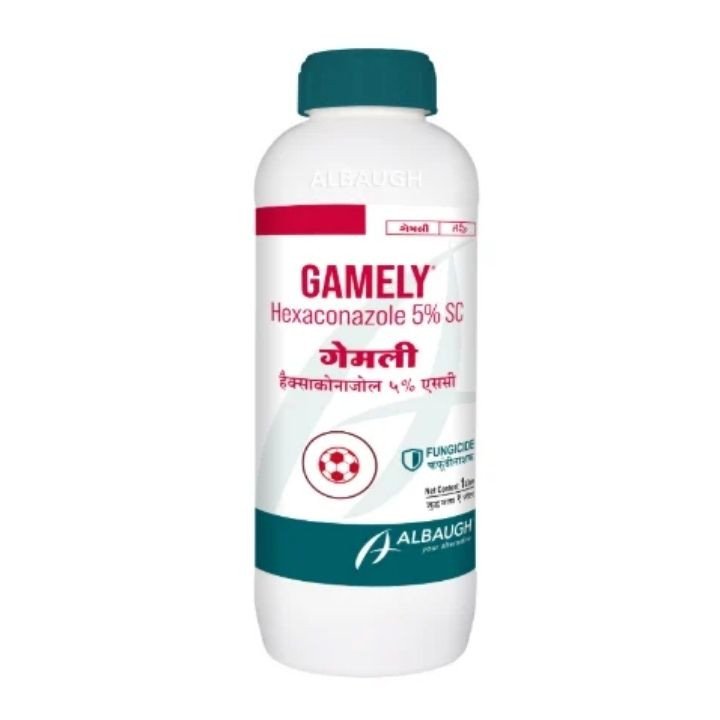
Albaugh Gamely Fungicide
Albaugh Gamely: A Triazole Built to Stop the Next Round of Spores, Not Just the Current One
Fungal diseases don't just spread through the initial infection — they spread through spore production that keeps launching new infection cycles across the field. This is precisely where Albaugh Gamely's anti-sporulation property earns its relevance. Built on Hexaconazole 5% in a systemic SC formulation from the triazole chemical group, Gamely doesn't just treat the visible infection; it interrupts the fungus's ability to keep producing spores that would otherwise carry disease to unaffected parts of the crop.
This distinction matters more than it might first appear. A fungicide that kills existing fungal tissue but leaves sporulation intact essentially buys the grower a short reprieve before the next wave of infection begins. Gamely's anti-sporulant action is designed to close that gap, which is part of why it's specifically positioned for sheath blight in rice and powdery mildew in grapes and mango — three diseases known for their capacity to spread rapidly once established.
Product Details
| Detail | Specification |
|---|---|
| Brand | Albaugh |
| Product Name | Gamely |
| Active Ingredient | Hexaconazole 5% |
| Formulation | Suspension Concentrate (SC) |
| Chemical Group | Triazole |
| Mode of Action | Systemic with Anti-Sporulant Property |
The Three Diseases This Product Was Registered For
| Crop | Target Disease |
|---|---|
| Rice | Sheath Blight |
| Grapes | Powdery Mildew |
| Mango | Powdery Mildew |
What connects these three isn't the crop type — it's the disease behavior. Sheath blight in rice and powdery mildew in both grapes and mango share a common trait of building disease pressure through repeated spore cycles under favorable humidity and temperature conditions, which is exactly the pattern Gamely's anti-sporulant mechanism is meant to interrupt.
Dosage Differs by Crop and Measurement Basis
One detail worth noting carefully: rice and mango doses are expressed as a per-litre dilution rate, while grapes uses a per-acre application rate. These aren't interchangeable, and mixing up the units when preparing a spray tank could lead to significant under- or over-dosing.
| Crop | Target Disease | Dosage |
|---|---|---|
| Rice | Sheath Blight | 2 ml per litre of water |
| Mango | Powdery Mildew | 2 ml per litre of water |
| Grapes | Powdery Mildew | 200–400 ml per acre |
The range given for grapes — 200 to 400 ml per acre — leaves room for adjustment based on disease pressure severity; lighter powdery mildew incidence would generally justify the lower end, while more advanced infection spread across the canopy would call for moving toward the upper limit.
Why Systemic Movement Matters for These Specific Diseases
Since Gamely moves systemically within the plant rather than sitting only on the sprayed surface, it can reach fungal growth that's already progressed beyond the immediate point of contact — relevant for sheath blight, which often develops in the lower canopy near the plant base where spray coverage can be inconsistent. For grape and mango powdery mildew, systemic movement similarly helps address infection on newer growth that may not have been directly present during the initial spray.
Getting the Application Right
- Confirm the correct dosage unit for the crop being treated — per litre for rice and mango, per acre for grapes
- Ensure spray coverage reaches lower canopy areas in rice, where sheath blight typically initiates
- Apply early, ideally at first visible symptoms, to give the anti-sporulant action the best chance of limiting further spread
- For grapes, adjust dosage within the 200–400 ml/acre range based on observed disease severity in the vineyard
Frequently Asked Questions
What does "anti-sporulation" actually mean for disease control in the field?
It means the fungicide interferes with the fungus's ability to produce new spores, which helps limit the disease from spreading to previously unaffected parts of the plant or field, beyond just treating the existing infection.
Why is the grape dosage measured per acre while rice and mango are per litre?
This reflects standard application conventions for each crop type and spray method; the two aren't directly comparable, so the specific unit for the crop being treated should always be used.
Can Gamely be used preventively, or only after symptoms appear?
While it shows curative-adjacent action through its anti-sporulant property, applying it early — at the first sign of disease — generally gives better results than waiting for extensive infection to develop.
Is Gamely effective on other diseases beyond sheath blight and powdery mildew?
Its specific registration and label recommendation covers sheath blight in rice and powdery mildew in grapes and mango; use against other diseases should not be assumed without label confirmation.
Disclaimer: The details provided are for informational guidance only. Always adhere to the recommended application instructions as stated on the product label and in the accompanying leaflet.
Similar Products
Best Selling
Customer Reviews
Recent Reviews
No reviews yet.