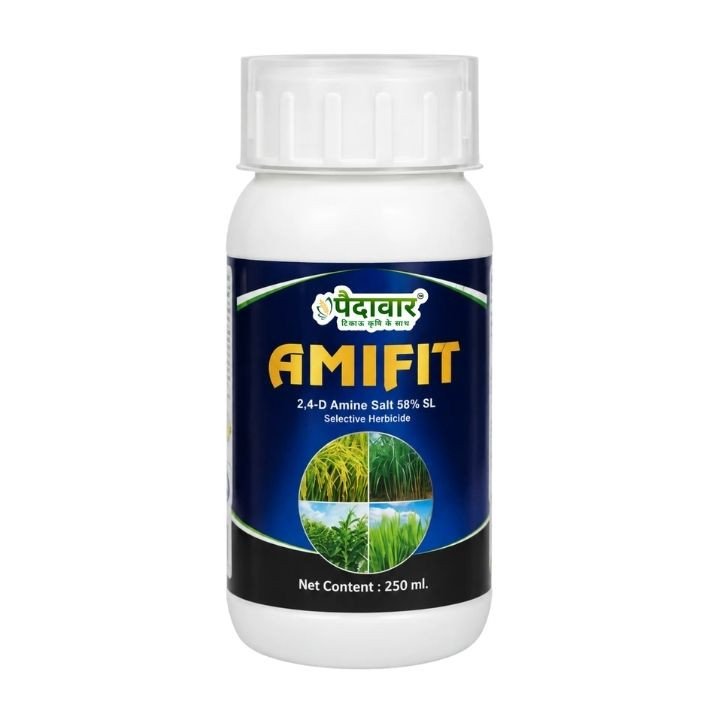
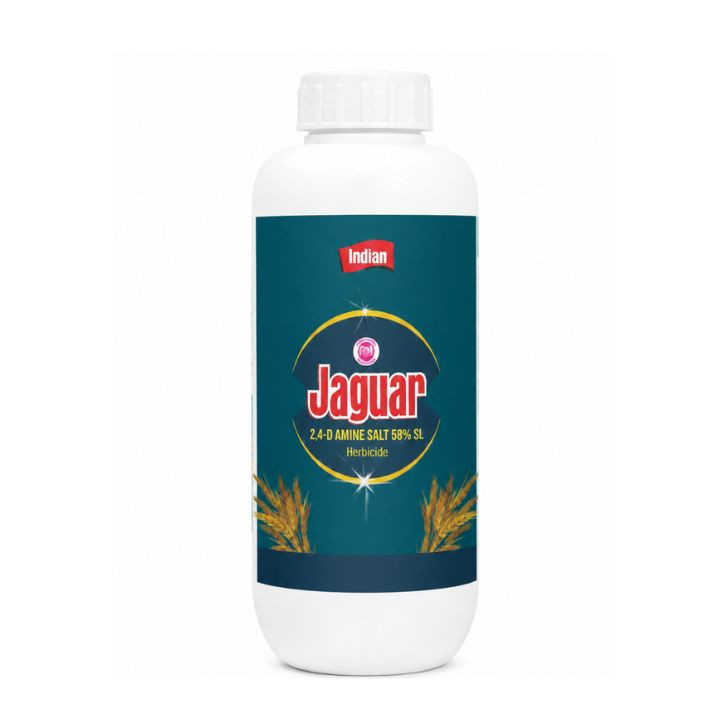
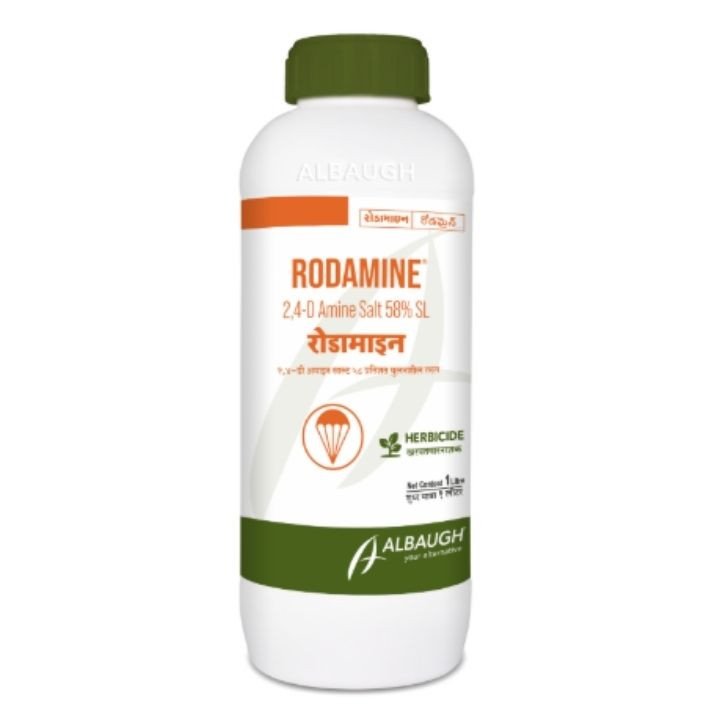
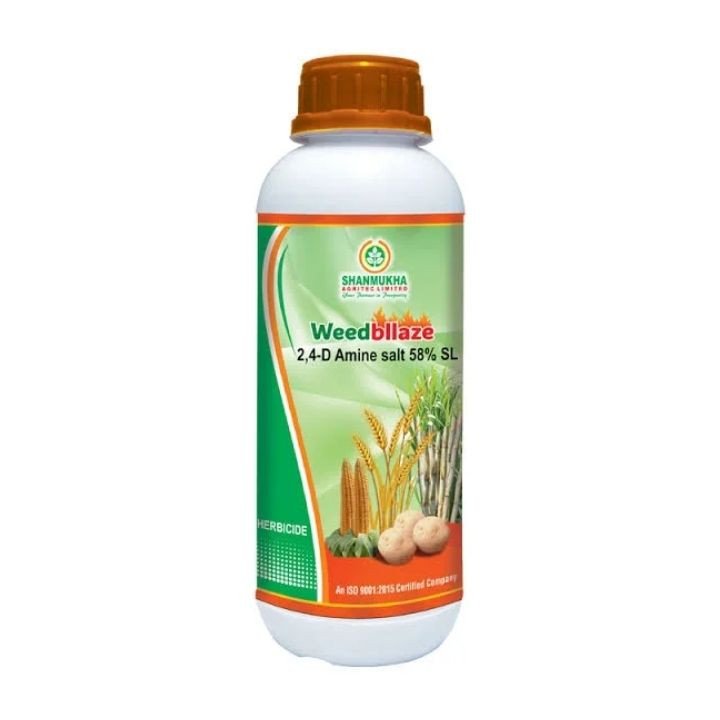
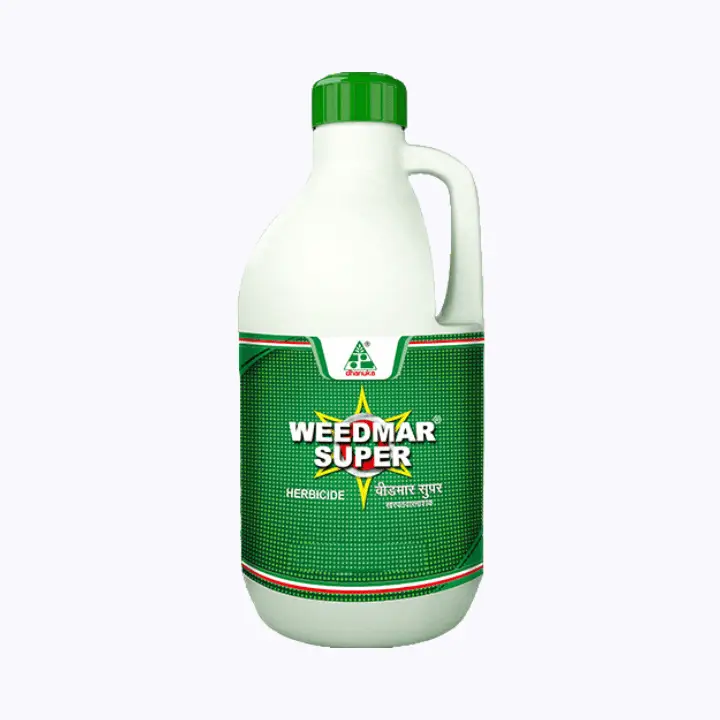
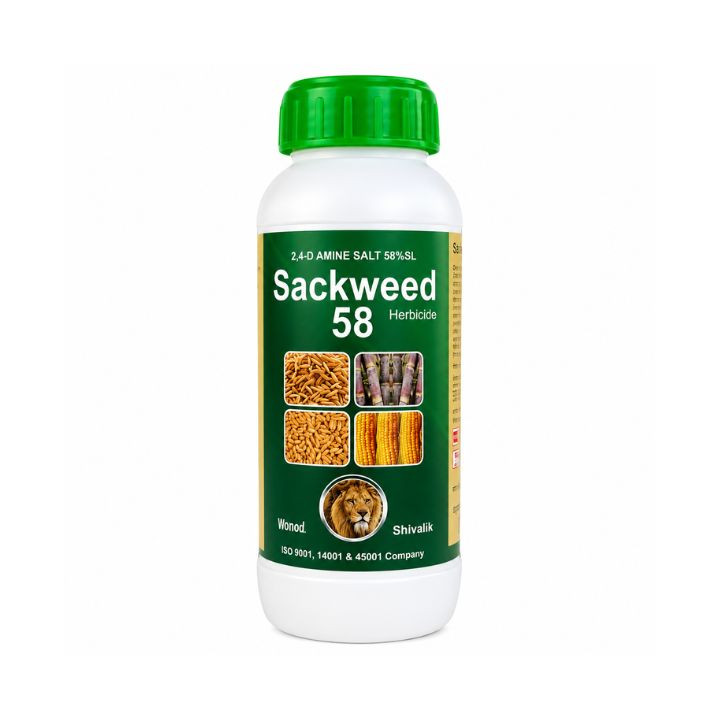
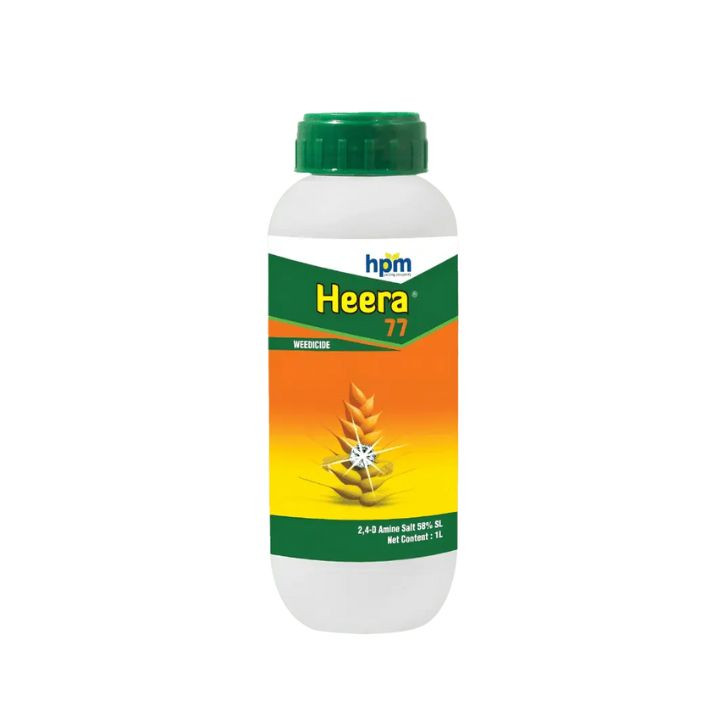
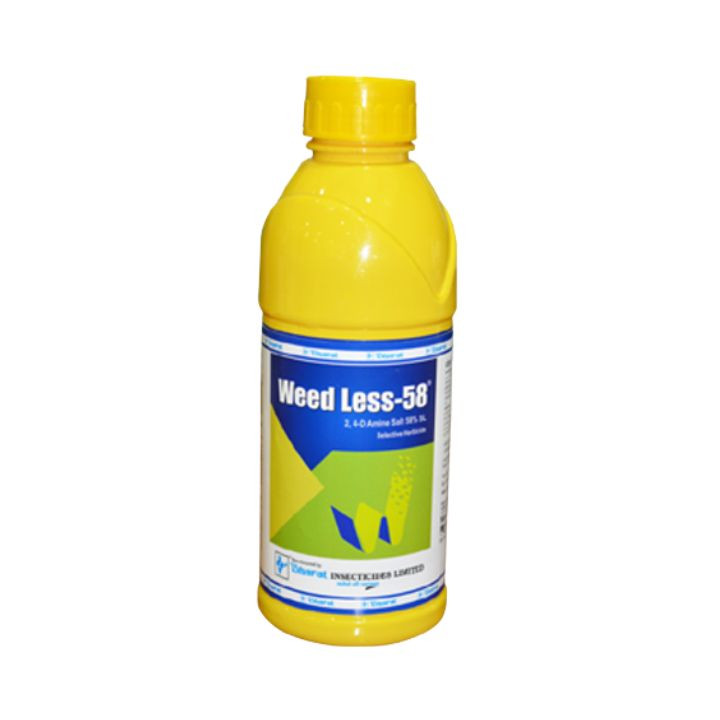
Broadleaf weeds like Bathua, Krishnaneel and Hirankhuri can take over a wheat field within weeks of sowing, pulling away the moisture and nutrients the young crop needs. 2,4-D Amine Salt 58% SL has been used by Indian farmers for decades to deal with exactly this problem. It is a selective herbicide, which means it acts on broadleaf weeds while crops like wheat, maize, sorghum and sugarcane tolerate it when it is sprayed at the right stage and dose.
It comes as a soluble liquid that mixes easily with water. Once sprayed, it is taken up through the weed's leaves and moves inside the plant to its growing points, so the effect is not limited to the surface that the spray touches.
2,4-D works like a plant growth hormone called auxin. Broadleaf weeds cannot regulate it, so their growth goes out of control. Within a few days of spraying, you will usually notice stems twisting and leaves curling or cupping. The weed then slowly stops growing and dries up over the following one to two weeks. Cereal crops and sugarcane break down the chemical differently, which is why they are not affected in the same way under proper use.
| Crop | Weeds It Helps Control |
|---|---|
| Wheat | Bathua, Krishnaneel, Senji, Hirankhuri, Jangli Palak |
| Maize and Sorghum | Itsit (Trianthema), Lahsua (Digera), Chaulai (Amaranthus) |
| Sugarcane | Broadleaf weeds and Motha (Cyperus rotundus) |
It is not meant for grassy weeds. If your wheat field has Gulli Danda (Phalaris minor) or Jangli Jai, you will need a separate grass herbicide for those.
Timing makes the biggest difference with this herbicide. Weeds are easiest to control when they are young, generally at the two to four leaf stage. In wheat, this usually falls around 30 to 35 days after sowing. Spraying too early can stress the crop, and spraying too late means the weeds are harder to control.
The right dose varies by crop and by product, so check the label of the pack you are using before preparing the spray solution. A flat fan nozzle gives more even coverage than a hollow cone nozzle for herbicide work. Try to spray on a calm, clear day when weeds are actively growing and no rain is expected soon after.
Cotton, pulses, vegetables, mustard and fruit plants are very sensitive to 2,4-D. Even small amounts carried by wind can cause leaf curling and damage. Avoid spraying when there is wind blowing toward such crops, and wash the sprayer thoroughly before using it for anything else. Many farmers prefer to keep a separate sprayer only for herbicides for this reason.
How long does 2,4-D take to show results?
Twisting and curling of weeds usually start within a few days. Complete drying generally takes one to two weeks, depending on the weed and the weather.
Can I use 2,4-D in mustard or gram?
No. Mustard, gram and other broadleaf crops are sensitive to 2,4-D and can be damaged by it.
Can it be mixed with other herbicides?
Some farmers tank-mix it with grass herbicides in wheat, but compatibility depends on the products involved. Check both labels or consult your local agronomist before mixing.
What if it rains after spraying?
Rain soon after spraying can wash the herbicide off the leaves and reduce its effect. Try to keep a dry window of a few hours after application.
Disclaimer: The details provided are for informational guidance only. Always adhere to the recommended application instructions as stated on the product label and in the accompanying leaflet.