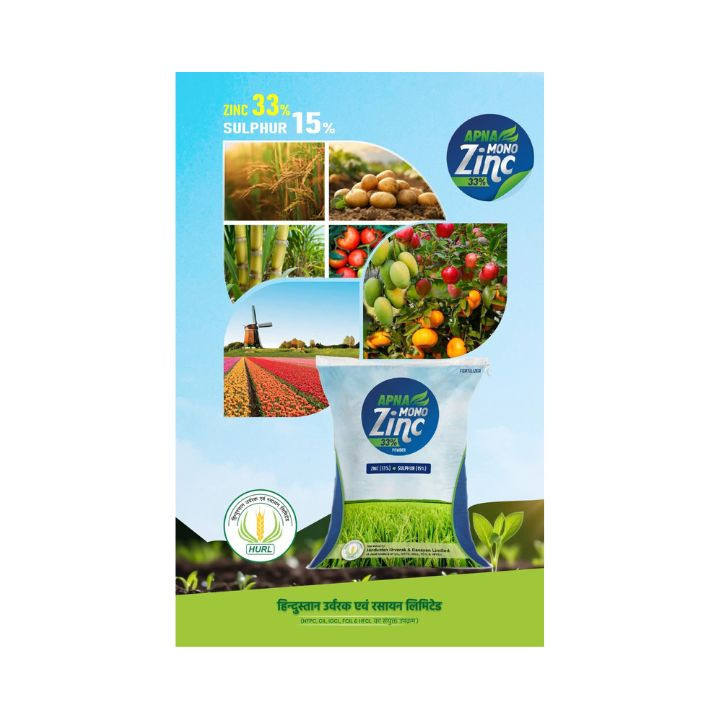
Apna Mono Zinc 33% is a high quality micronutrient fertilizer containing Zinc 33% and Sulphur 15% in powder form. It is specially designed to correct zinc deficiency in crops and support healthy plant growth.
Zinc plays a crucial role in enzyme activation, chlorophyll formation and overall plant metabolism. Regular application of Apna Mono Zinc helps improve leaf greening, root development and crop productivity.
This fertilizer is suitable for use in a wide range of crops including cereals, vegetables, fruits and commercial crops, helping farmers achieve better yield and improved crop quality.
Zinc activates various plant enzymes and supports chlorophyll formation. It improves nutrient uptake and metabolic activity, resulting in better plant growth and higher productivity.
Recommended Usage
Apply through soil or foliar spray depending on crop requirement.
Ensure proper mixing and uniform application.
Follow soil test recommendations for accurate dosage.
Dosage and Application
Soil application: 4 – 5 kg per acre.
Foliar spray: 3 – 5 grams per litre of water.
Apply spray on both sides of leaves for better absorption.
Application Schedule
First spray: 20 days after sowing or transplanting.
Second spray: 25 days after first spray.
Third spray: At flowering stage.
Suitable Crops
Cereals
Pulses
Oilseeds
Vegetable Crops
Fruit Crops
Commercial Crops
Application Tips
Spray during morning or evening hours.
Avoid spraying during extreme heat.
Use clean water for preparing spray solution.
Safety and Precautions
Wear protective gloves while handling the product.
Avoid contact with eyes and skin.
Store in a cool and dry place.
Keep away from children and animals.
Frequently Asked Questions (FAQs)
Q1: What is Apna Mono Zinc used for? It is used to correct zinc deficiency and improve crop growth.
Q2: What is the recommended dosage? 4–5 kg per acre for soil and 3–5 gm per litre for foliar spray.
Q3: When should it be applied? It should be applied after 20 days of sowing and repeated at regular intervals.
Q4: Which crops can use this fertilizer? It can be used in cereals, vegetables, fruits and other crops.
Disclaimer: The information above is intended for reference only. Always follow the directions and safety guidelines provided on the product label and leaflet.