

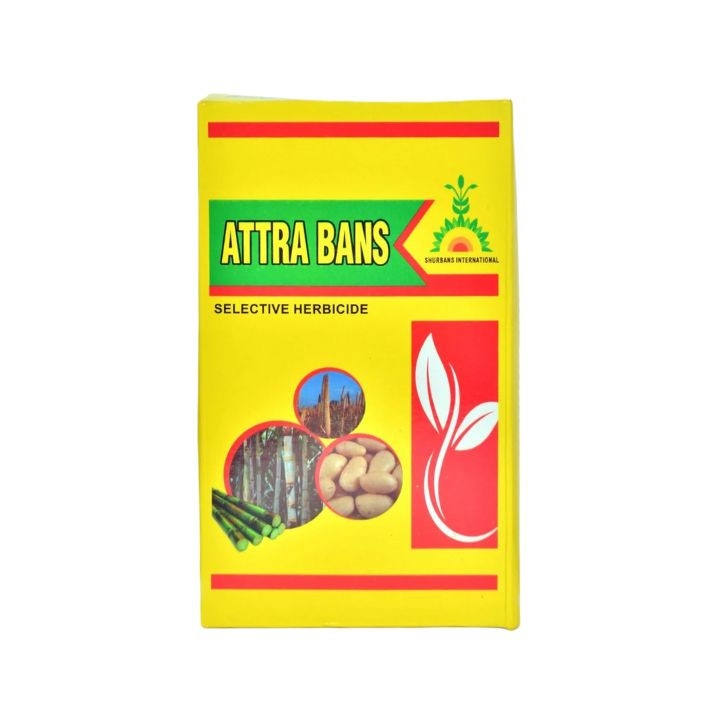
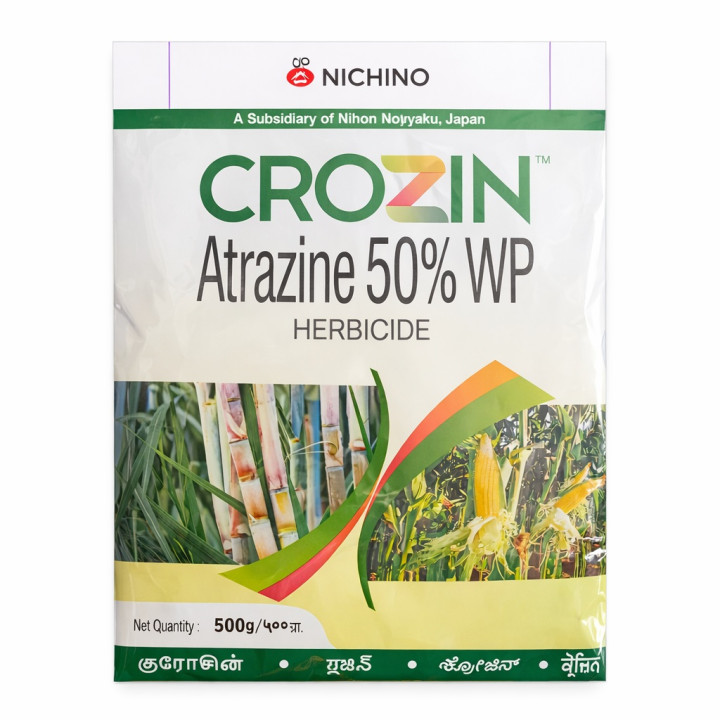
Shurbans Attrabans Atrazine 50% WP Herbicide
Atrabans Atrazine 50% WP Herbicide
Atrabans Atrazine 50% WP is a selective and systemic herbicide formulated to deliver consistent and long-lasting control of both broadleaf and grassy weeds. Containing 50% atrazine as a wettable powder, it belongs to the triazine group and is widely used in maize and sugarcane farming. It works as a pre-emergence and early post-emergence herbicide, offering reliable protection during the crop’s most vulnerable growth period. By inhibiting photosynthesis in weeds, Atrabans ensures clean and weed-free fields while keeping the crop safe.
Product Specifications
| Feature | Details |
|---|---|
| Active Ingredient | Atrazine 50% WP |
| Formulation Type | Wettable Powder (WP) |
| Herbicide Group | Triazine |
| Mode of Action | Systemic; inhibits photosynthesis in weeds |
| Recommended Crops | Maize, sugarcane, sorghum (regional recommendations apply) |
| Target Weeds | Broadleaf & grassy weeds (Amaranthus, Digitaria, Cynodon, etc.) |
| Rainfastness | 3–4 hours |
| Compatibility | Compatible with most pre-emergence herbicides |
Key Benefits
- Controls weeds in both pre-emergence and early post-emergence stages.
- Effective against a wide spectrum of broadleaf and grassy weeds.
- Systemic activity ensures complete weed elimination.
- Provides long-lasting residual protection.
- Highly selective and safe for maize and sugarcane.
- Improves crop yield by reducing competition for resources.
- Cost-effective due to reduced number of sprays.
Recommended Usage
Crops: Maize, sugarcane, sorghum
Target Weeds: Broadleaf weeds and grasses
Dosage: 400–800 g per acre depending on soil type and weed pressure
Application Timing:
- Pre-emergence: Within 2–3 days after sowing
- Post-emergence: At 2–3 leaf stage of weeds
Application Method: Mix with water and spray uniformly across the field
Frequently Asked Questions (FAQs)
1. Can Atrabans be used as both pre and post-emergence herbicide?
Yes, it offers effective control in both stages, especially during early weed growth.
2. Is it safe for maize?
Yes, Atrazine is highly selective and safe for maize when used as directed.
3. How long does the effect last?
It provides a long weed-free period due to its soil residual activity.
4. Does rain affect its efficacy?
It becomes rainfast after 3–4 hours of application.
5. What weeds does it control?
It controls broadleaf weeds and grasses like Amaranthus, Cynodon, Digitaria, and more.
Disclaimer: The information above is intended for reference only. Always follow the directions and safety guidelines provided on the product label and leaflet.
Similar Products
Best Selling
Customer Reviews
Recent Reviews
No reviews yet.