

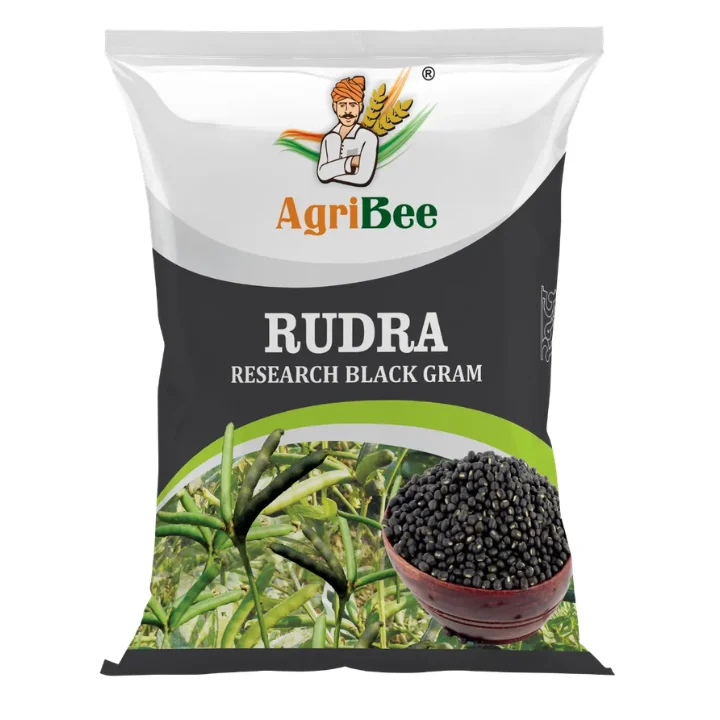
AgriBee Rudra Research Black Gram Seeds
AgriBee Rudra Research Black Gram Seeds
AgriBee Rudra Research Black Gram Seeds is an early-maturing black gram (urad) variety offered by AgriBee Seeds Private Limited. Rudra is developed for pulse cultivation and is known for its black grains, uniform pod development, good branching and high yield potential under suitable farming conditions. The variety reaches maturity in approximately 75–85 days, making it suitable for farmers planning relatively short-duration pulse cultivation.
According to AgriBee's official variety specifications, Rudra plants generally grow 30–40 cm tall, develop around 4–5 branches and reach 50% flowering approximately 42–45 days after sowing. The variety is promoted by the manufacturer for its adaptability and disease-resistance characteristics. Actual crop performance depends on climate, planting season, soil fertility, pest pressure and field management.
Product Details
| Brand | AgriBee |
|---|---|
| Variety Name | Rudra |
| Product Name | Research Black Gram Seeds |
| Crop | Black Gram / Urad |
| Botanical Name | Vigna mungo |
| Plant Height | 30–40 cm |
| Number of Branches | 4–5 |
| Days to 50% Flowering | 42–45 Days |
| Days to Maturity | 75–85 Days |
| 100-Seed Weight | Approximately 3.2 g |
| Seed Colour | Black |
| Growing Season | Kharif; Rabi where locally suitable |
| Manufacturer / Brand Company | AgriBee Seeds Private Limited |
Key Features and Benefits
- Early Maturing Variety: Reaches harvest maturity in approximately 75–85 days under suitable conditions.
- High Yield Potential: Selected for good productivity and grain development with proper crop management.
- Good Branching: Plants generally develop 4–5 branches, supporting pod-bearing growth.
- Black Grain Colour: Produces black seeds suitable for urad dal production and marketing.
- Uniform Pod Development: Manufacturer highlights uniform pod characteristics and market acceptance.
- Disease-Resistance Characteristics: Manufacturer promotes resistance to certain common black gram diseases; performance may vary with local disease pressure.
- Suitable for Pulse Cultivation: Useful in appropriate crop rotations and seasonal production programmes.
Recommended Growing Conditions
- Soil: Well-drained sandy loam to clay loam soil.
- Soil pH: Approximately 6.0–7.8.
- Kharif Sowing: Generally June to July, depending on monsoon arrival.
- Rabi Sowing: October to November in suitable regions with favourable temperatures and irrigation.
- Drainage: Avoid prolonged waterlogging, which can affect root growth and crop establishment.
Seed Rate and Sowing Method
| Rainfed Seed Rate | 40–50 kg per hectare, approximately 16–20 kg per acre |
|---|---|
| Irrigated Seed Rate | 25–30 kg per hectare, approximately 10–12 kg per acre |
| Row Spacing | Approximately 45 cm |
| Plant Spacing | Approximately 10 cm |
| Sowing Depth | Generally 3–5 cm, adjusted to soil conditions |
| Sowing Method | Line Sowing |
These are the manufacturer's detailed cultivation-guide seed rates. Adjust plant population and seed rate according to local agricultural recommendations, season and actual seed germination.
Field Preparation and Crop Management
- Prepare a fine, well-drained seedbed by ploughing and levelling the field.
- Use healthy seeds and follow the recommended seed treatment instructions on the packet.
- Where recommended, inoculate seeds with a suitable Rhizobium culture, following compatibility and treatment-sequence guidance.
- Sow at the appropriate seasonal window with sufficient soil moisture.
- Use soil test-based fertilizer management and avoid unnecessary nitrogen application.
- Control weeds during early crop establishment, especially within the first month.
- Maintain adequate moisture during flowering and pod formation without waterlogging.
- Monitor the crop regularly for sucking pests, pod borers and disease symptoms.
Flowering and Harvesting
Rudra generally reaches 50% flowering in approximately 42–45 days and maturity in 75–85 days. Actual timing varies with temperature, soil moisture and growing season.
Harvest when most pods have matured and turned dark brown to black. The manufacturer's detailed guidance mentions harvesting when approximately 70–80% of pods have reached maturity. Dry and thresh the harvested crop carefully to maintain grain quality.
Frequently Asked Questions
1. What is AgriBee Rudra?
AgriBee Rudra is a research black gram seed variety offered by AgriBee Seeds Private Limited for urad cultivation.
2. How many days does Rudra take to mature?
The manufacturer's stated maturity period is approximately 75–85 days.
3. What is the plant height of Rudra black gram?
Plants are generally 30–40 cm tall under suitable growing conditions.
4. When does Rudra begin flowering?
Approximately 50% flowering occurs within 42–45 days after sowing.
5. What is the recommended seed rate?
The manufacturer's detailed cultivation guide specifies 40–50 kg/hectare for rainfed conditions and 25–30 kg/hectare for irrigated conditions. Local recommendations should also be considered.
6. Can Rudra be cultivated during Kharif?
Yes. Kharif sowing is generally recommended during June–July, depending on regional monsoon conditions.
7. Is Rudra a guaranteed disease-free variety?
No. Although the manufacturer promotes disease-resistance characteristics, the crop still requires regular monitoring and appropriate pest and disease management.
8. Is Rudra a hybrid black gram seed?
The official Rudra product page identifies it as a research black gram variety but does not clearly confirm F1 hybrid status. It should not be labelled F1 Hybrid without further manufacturer confirmation.
Disclaimer: Product specifications and cultivation guidance are based on AgriBee Seeds' official Rudra variety information. Crop maturity, performance, yield and disease response depend on local growing conditions and management. Follow the original seed packet and regional agricultural recommendations before sowing.
Similar Products



Best Selling







Customer Reviews
Recent Reviews
No reviews yet.