

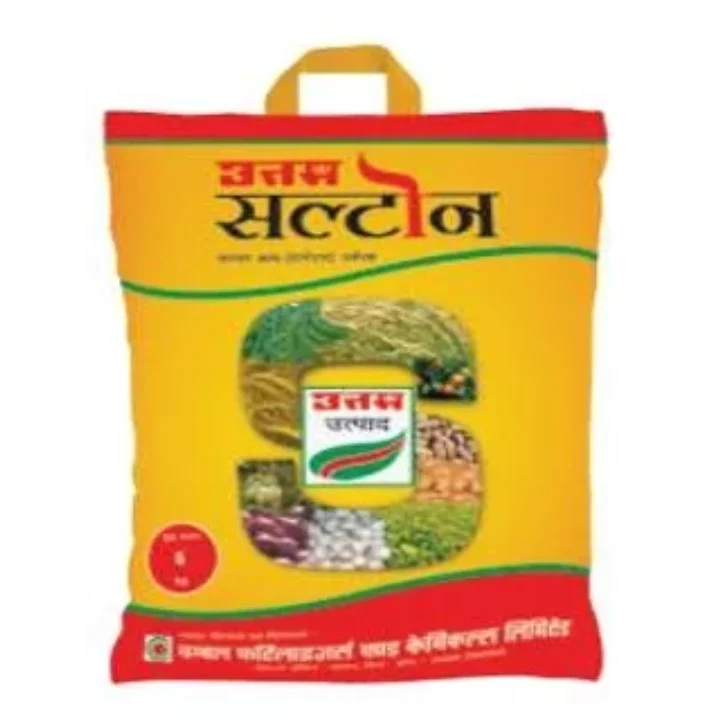
Chambal Uttam Sulton 90% Sulphur Granular Fertilizer
Chambal Uttam Sulton 90% Sulphur Granular Fertilizer
Chambal Uttam Sulton is a granular sulphur fertilizer containing 90% elemental sulphur, marketed by Chambal Fertilisers and Chemicals Limited. It provides an essential secondary plant nutrient that supports normal crop growth, protein formation, root development and oil synthesis in oilseed crops. Its granular formulation is designed for soil application, where sulphur becomes available gradually as soil microorganisms convert elemental sulphur into plant-available sulphate.
Product Details
| Brand | Chambal |
|---|---|
| Product Name | Uttam Sulton |
| Composition | Elemental Sulphur 90% |
| Formulation | Granular Fertilizer |
| Product Category | Sulphur Fertilizer |
| Nutrient Type | Secondary Macronutrient |
| Application Method | Soil Application |
| Field Crop Dosage | 8–10 kg per Acre |
| Citrus Tree Dosage | 500–600 g per Tree |
| Recommended Timing | Before Sowing / As Recommended |
| Company | Chambal Fertilisers and Chemicals Limited |
Key Features and Benefits
- 90% Elemental Sulphur: Provides concentrated sulphur nutrition for agricultural and horticultural crops.
- Gradual Nutrient Availability: Elemental sulphur is converted by soil microorganisms into sulphate, which plants can absorb.
- Supports Protein Formation: Sulphur is essential for sulphur-containing amino acids and proteins.
- Supports Oilseed Nutrition: Adequate sulphur plays an important role in oil formation and oilseed crop quality.
- Promotes Root Development: Balanced sulphur availability supports healthy crop development.
- Supports Chlorophyll Formation: Sulphur contributes indirectly to chlorophyll development and normal photosynthesis.
- Granular Soil Application: Designed for incorporation into the soil before sowing.
Why Is Sulphur Important for Crops?
Sulphur is an essential plant nutrient required for the formation of certain amino acids, proteins, enzymes and vitamins. It participates in several plant metabolic processes and supports healthy development.
In oilseed crops such as mustard, groundnut and soybean, adequate sulphur nutrition is important for oil synthesis and seed development. In cereals and pulses, it supports balanced growth and protein formation.
Symptoms of Sulphur Deficiency
- Yellowing of young leaves, particularly during early deficiency.
- Slow plant growth and reduced vigour.
- Restricted root and shoot development.
- Delayed flowering or poor reproductive development.
- Smaller grains or reduced seed quality under severe deficiency.
- Reduced oil and protein formation where sulphur nutrition is inadequate.
Sulphur deficiency can resemble nitrogen deficiency. However, sulphur deficiency usually appears first on younger leaves because sulphur is less mobile within plants. Soil or tissue testing can help confirm the deficiency.
Suitable Crops
- Oilseeds: Mustard, Groundnut, Soybean and Sunflower.
- Cereals: Wheat, Paddy, Maize and other cereal crops.
- Pulses: Chickpea, Pigeon Pea, Green Gram and Black Gram.
- Vegetables: Onion, Garlic, Potato and other vegetable crops.
- Fruit Crops: Kinnow, Sweet Lime, Malta, Lemon and other suitable fruit trees.
Application should depend on the crop's nutritional requirements and soil sulphur availability.
Recommended Dosage and Application
| Crop / Application | Dosage | Method |
|---|---|---|
| Field Crops | 8–10 kg per Acre | Mix with soil before sowing |
| Citrus Trees | 500–600 g per Tree | Mix with soil in the appropriate root zone |
How to Apply Uttam Sulton
1. Field Crop Soil Application
- Assess the crop's sulphur requirement and soil conditions.
- Measure 8–10 kg of Uttam Sulton per acre as recommended.
- Distribute the granules evenly across the field before sowing.
- Incorporate into the soil using appropriate cultivation equipment.
- Maintain adequate soil moisture to support microbial activity and nutrient transformation.
2. Citrus Tree Application
For Kinnow, Sweet Lime, Malta and Lemon, apply 500–600 g per tree according to the supplied manufacturer guidance. Mix the granules with soil in the suitable root zone, maintaining sufficient distance from the trunk and following local horticultural recommendations.
How Does Granular Sulphur Work?
Elemental sulphur does not become immediately available to plants in its original form. After soil application, sulphur-oxidising microorganisms gradually convert it into sulphate.
Plants absorb sulphate through their roots and use it to produce amino acids, proteins and other essential compounds. The conversion rate depends on soil moisture, temperature, aeration and microbial activity.
Because sulphur conversion takes time, soil incorporation before sowing is generally preferable to relying on elemental sulphur for rapid correction of severe deficiency.
Important Precautions
- Follow the recommended soil application dosage.
- Do not assume that granular sulphur is suitable for foliar spraying.
- Apply according to crop need and soil test results.
- Do not place concentrated granules directly against seeds, stems or tree trunks.
- Use gloves and eye protection while handling the product.
- Keep sulphur granules away from flames, sparks and excessive heat.
- Store in a cool, dry, ventilated place away from moisture, children, food and animal feed.
Frequently Asked Questions
1. What is Chambal Uttam Sulton?
Uttam Sulton is a granular fertilizer containing 90% elemental sulphur for soil application.
2. What is the dosage per acre?
The supplied Chambal product guidance recommends 8–10 kg per acre before sowing.
3. Is Uttam Sulton suitable for mustard?
Yes. Mustard is an oilseed crop that requires sulphur for normal growth and oil synthesis. Apply based on soil nutrient requirements.
4. Can Uttam Sulton be sprayed on leaves?
The supplied granular product guidance recommends soil application. Foliar spray recommendations have not been verified for this product.
5. What are the symptoms of sulphur deficiency?
Common symptoms include yellowing of young leaves, slow growth, delayed flowering and reduced crop vigour.
6. How much Sulton should be applied to citrus trees?
The supplied guidance recommends 500–600 g per tree for citrus crops such as Kinnow, Sweet Lime, Malta and Lemon.
Disclaimer: Product composition is verified against Chambal's official catalogue. Dosage is based on the supplied Chambal agricultural booklet. Follow the original product packaging and current manufacturer recommendations. Actual crop performance depends on nutrient requirements, soil conditions and agricultural management.
Similar Products





Best Selling




Customer Reviews
Recent Reviews
No reviews yet.