

Shatabdi Seeds Nageena F1 Hybrid Snake Gourd (Chichinda) Seeds
Shatabdi Seeds Nageena F1 Hybrid Snake Gourd Seeds
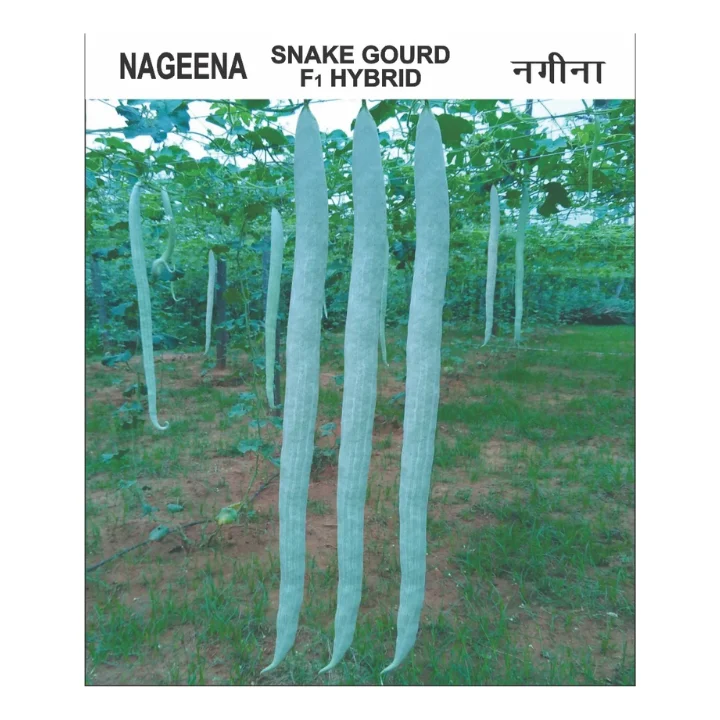
Shatabdi Seeds Nageena F1 Hybrid Snake Gourd is a hybrid vegetable seed variety intended for cultivating snake gourd, commonly known as Chichinda or Chichinga. The supplied variety image shows long, slender, pale-green fruits hanging from climbing vines supported by an overhead trellis. This fruit type is suitable for growers interested in producing elongated snake gourds for fresh vegetable markets and household consumption.
Snake gourd is a warm-season cucurbit vegetable grown in tropical and subtropical regions. Its climbing vines benefit from suitable support structures that allow developing fruits to hang freely. Proper crop spacing, irrigation, pollination and timely harvesting are important for maintaining fruit quality. Nageena F1 Hybrid can be cultivated using appropriate snake gourd production practices, with final sowing and crop management decisions guided by the original seed packet.
Product Details
| Brand | Shatabdi Seeds |
|---|---|
| Variety Name | Nageena |
| Crop | Snake Gourd (Chichinda) |
| Seed Type | F1 Hybrid |
| Botanical Name | Trichosanthes cucumerina |
| Fruit Appearance | Long, Slender and Pale Green |
| Fruit Growth | Hanging Fruits on Climbing Vines |
| Plant Growth Habit | Climbing Vine |
| Suitable Climate | Warm Tropical and Subtropical Conditions |
| Growing Method | Open-Field Cultivation with Suitable Support |
| Crop Use | Fresh Vegetable Production |
| Exact Fruit Length | Not Verified for Nageena |
| Seed Rate and Spacing | Follow Original Seed Packet |
| Maturity Period | Not Verified for Nageena |
Key Features and Benefits
- F1 Hybrid Variety: Nageena is identified on the supplied packaging artwork as an F1 hybrid snake gourd variety.
- Long Fruit Appearance: The variety image displays elongated, slender fruits with a pale-green exterior.
- Climbing Growth Habit: Snake gourd vines can be trained over trellises or suitable support structures.
- Suitable for Fresh Vegetables: Snake gourds are harvested while tender for cooking and fresh-market consumption.
- Trellis Cultivation: Supporting the vines can help keep developing fruits away from direct soil contact.
- Warm-Season Crop: Snake gourd grows best under suitable warm growing conditions.
Fruit Characteristics
The supplied Nageena variety image shows a distinctive elongated fruit type. The fruits are slender, pale green and hang vertically from the supporting trellis. Their smooth, extended appearance makes them visually different from shorter gourd varieties.
Actual fruit length, diameter, weight and colour may vary with temperature, plant nutrition, irrigation, growing conditions and harvesting stage. Exact commercial fruit specifications for Nageena should be confirmed from Shatabdi Seeds.
Climate and Soil Requirements
Climate: Snake gourd is a warm-season vegetable. Good growth generally occurs under warm temperatures with adequate sunlight and moisture. Frost and prolonged cold conditions may damage developing plants.
Soil: Fertile, well-drained soil with adequate organic matter is desirable. Avoid prolonged waterlogging around the roots.
Sunlight: Grow plants in a location receiving adequate direct sunlight for healthy vine development and flowering.
Sowing and Cultivation Method
- Select a well-drained field with adequate sunlight.
- Prepare the soil by loosening it and incorporating well-decomposed organic matter where required.
- Sow seeds at the depth and spacing recommended on the original seed packet.
- Maintain appropriate moisture during germination without allowing waterlogging.
- Provide suitable trellis or support structures as the climbing vines develop.
- Guide the vines carefully onto the support system and avoid damaging young stems.
- Follow balanced irrigation, fertilization and pest-management practices.
- Harvest fruits at the appropriate tender stage according to local market preference.
Importance of Trellis Cultivation
Snake gourd plants develop climbing vines that benefit from support. A properly constructed trellis provides space for vine growth and allows fruits to hang vertically.
Suspended fruits have less direct contact with soil, which can help reduce physical damage and improve access for inspection and harvesting. Trellis strength and crop spacing should be selected according to field conditions.
Irrigation and Nutrient Management
Maintain adequate soil moisture during germination, flowering and fruit development. Irregular irrigation can affect plant growth and fruit development, while excessive irrigation may create unsuitable root-zone conditions.
Apply organic manure and fertilizers based on soil testing and crop requirements. Balanced nitrogen, phosphorus and potassium nutrition supports vine growth and fruit production. Avoid excessive nitrogen application that may promote vegetative growth at the expense of reproductive development.
Flowering and Pollination
Snake gourd produces separate male and female flowers. Successful pollination is important for fruit setting and normal fruit development.
Protect beneficial pollinators and avoid unnecessary insecticide spraying during their active periods. Poor pollination, unsuitable weather and plant stress may contribute to irregular fruit setting.
Harvesting and Crop Care
- Inspect developing fruits regularly.
- Harvest fruits while tender according to market requirements.
- Use clean cutting tools and avoid pulling or damaging the vines.
- Remove damaged or diseased plant material as part of routine crop hygiene.
- Monitor leaves, flowers and fruits for pests and diseases.
- Follow locally recommended integrated pest-management practices.
Frequently Asked Questions
1. What is Shatabdi Nageena?
Shatabdi Nageena is an F1 hybrid snake gourd variety identified in the supplied product image.
2. Is Nageena a snake gourd or sponge gourd variety?
Nageena is identified as snake gourd (Chichinda). It should not be confused with the Shatabdi S-16 sponge gourd variety.
3. What type of fruits does Nageena produce?
The supplied variety image shows long, slender, pale-green snake gourds hanging from climbing vines.
4. Does snake gourd require a trellis?
A suitable trellis is beneficial for supporting climbing vines and allowing fruits to develop while hanging freely.
5. Which season is suitable for cultivation?
Snake gourd is a warm-season crop. Select the sowing period according to local temperature, rainfall and the original Nageena seed packet recommendations.
6. How many days does Nageena take for harvesting?
The exact Nageena-specific maturity period has not been verified. Refer to the original seed packet or Shatabdi Seeds for the confirmed number of days.
7. What is the seed rate per acre?
The exact seed rate for this variety has not been verified. Follow the manufacturer's recommendations for seed rate and plant spacing.
8. Can Nageena be grown for commercial vegetable production?
It may be considered for fresh-market snake gourd cultivation, subject to local demand, suitable growing conditions and verified variety characteristics.
Disclaimer: Variety identity and visible fruit characteristics are based on the supplied Nageena F1 Hybrid Snake Gourd image. General crop-management information follows standard snake gourd cultivation principles. Exact germination percentage, fruit length, yield, maturity period, seed rate, disease resistance and other variety-specific claims have not been independently verified. Follow the original Shatabdi Seeds packet for confirmed instructions.
Similar Products




Best Selling








Customer Reviews
Recent Reviews
No reviews yet.