

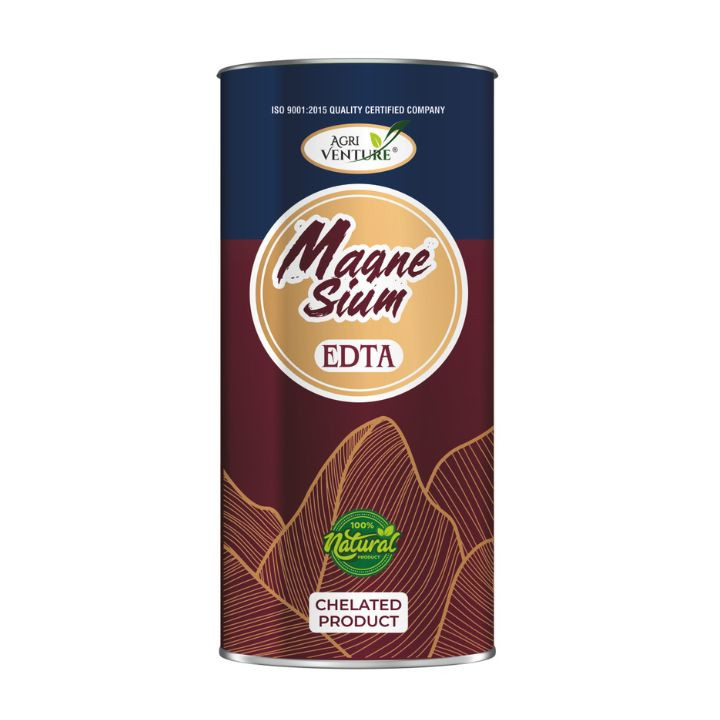
Agriventure Magnesium Edta Chelated Micronutrient Fertilizer
Highly Available Chelated Magnesium for Greener and Healthier Crops
AGRIVENTURE Magnesium EDTA is a premium water-soluble chelated micronutrient fertilizer specially formulated to correct magnesium deficiency quickly and efficiently. The EDTA chelation keeps magnesium available for immediate plant uptake, ensuring maximum nutrient utilization without getting locked in the soil.
Magnesium is the central element of chlorophyll and is essential for photosynthesis, enzyme activation, energy transfer and carbohydrate movement within plants. Regular application improves leaf greenness, crop vigor, flowering, fruit development and overall yield.
Product Specifications
| Product Name | AGRIVENTURE Magnesium EDTA |
|---|---|
| Technical Content | Magnesium EDTA (Chelated Magnesium) |
| Product Type | Chelated Micronutrient Fertilizer |
| Formulation | Water Soluble |
| Mode of Entry | Foliar & Root Absorption |
| Application Method | Foliar Spray, Fertigation, Drip Irrigation, Soil Drench |
| Recommended Dose | 1.5–1.7 g per litre of water or 25 g per 15 litres of water |
| Brand | AGRIVENTURE |
Key Features & Benefits
- Corrects magnesium deficiency rapidly.
- Promotes dark green leaves by improving chlorophyll formation.
- Enhances photosynthesis and energy production.
- Improves flowering, fruit development and grain filling.
- Supports efficient nitrogen and phosphorus utilization.
- Highly stable EDTA chelation prevents nutrient fixation.
- Works effectively across a wide soil pH range.
- Improves crop quality, yield and overall plant vigor.
- Suitable for foliar spray and fertigation.
Mode of Action
EDTA chelation protects magnesium from reacting with other minerals in the soil and irrigation water, allowing rapid absorption through roots and leaves. Magnesium becomes immediately available for chlorophyll production, enzyme activation, ATP energy transfer and carbohydrate movement, resulting in improved photosynthesis, stronger growth and higher productivity.
Suitable Crops
- Tomato
- Chilli
- Brinjal
- Potato
- Onion
- Spinach
- Lettuce
- Cabbage
- Cauliflower
- Rice
- Wheat
- Maize
- Sugarcane
- Cotton
- Banana
- Grapes
- Pomegranate
- Citrus
- All Fruits, Vegetables and Field Crops
Corrects Deficiency Symptoms
- Interveinal yellowing (chlorosis) on older leaves.
- Pale green foliage.
- Reduced chlorophyll production.
- Poor photosynthesis.
- Weak vegetative growth.
- Low flowering and fruit development.
- Reduced crop quality and yield.
Recommended Dose
Foliar Spray: 1.5–1.7 g per litre of water or 25 g per 15 litres of water.
Repeat the application according to crop requirement and deficiency symptoms.
Method of Application
- Foliar Spray
- Fertigation
- Drip Irrigation
- Soil Drench / Root Application
Best Time to Apply
- Vegetative growth stage.
- Before flowering.
- Flowering stage.
- Fruit development stage.
- Whenever magnesium deficiency symptoms are observed.
Compatibility
Compatible with most water-soluble fertilizers and crop protection products. Perform a jar compatibility test before preparing large spray solutions.
Why Choose AGRIVENTURE Magnesium EDTA?
- Fast correction of magnesium deficiency.
- Highly stable EDTA chelated formulation.
- Excellent foliar absorption.
- Improves chlorophyll production and photosynthesis.
- Enhances nutrient use efficiency.
- Suitable for all major crops.
Frequently Asked Questions (FAQs)
Q1. What is AGRIVENTURE Magnesium EDTA used for?
It is used to prevent and correct magnesium deficiency while improving chlorophyll formation, photosynthesis and overall crop growth.
Q2. What is the recommended dose?
Use 1.5–1.7 g per litre of water or 25 g per 15 litres of water for foliar application.
Q3. Which crops can use Magnesium EDTA?
It is suitable for vegetables, fruits, cereals, cotton, sugarcane and all major agricultural and horticultural crops.
Q4. Can it be applied through drip irrigation?
Yes. It can be applied through fertigation, drip irrigation, foliar spray and soil drenching.
Q5. What are the symptoms of magnesium deficiency?
The most common symptom is yellowing between the veins of older leaves (interveinal chlorosis), reduced chlorophyll, weak growth and lower crop productivity.
Similar Products
Best Selling

Customer Reviews
Recent Reviews
No reviews yet.