

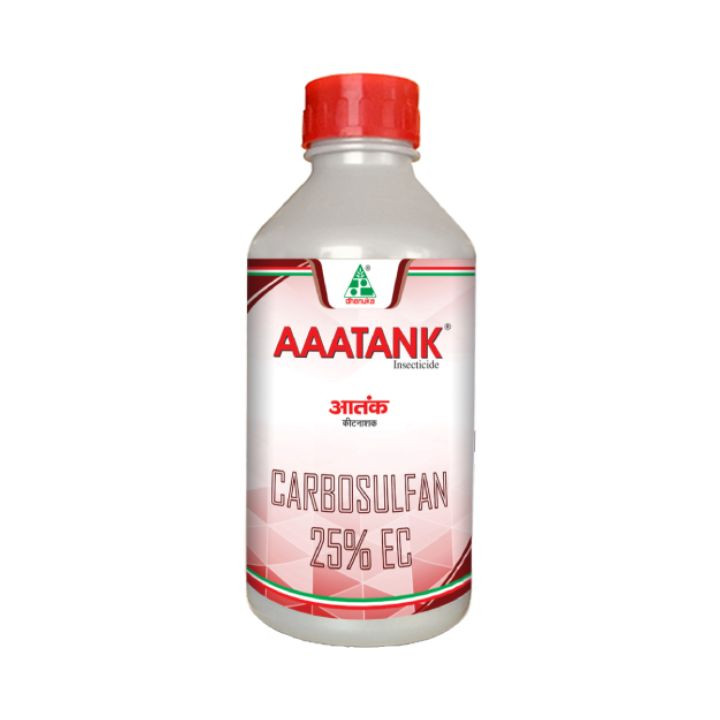
Dhanuka Aaatank Carbosulfan 25% EC Insecticide For Pest Management
Aaatank is an insecticide from Dhanuka formulated with carbosulfan 25% EC. It belongs to the carbamate group and is used for managing insect pests in crops when applied as per recommended agricultural practices.
The formulation works through systemic, contact, and stomach action, helping to reduce pest activity effectively. Dhanuka Aaatank is commonly included in crop protection programs for managing borers, hoppers, aphids, and other chewing and sucking pests.
Product Specifications
| Product Category | Insecticide |
| Insecticide Group | Carbamate Group |
| Active Ingredient | Carbosulfan 25% EC |
| Mode Of Action | Systemic, Contact And Stomach Action |
| Target Pests | Borers, Aphids, Hoppers, Leaf Feeders |
| Dosage | 2 ml Per Litre Of Water (Approximately 400 ml Per Acre) |
| Brand | Dhanuka |
Key Product Characteristics
- Broad spectrum carbamate insecticide
- Works through systemic, contact and stomach action
- Helps manage chewing and sucking insect pests
- Suitable for use in recommended crops only
- Fits well into planned pest management programs
Recommended Usage Practices
- Apply at the initial stage of pest infestation.
- Ensure uniform spray coverage on crop foliage.
- Use only the recommended dose and spray volume.
- Avoid spraying during windy or rainy conditions.
- Follow all safety instructions mentioned on the label.
Why Farmers Choose Dhanuka Aaatank
- Trusted insecticide from Dhanuka
- Effective against a wide range of crop pests
- Dual action helps improve pest control efficiency
- Easy to integrate into regular crop protection schedules
Frequently Asked Questions
- What Is Dhanuka Aaatank Used For?
It is used for managing chewing and sucking insect pests in crops. - Is It A Systemic Insecticide?
Yes, it has systemic action along with contact and stomach action. - Can It Be Used In All Crops?
It should be used only in crops recommended on the product label. - Is Safety Important During Application?
Yes, proper safety precautions must always be followed.
The details provided are for informational guidance only. Always follow the instructions mentioned on the product label and recommended agronomic practices suitable for your local growing conditions.
Similar Products

Best Selling

Customer Reviews
Recent Reviews
Product reached within the expected time.
Delivery fast thi.
Ye product KisanShop se kharid ke khush hoon.
Is item se khush hoon, aage chal ke phir order karne ka plan hai.