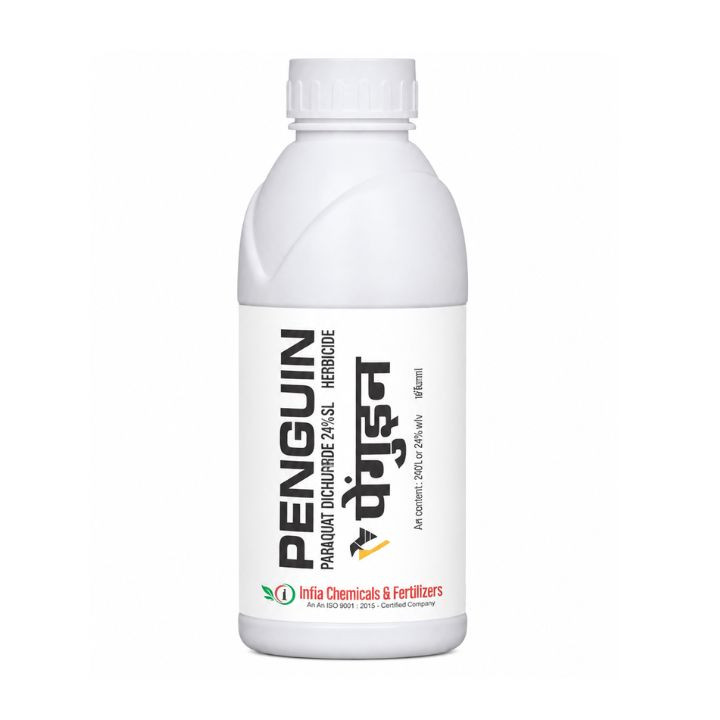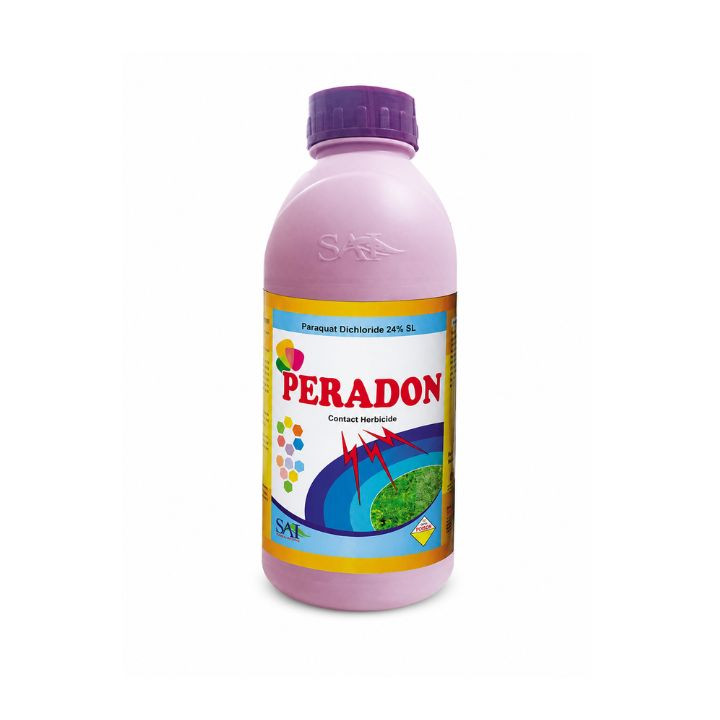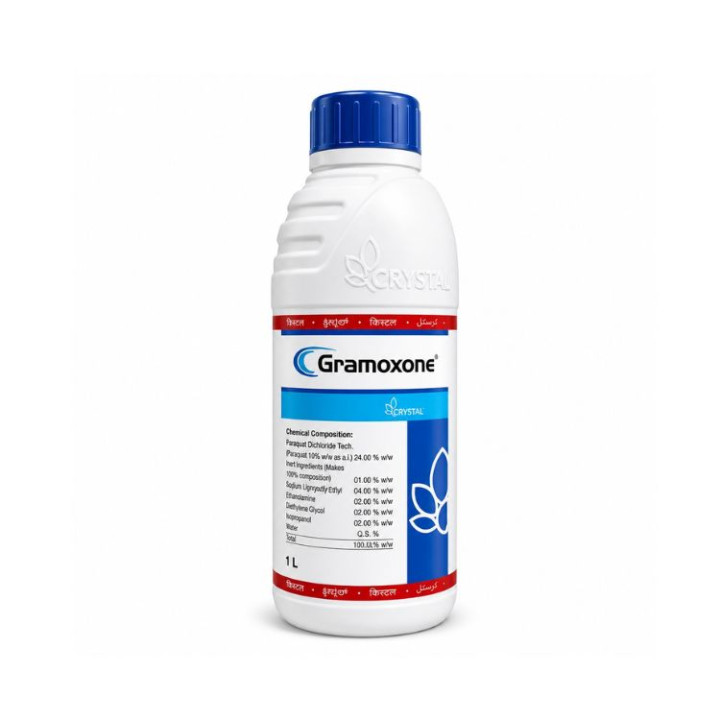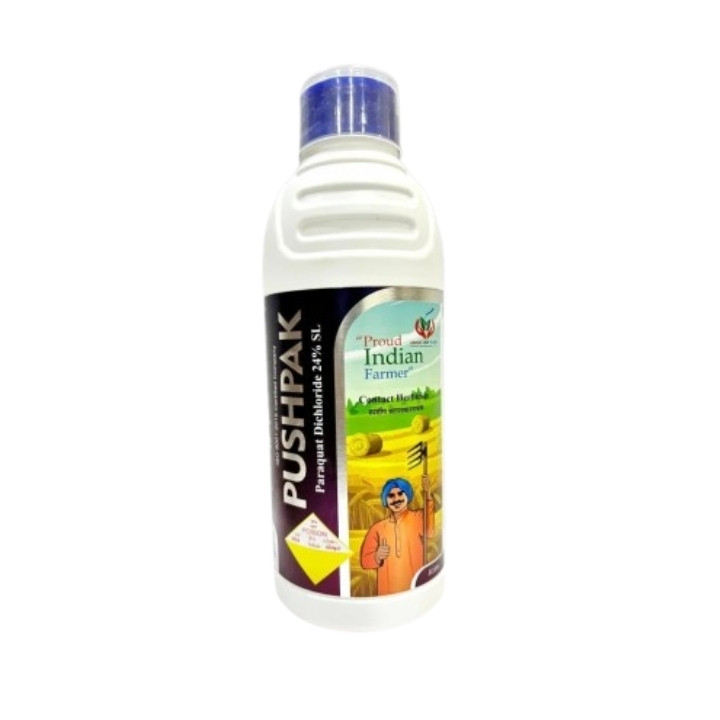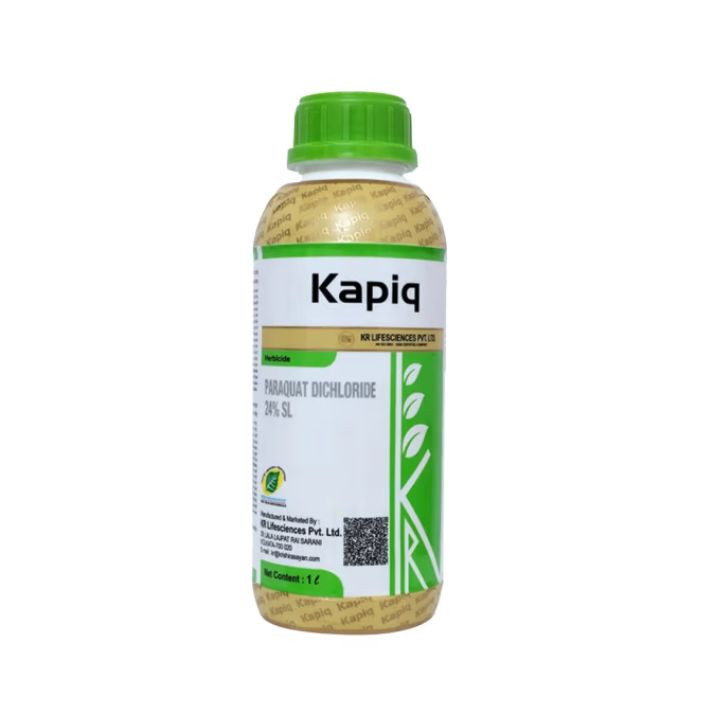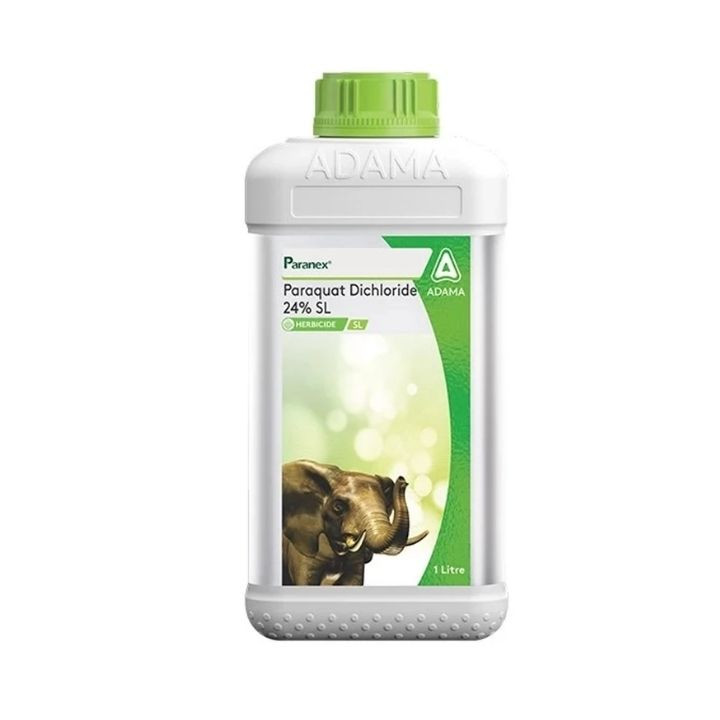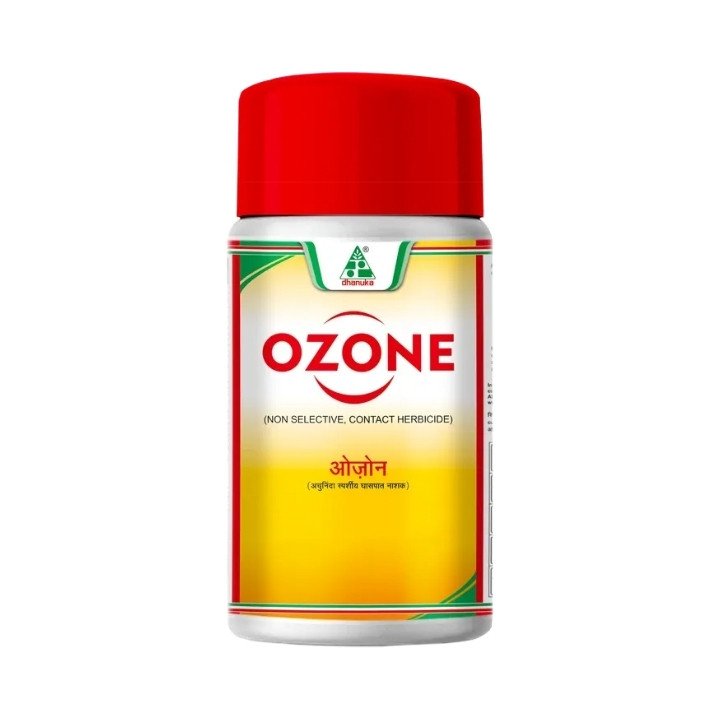

Dhanuka Ozone is a fast-acting, non-selective contact herbicide containing Paraquat Dichloride 24% SL. It belongs to the bipyridylium group of herbicides and is designed for rapid control of susceptible green weeds through foliar contact.
Ozone is absorbed by the green foliage of weeds and acts in the presence of light. It rapidly damages contacted green tissues, causing desiccation and drying. Because it is a contact herbicide, only the plant parts directly contacted by the spray are affected.
Dhanuka recommends Ozone for directed weed management in crops and situations such as tea, potato, cotton, rubber, coffee, rice, wheat, maize, grapes and apple, subject to the current registered label and applicable regulations.
| Brand | Dhanuka |
| Product Name | Ozone |
| Technical Name | Paraquat Dichloride 24% SL |
| Product Category | Chemical Herbicide / Weedicide |
| Herbicide Type | Non-Selective Herbicide |
| Mode of Entry | Foliar Contact |
| Mode of Action | Fast-Acting Contact Herbicide |
| Chemical Group | Bipyridylium |
| HRAC/WSSA Group | Group 22 |
| Formulation | SL – Soluble Liquid |
| Activity | Light Activated |
| Action on Soil | Becomes biologically inactive after binding to soil |
| Application | Directed Foliar / Inter-Row Spray as per label |
| Pack Sizes | 500 ml, 1 Litre and 5 Litres |
| Manufacturer / Marketer | Dhanuka Agritech Limited |
Paraquat is absorbed through the foliage of susceptible weeds. In the presence of light, it diverts electrons associated with photosynthesis and generates highly reactive oxygen species inside plant cells.
These reactive molecules rapidly damage cell membranes and other cellular structures, resulting in leakage, tissue collapse and rapid drying of contacted green vegetation.
Because Ozone is a contact rather than systemic herbicide, good spray coverage of the target weed foliage is important. It does not move extensively through the entire weed plant.
Dhanuka Ozone is used against a broad range of susceptible weeds, including:
| Crop / Situation | Target Weeds | Dhanuka Listed Dose / Acre | Water / Acre |
|---|---|---|---|
| Tea Directed inter-row application at 2–3 leaf stage of weeds |
Imperata, Setaria spp., Commelina benghalensis, Boerhavia hispida, Paspalum conjugatum | 320–1700 ml | 80–160 L |
| Potato Inter-row application at 5–10% crop emergence |
Chenopodium spp., Anagallis arvensis, Trianthema monogyna, Cyperus rotundus, Fumaria parviflora | 800 ml | 200 L |
| Cotton Directed inter-row application at 2–3 leaf stage of weeds |
Digera arvensis, Cyperus iria, Trianthema monogyna, Corchorus spp., Leucas aspera, Euphorbia spp. | 500–800 ml | 200 L |
| Rubber Directed inter-row application at 2–3 leaf stage |
Digitaria spp., Eragrostis spp., Fimbristylis spp. | 600–1000 ml | 240 L |
| Coffee | Digitaria marginata, Paspalum conjugatum, Ageratum spp., Boerhavia hispida, Commelina benghalensis, Euphorbia hirta, Eleusine indica | 400 ml | 160 L |
| Rice Before sowing/transplanting to control standing weeds |
Echinochloa crus-galli, Cyperus iria, Ageratum spp., Commelina benghalensis, Marsilea quadrifoliata, Brachiaria mutica | 500–1400 ml | 200 L |
| Wheat Pre-plant minimum tillage before sowing |
Grassy and broadleaf weeds | 1700 ml | 200 L |
| Maize Directed inter-row application at 2–3 leaf stage of weeds |
Cyperus iria, Cyperus rotundus, Commelina benghalensis, Amaranthus spp., Echinochloa spp., Trianthema monogyna | 320–800 ml | 200 L |
| Grapes Directed inter-row application at 2–3 leaf stage of weeds |
Cyperus rotundus, Cynodon dactylon, Convolvulus spp., Portulaca spp., Tridax spp. | 800 ml | 200 L |
| Apple Directed inter-row application at 2–3 leaf stage of weeds |
Rosa moschata, Rosa eglantaria, Rubus ellipticus | 1300 ml | 280–400 L |
Dosage Note: Dhanuka's online page currently displays more than one crop-dose table and some values differ between them. Always treat the latest registered label printed on the original Ozone container or leaflet as the final authority for crop, weed, dose, water volume and timing.
Dhanuka Ozone should be used only as a directed spray where the registered label permits its use.
Ozone is non-selective. Any green crop tissue contacted by the spray may be injured. When used as a directed inter-row herbicide, the spray should be kept away from green leaves, young shoots and tender green stems of the crop.
Dhanuka states that properly directed application does not affect brown, mature tree stems and bark; however, contact with green or immature plant tissue must be avoided.
For several of its registered crop uses, Dhanuka recommends application when weeds are young, particularly around the 2–3 leaf stage. Younger actively growing weeds generally provide better exposed green surface for contact action.
Paraquat belongs to HRAC/WSSA Group 22. Repeated reliance on any single herbicide mode of action can select for resistant weed populations.
For sustainable weed management, combine suitable herbicides with non-chemical practices such as:
Paraquat Dichloride is acutely toxic and must be handled with extreme care. Never transfer Ozone into beverage bottles, food containers or unlabelled containers.
Paraquat poisoning is a medical emergency. The Government of India's 2026 regulatory review specifically cited serious adverse health effects, fatal poisoning incidents and the absence of a specific antidote.
If accidental swallowing, significant skin/eye exposure or other suspected poisoning occurs, obtain emergency medical attention immediately and take the original product label/container information with the patient where it is safe to do so.
Dhanuka Ozone is a non-selective contact herbicide containing Paraquat Dichloride 24% SL.
Ozone contains Paraquat Dichloride 24% SL.
Ozone is a non-selective herbicide. It can damage susceptible green vegetation contacted by the spray.
Ozone is primarily a contact herbicide. It acts mainly on the green plant tissues directly contacted by the spray.
Dhanuka states that Ozone provides rapid action and can control susceptible weeds within approximately 48 hours under suitable conditions.
No. Dhanuka states that Paraquat becomes biologically inactive after contact with soil. Ozone is primarily intended to act through contacted green weed foliage.
Because it is non-selective, it should not be sprayed over green crop foliage. In registered standing crops, use only the directed inter-row application specified on the current label.
Dhanuka currently lists applications involving tea, potato, cotton, rubber, coffee, rice, wheat, maize, grapes and apple, subject to crop-specific application directions.
The dose varies significantly by crop and weed situation. Dhanuka lists rates ranging from a few hundred millilitres to more than one litre per acre depending on the registered use. Always follow the exact crop-specific rate on the current container label.
SL means Soluble Liquid formulation.
Paraquat belongs to HRAC/WSSA Group 22.
No. Paraquat is acutely toxic. Always use the personal protective equipment and handling precautions specified on the current product label.
In July 2026, the Government of India published a draft order proposing a nationwide ban on Paraquat Dichloride. The draft states that prohibition takes effect upon final publication of the order in the Official Gazette. The current regulatory status should therefore be verified before sale, purchase or use.
The Government of India published the Draft Banning of Paraquat Dichloride Order, 2026 proposing prohibition of manufacture, import, transport, distribution, sale and use of Paraquat Dichloride. Dealers, farmers and other users should verify the latest Central and State regulatory status before stocking, selling, purchasing or applying this product.
The information above is intended for product identification and agricultural awareness purposes. Always follow the latest registered Dhanuka Ozone label and leaflet regarding approved crops, target weeds, dose, water volume, application timing, personal protective equipment, storage, disposal and emergency precautions. Regulatory status can change; verify applicable Central and State rules before sale or use.
No reviews yet.