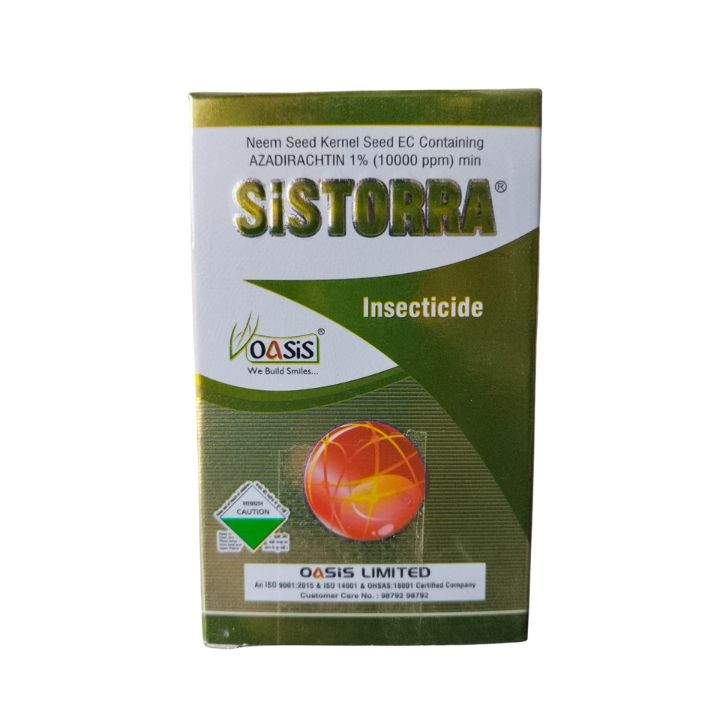
Oasis limited sistora azadirachtin 1% – neem based botanical insecticide
sistora is a botanical insecticide from oasis limited containing azadirachtin 1% (10000 ppm). It is derived from neem and is used as part of integrated pest management programs to help manage insect pest populations.
The product works through multiple modes such as feeding deterrence and growth regulation of insects. oasis limited sistora can be used on various crops as per recommended agricultural practices and is suitable for routine pest management programs.
Product specifications
| Product category |
Insecticide |
| Type |
Botanical (neem based) |
| Active ingredient |
Azadirachtin 1% (10000 ppm) |
| Formulation |
Liquid formulation |
| Brand |
Oasis limited |
Key product characteristics
- Neem based botanical insecticide
- Contains azadirachtin 1% (10000 ppm)
- Helps manage sucking and chewing insect pests
- Supports integrated pest management practices
- Suitable for use on multiple crops as recommended
Recommended usage practices
- Apply at early stages of pest incidence.
- Ensure thorough spray coverage on crop foliage.
- Repeat application as per pest pressure and guidance.
- Avoid spraying during extreme weather conditions.
- Always follow label instructions and agronomic advice.
Why farmers choose oasis limited sistora
- Neem based solution for pest management
- Fits well into IPM and organic-friendly programs
- Easy to integrate with regular spray schedules
- Trusted botanical insecticide formulation
Frequently asked questions
- What is sistora used for?
It is used for managing insect pests as part of botanical pest control programs.
- Is sistora a chemical insecticide?
No, it is a neem based botanical insecticide.
- Can it be mixed with other products?
Tank mixing should be done only after checking compatibility.
- Is it suitable for multiple crops?
Yes, it can be used on various crops as per label recommendation.
The details provided are for informational guidance only. Always follow the instructions mentioned on the product label and recommended agronomic practices suitable for your local growing conditions.