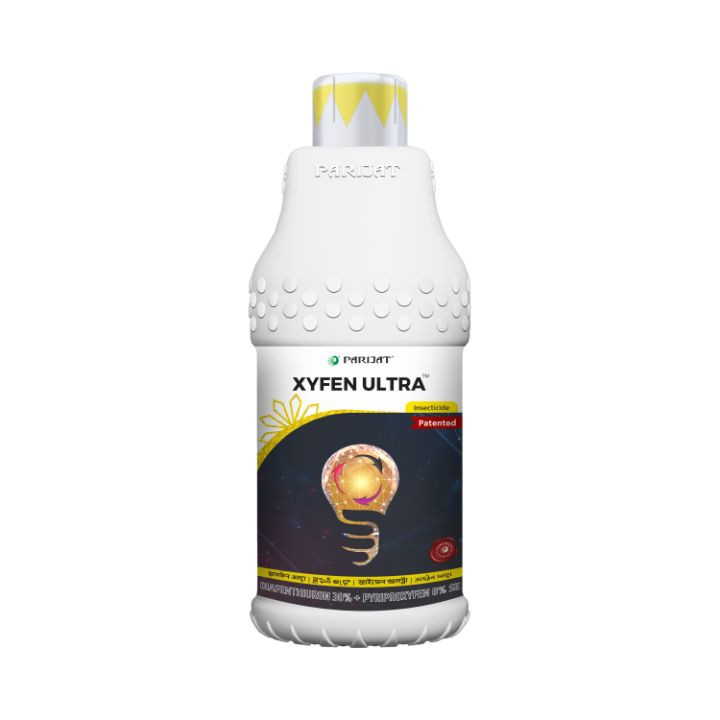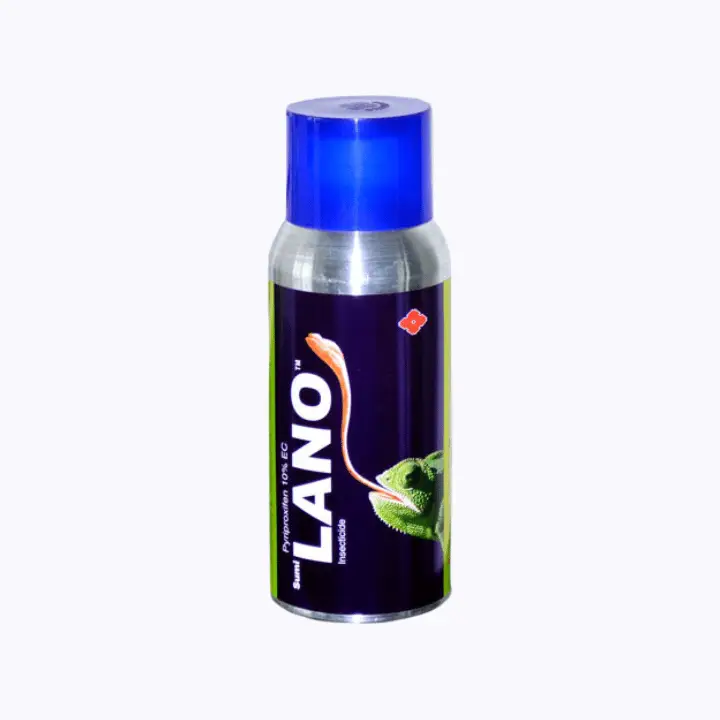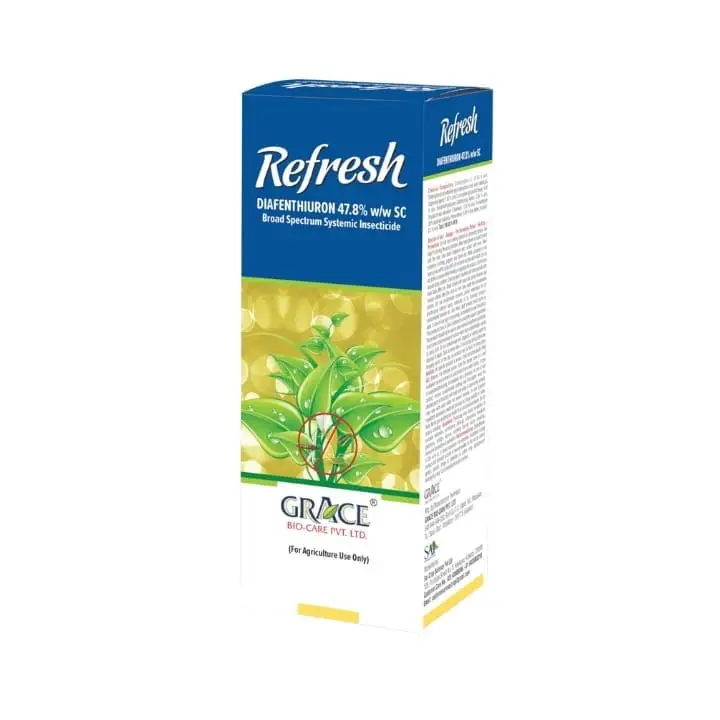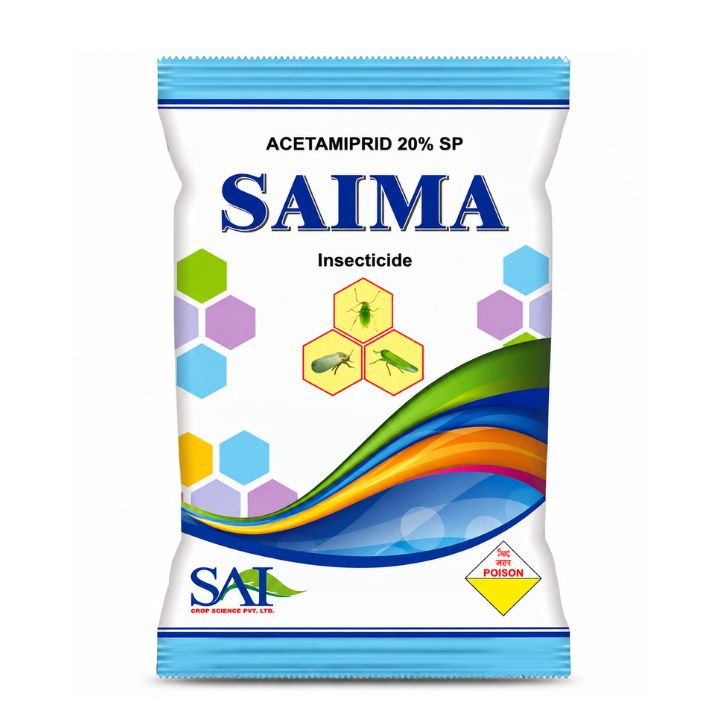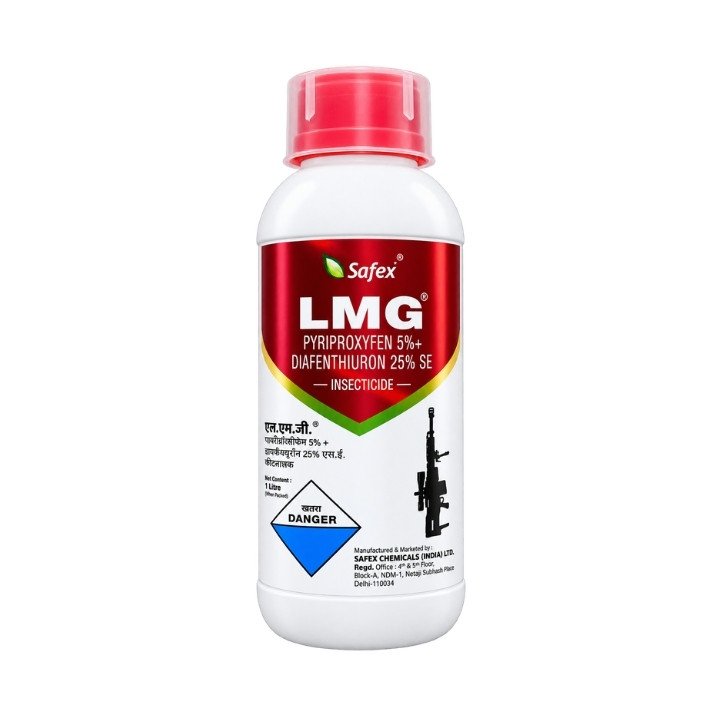
Safex LMG is a dual-action insecticide containing Pyriproxyfen 5% and Diafenthiuron 25% in a suspo-emulsion formulation. It is registered for controlling whiteflies, thrips, jassids and aphids in cotton.
The combination targets different pest-development stages through two distinct modes of action. Diafenthiuron disrupts mitochondrial energy production in susceptible nymphs and adults, while Pyriproxyfen interferes with insect growth, development and reproduction.
By combining adult and nymph activity with insect-growth regulation, Safex LMG supports immediate reduction of active pest populations and suppression of the next generation when applied according to the label.
| Specification | Details |
|---|---|
| Product Name | Safex LMG |
| Brand | Safex |
| Manufacturer and Marketer | Safex Chemicals (India) Limited |
| Technical Name | Pyriproxyfen 5% + Diafenthiuron 25% SE |
| Active Ingredients | Pyriproxyfen 5% and Diafenthiuron 25% |
| Formulation | SE – Suspo-Emulsion |
| Product Category | Insecticide |
| Recommended Crop | Cotton |
| Target Pests | Whitefly, thrips, jassid and aphid |
| Recommended Dose | 1000–1250 ml per hectare |
| Approximate Dose per Acre | 405–506 ml |
| Water Volume | 500 litres per hectare, approximately 202 litres per acre |
| Pre-Harvest Interval | 35 days |
| Pack Size Shown | 1 litre |
| Active Ingredient | Mode of Action | Primary Activity |
|---|---|---|
| Diafenthiuron 25% | Inhibits mitochondrial ATP synthesis and disrupts pest energy production | Acts mainly against susceptible nymphs and adults through contact and stomach activity |
| Pyriproxyfen 5% | Juvenile-hormone mimic that disrupts normal insect growth and development | Affects eggs and immature stages and reduces successful adult emergence and reproduction |
Diafenthiuron belongs to the thiourea group and functions as a pro-insecticide. After activation, it interferes with mitochondrial ATP synthesis, disrupting the energy supply required for normal movement, feeding and survival.
It provides contact and stomach activity against susceptible nymphs and adults. Good coverage of the crop canopy, including lower leaf surfaces, is important for satisfactory control.
Pyriproxyfen is an insect growth regulator that mimics juvenile hormone. It interferes with egg development, moulting, adult emergence and reproductive processes in susceptible insects.
Because Pyriproxyfen primarily disrupts development rather than providing immediate adult knockdown, its full population-suppression effect may become more apparent over time.
| Crop | Target Pests | Dose per Hectare | Approximate Dose per Acre | Water Volume per Acre |
|---|---|---|---|---|
| Cotton | Whitefly (Bemisia tabaci), thrips (Thrips tabaci), jassid (Amrasca biguttula biguttula) and aphid (Aphis gossypii) | 1000–1250 ml | Approximately 405–506 ml | Approximately 202 litres |
Registered-use warning: The available registered recommendation is for cotton. Do not advertise or apply Safex LMG on another crop unless that crop appears on the current product label.
| Product Quantity | Approximate Area at 405 ml/Acre | Approximate Area at 506 ml/Acre |
|---|---|---|
| 250 ml | 0.62 acre | 0.49 acre |
| 500 ml | 1.23 acres | 0.99 acre |
| 1 litre | 2.47 acres | 1.98 acres |
Coverage note: These are mathematical calculations based on the registered dose range. Select the actual dose strictly according to the current label and qualified agricultural guidance.
If approximately 202 litres of water are used per acre, the crop-wise dose corresponds to roughly 2–2.5 ml of Safex LMG per litre of water.
| Water Volume | Quantity at Approximately 2 ml/L | Quantity at Approximately 2.5 ml/L |
|---|---|---|
| 1 litre | 2 ml | 2.5 ml |
| 10 litres | 20 ml | 25 ml |
| 15 litres | 30 ml | 37.5 ml |
| 16 litres | 32 ml | 40 ml |
| 20 litres | 40 ml | 50 ml |
Calculation warning: Per-pump quantities are approximate. The complete registered product dose must be distributed uniformly over exactly one acre using the label-specified total water volume.
Inspect the cotton crop regularly and apply Safex LMG when label-listed sucking pests reach the locally recommended economic threshold. Early application against developing whitefly and other sucking-pest populations generally provides better management than treatment after a severe outbreak.
Examine the upper and lower surfaces of leaves because whitefly nymphs and eggs are commonly found on the underside. Consider pest life stages, beneficial-insect activity and local agricultural advice before spraying.
Repeated use of insecticides with the same biochemical action can select resistant pest populations. Although LMG contains two active ingredients, it should not be used repeatedly without rotation.
Prepare a tank mixture only when the labels of all intended products permit the combination. Conduct a small jar test before mixing Safex LMG with an unfamiliar insecticide, fungicide, fertilizer or adjuvant.
Do not prepare a full tank mixture if the jar test produces separation, precipitation, excessive foam or heat. Obtain expert advice where compatibility is uncertain.
If exposure occurs, move the affected person away from the source and follow the first-aid directions printed on the product label. If the product is swallowed, inhaled or enters the eyes, seek medical attention promptly and carry the container or label.
No specific antidote is generally stated for this formulation; treatment is symptomatic and supportive under medical supervision.
It contains Pyriproxyfen 5% + Diafenthiuron 25% SE.
The available registered recommendation is for cotton.
It is registered against whitefly, thrips, jassid and aphid.
The registered dose of 1000–1250 ml per hectare is approximately 405–506 ml per acre.
The registered water volume of 500 litres per hectare is approximately 202 litres per acre.
At the registered dose range, one litre is mathematically sufficient for approximately 1.98–2.47 acres.
The stated pre-harvest interval is 35 days.
Pyriproxyfen affects eggs and immature developmental stages and helps prevent successful adult emergence and reproduction.
Diafenthiuron acts against susceptible active stages, while Pyriproxyfen provides population suppression through growth regulation. Field response depends on pest stage, coverage and infestation level.
Vegetables are not included in the available registered recommendation. Do not apply it to another crop unless that crop is printed on the current pack label.
No. Diafenthiuron is a pro-insecticide converted into an active insecticidal metabolite. It should not be represented as a source of urea nutrition.
Disclaimer: The information provided is for general guidance only. Always adhere to the registered crop, target pests, dose, water volume, pre-harvest interval, protective equipment and application directions printed on the current product label and accompanying leaflet.
No reviews yet.