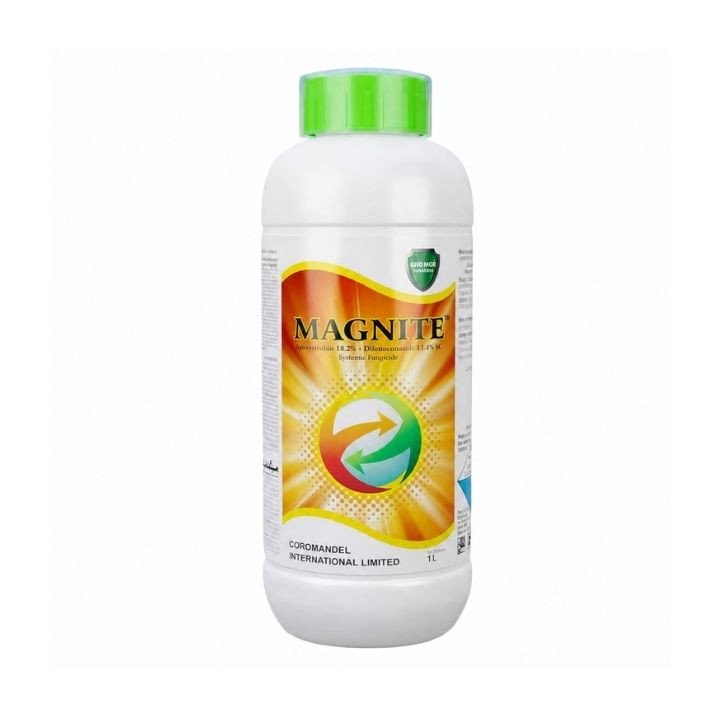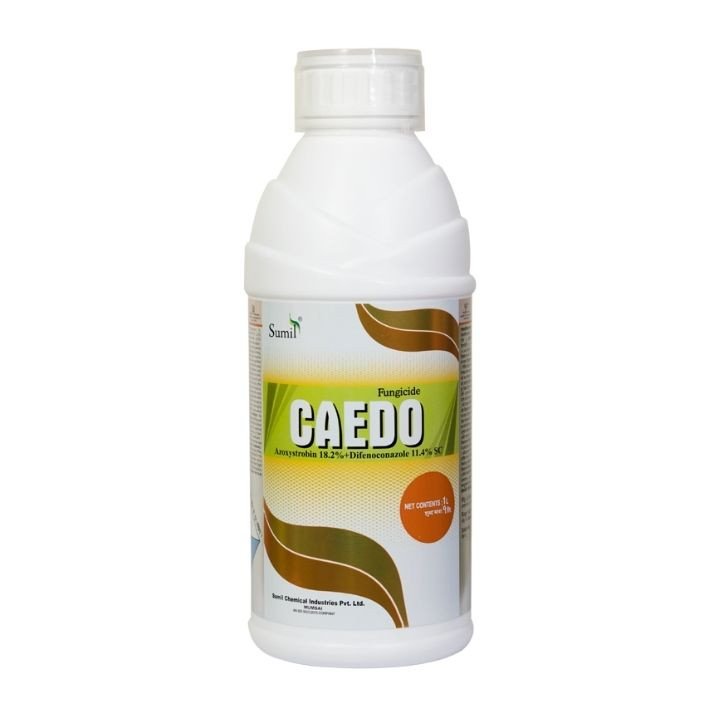

Sumil Chemicals Caedo Fungicide is a broad-spectrum combination fungicide containing Azoxystrobin 18.2% + Difenoconazole 11.4% SC. The combination brings together two established fungicidal modes of action to help manage a wide range of fungal diseases affecting agricultural and horticultural crops.
Azoxystrobin provides preventive activity by interfering with fungal respiration, while Difenoconazole provides systemic and curative activity by inhibiting sterol production required for fungal growth. Together, they provide broad-spectrum protection against several leaf, stem, fruit and other crop diseases when used according to label recommendations.
| Product Name | Caedo |
|---|---|
| Brand | Sumil Chemicals |
| Product Type | Broad-Spectrum Fungicide |
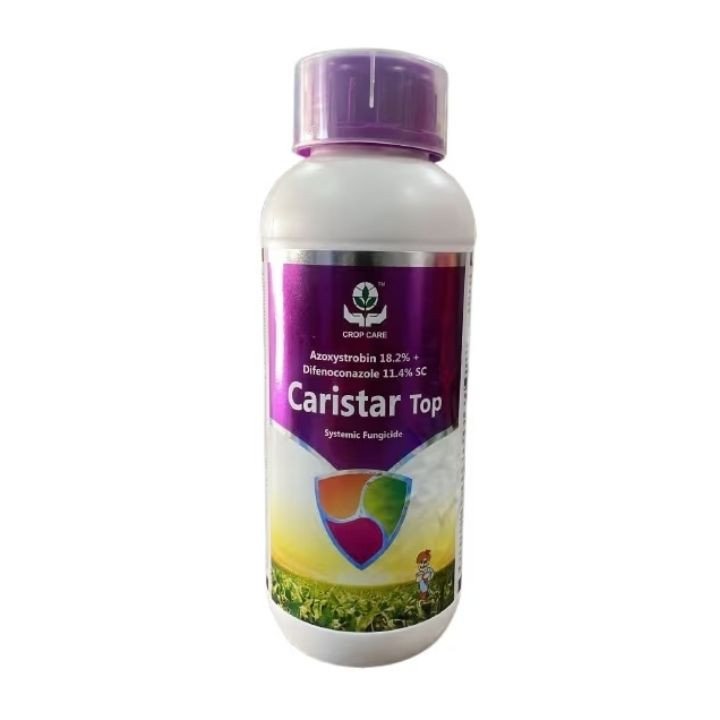
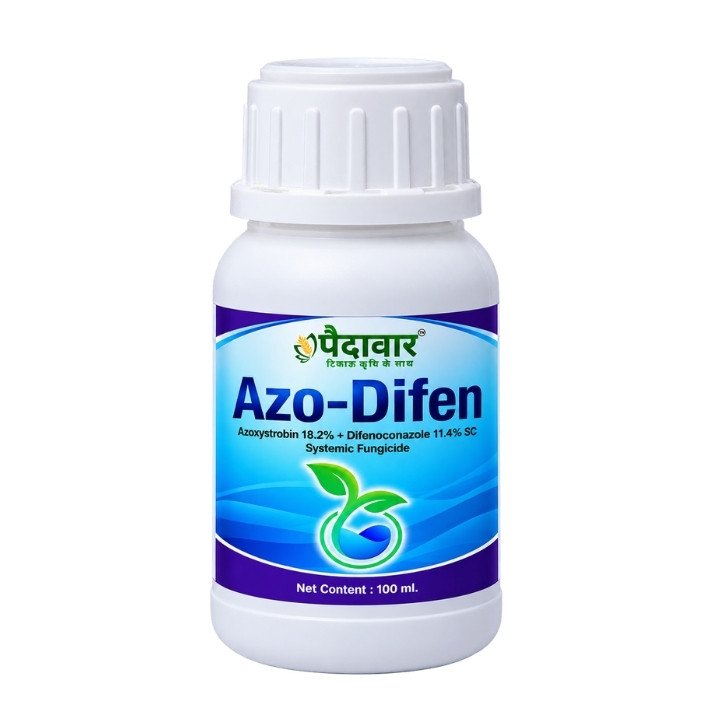
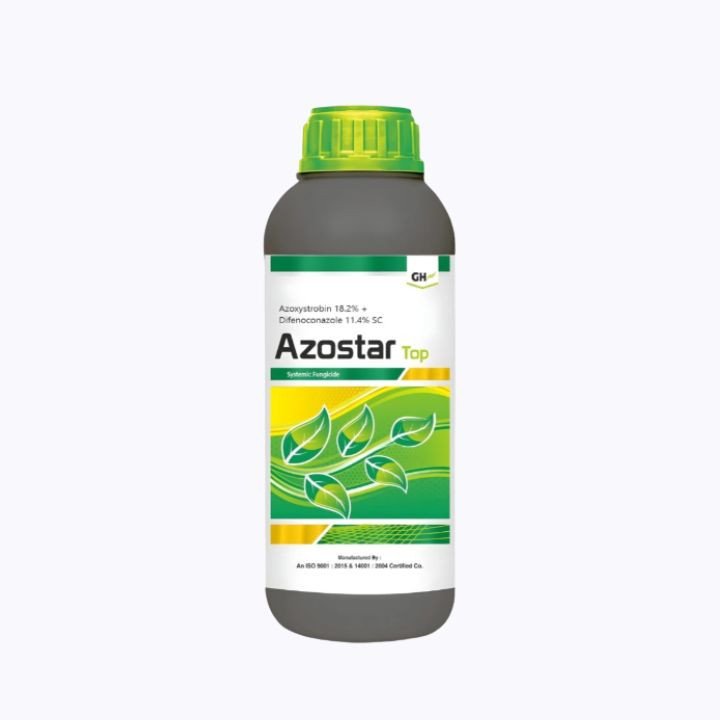
| Technical Composition | Azoxystrobin 18.2% + Difenoconazole 11.4% SC |
| Formulation | Suspension Concentrate (SC) |
| Mode of Action | Systemic, Preventive & Curative |
| Application Method | Foliar Spray |
| Fungicide Groups | QoI / Strobilurin + DMI / Triazole |
| FRAC Groups | 11 + 3 |
| Active Ingredient | Concentration | Primary Activity |
|---|---|---|
| Azoxystrobin | 18.2% | Preventive, systemic and translaminar fungicidal activity |
| Difenoconazole | 11.4% | Systemic and curative fungicidal activity |
| Formulation | Suspension Concentrate (SC) | |
| Crop | Target Diseases |
|---|---|
| Chilli | Anthracnose and Powdery Mildew |
| Tomato | Early Blight and Late Blight |
| Paddy / Rice | Blast and Sheath Blight |
| Maize | Blight and Downy Mildew |
| Wheat | Rust and Powdery Mildew |
| Cotton | Leaf Spot and Grey Mildew |
| Turmeric | Leaf Blotch, Leaf Spot and Rhizome Rot |
| Onion | Purple Blotch, Stemphylium Blight and Downy Mildew |
| Sugarcane | Red Rot, Smut and Rust |
The crop and disease recommendations above correspond to the registered Indian uses of the same technical formulation. Always use the current Caedo product label as the final authority for crop-specific application.
The registered-use reference for Azoxystrobin 18.2% + Difenoconazole 11.4% SC generally specifies a formulation concentration of approximately 0.1%, equivalent to about 1 ml per litre of water, for the listed crops.
| Application | Reference Recommendation |
|---|---|
| General Foliar Spray | Approximately 1 ml per litre of water |
| Typical Spray Water | Approximately 500 litres per hectare for most registered crops |
| Sugarcane Reference | Approximately 400 litres of water per hectare |
Actual spray volume can vary with crop canopy, spraying equipment and label directions. Always follow the current Sumil Chemicals Caedo label before application.
Azoxystrobin belongs to the strobilurin or QoI fungicide group. It inhibits fungal mitochondrial respiration by acting at the Qo site of the cytochrome bc1 complex. This interferes with energy production required for fungal spore germination and growth.
Difenoconazole belongs to the triazole or DMI fungicide group. It inhibits sterol biosynthesis in susceptible fungi, disrupting normal fungal cell membrane formation and limiting fungal growth.
The combination provides both preventive and curative activity through two complementary fungicidal mechanisms.
The same technical formulation is registered for management of anthracnose and powdery mildew in chilli. Anthracnose can damage fruits and other plant tissues, while powdery mildew affects foliage and may reduce healthy photosynthetic area.
Apply according to the current Caedo label at the earliest stages of disease development or preventively when conditions favour infection.
The formulation is registered against early blight and late blight in tomato. Both diseases can cause significant foliage damage and may affect fruit production where disease pressure is severe.
Timely preventive or early-stage application is important for protecting healthy plant tissues.
Azoxystrobin 18.2% + Difenoconazole 11.4% SC is registered against blast and sheath blight in paddy. These diseases can affect leaves, tillers, sheaths and reproductive crop development.
Correct disease identification, appropriate timing and uniform spray coverage are important for effective management.
The same technical formulation is registered against blight and downy mildew in maize. Disease management should begin preventively or when early symptoms are observed according to label directions.
Registered uses include management of rust and powdery mildew in wheat. These fungal diseases can reduce healthy leaf area and interfere with normal crop development when severe.
The same formulation is registered for leaf spot and grey mildew in cotton. Foliar applications should provide uniform coverage of the crop canopy according to current label recommendations.
Registered target diseases in onion include purple blotch, Stemphylium blight and downy mildew. These diseases can affect foliage and reduce crop performance under favourable environmental conditions.
The formulation is registered for management of leaf blotch, leaf spot and rhizome rot in turmeric. Disease monitoring and timely treatment are important, particularly where humid conditions favour fungal development.
Registered uses of the same technical formulation include red rot, smut and rust in sugarcane. Follow crop-specific application instructions because disease-management techniques can differ according to the target pathogen.
The registered formulation guidance recommends the first application preventively or at disease initiation. Where a second treatment is required, it may be applied approximately 10–15 days later depending on disease pressure and label recommendations.
The registered same-technical reference limits applications to a maximum of two per crop season. The current Caedo label should always take precedence.
| Crop | Same-Technical Registered Waiting Period |
|---|---|
| Chilli | 5 Days |
| Tomato | 5 Days |
| Onion | 7 Days |
| Cotton | 12 Days |
| Maize | 26 Days |
| Paddy | 31 Days |
| Wheat | 35 Days |
| Turmeric | 60 Days |
| Sugarcane | 265 Days |
These waiting periods are same-technical registered-use references. Check the current Caedo label before determining harvest intervals.
Azoxystrobin belongs to FRAC Group 11 and Difenoconazole belongs to FRAC Group 3. Repeated use of fungicides containing the same modes of action can encourage selection of resistant fungal populations.
Use Caedo according to label recommendations and integrate it with crop sanitation, resistant varieties where available, balanced nutrition and other suitable disease-management practices.
Sumil Chemicals Caedo is a broad-spectrum fungicide containing Azoxystrobin 18.2% + Difenoconazole 11.4% SC.
Yes. Its active ingredients provide systemic and translaminar activity along with preventive and curative disease management.
Caedo contains Azoxystrobin 18.2% + Difenoconazole 11.4% SC.
The same technical formulation is registered against anthracnose and powdery mildew in chilli.
The same formulation is registered against early blight and late blight in tomato. Follow the current Caedo label for final directions.
The same technical formulation is registered against blast and sheath blight in paddy.
The registered same-technical reference generally specifies approximately 1 ml per litre of water. Always verify the current Caedo label for the crop-specific dose.
Application is generally recommended preventively or at the first appearance of fungal disease, according to crop and label instructions.
Yes. The same technical formulation has registered uses against powdery mildew in crops including chilli and wheat.
The same technical formulation is registered against purple blotch, Stemphylium blight and downy mildew in onion.
Azoxystrobin interferes with mitochondrial respiration in susceptible fungi, reducing energy production required for fungal growth and spore germination.
Difenoconazole inhibits sterol biosynthesis required for normal fungal cell membrane formation and development.
The same-technical registered reference permits up to two applications per crop season with a 10–15 day interval when required. Follow the current Caedo label as the final recommendation.
No. Apply it only to crops and diseases specifically permitted on the current product label.
Sumil Chemicals Caedo Fungicide (Azoxystrobin 18.2% + Difenoconazole 11.4% SC) combines preventive, systemic and curative activity for management of important fungal diseases. Its dual fungicide chemistry supports broad-spectrum crop protection when used at the correct disease stage, dose and application interval.
Disclaimer: The details provided are for informational guidance only. Always adhere to the recommended application instructions as stated on the product label and in the accompanying leaflet.
No reviews yet.