

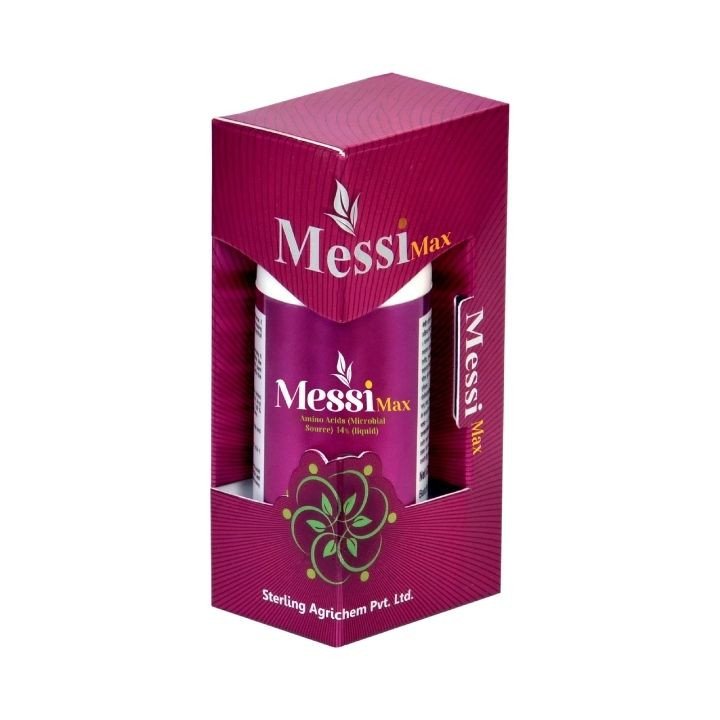
Sterling Messi Max Plant Growth Promoter
Messi Max: Where the Amino Acid Actually Comes From Changes What It Can Do
Not all amino acid biostimulants on the market are built the same way — some are derived from hydrolyzed plant or animal protein, while others come from microbial fermentation. Sterling Agrichem's Messi Max falls into this second category, supplying 14% Amino Acids of microbial origin in a liquid formulation. This distinction matters because microbial-source amino acids tend to offer a more consistent, purified profile compared to some hydrolyzed alternatives, since the production process can be more tightly controlled at the fermentation stage.
As a Plant Growth Promoter rather than a conventional NPK fertilizer, Messi Max isn't meant to replace a crop's base nutrition program — it's positioned to work alongside it, supplying readily usable amino acids that plants would otherwise need to synthesize themselves through energy-intensive metabolic processes.
Product Basics
| Detail | Specification |
|---|---|
| Brand | Sterling Agrichem |
| Product Name | Messi Max |
| Composition | Amino Acids (Microbial Source) 14% |
| Form | Liquid |
| Category | Plant Growth Promoter |
| Available Pack Sizes | 10 ml, 50 ml, 100 ml, 250 ml |
Why Supplying Amino Acids Directly Makes a Difference
Under normal conditions, a plant builds its own amino acids through nitrogen metabolism — a process that consumes a meaningful share of the plant's energy reserves. When a plant is under stress, whether from heat, transplant shock, disease pressure, or nutrient imbalance, this internal amino acid synthesis process can slow down precisely when the plant needs those building blocks most. Supplying amino acids directly through a product like Messi Max is intended to bypass this bottleneck, giving the plant readily available compounds without diverting energy from other critical growth processes.
What This Generally Supports in the Field
- Faster recovery from transplant shock or environmental stress conditions
- Improved chlorophyll synthesis, contributing to healthier, greener foliage
- Better nutrient absorption efficiency, since amino acids can support chelation of certain micronutrients
- Support for enzyme activity involved in flowering, fruit set, and overall metabolic function
- General improvement in plant vigour during critical growth stages
Where Amino Acid Biostimulants of This Type Are Typically Used
| Crop Category | Typical Application Context |
|---|---|
| Vegetables | Supporting recovery after transplanting and during flowering/fruiting stages |
| Fruit Crops | Supporting fruit development and stress recovery during critical phenological stages |
| Field Crops | Supporting overall vigour and nutrient uptake efficiency through the growing season |
| Flower & Ornamental Crops | Supporting bloom quality and general plant health |
Application Guidance
As a liquid formulation, Messi Max is generally applied as a foliar spray, diluted in water at the rate specified on the current product label. Since exact dosage can vary based on crop type, growth stage, and the severity of stress conditions being addressed, the precise application rate and spray interval should be confirmed from Sterling Agrichem's current product label before field use rather than assumed from general biostimulant practices.
Things Worth Checking Before Use
- Confirm the current recommended dilution rate and spray interval from the product label for your specific crop
- Consider a jar compatibility test if planning to tank-mix with other fertilizers or crop protection products
- Time application around known stress periods (post-transplant, pre-flowering, post-stress recovery) for best results
- Store the liquid formulation in a cool, dry place away from direct sunlight as per standard storage practice
Frequently Asked Questions
Does Messi Max replace regular fertilizer application?
No, it functions as a plant growth promoter supplying amino acids to support metabolic processes, and is generally used alongside a crop's standard fertilization program rather than as a replacement.
Why does the source of amino acids (microbial versus plant-derived) matter?
Microbial-source amino acids are produced through controlled fermentation, which can offer a more consistent and purified profile compared to some other extraction methods, though both types can support plant metabolic function.
When is the best time to apply an amino acid-based product like Messi Max?
It's generally most useful during periods of plant stress — after transplanting, during flowering and fruit set, or following environmental stress like heat or drought — when the plant's own amino acid synthesis may be under pressure.
What pack sizes is Messi Max available in?
It's available in 10 ml, 50 ml, 100 ml, and 250 ml pack sizes, offering flexibility for different farm sizes and testing needs.
Disclaimer: The details provided are for informational guidance only. Always adhere to the recommended application instructions as stated on the product label and in the accompanying leaflet.
Similar Products




Best Selling
Customer Reviews
Recent Reviews
No reviews yet.