

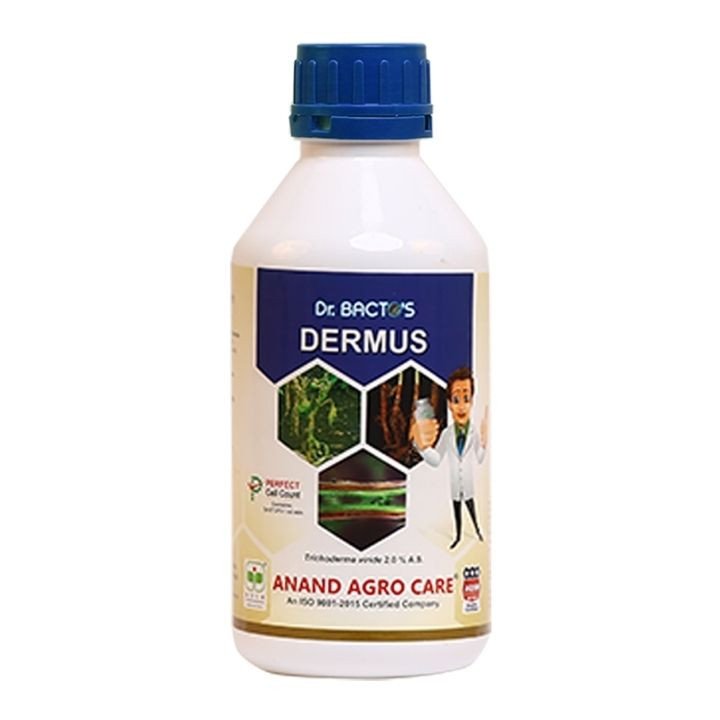
Anand Agro Care Dr. Bacto's Dermus Bio Fungicide
Anand Agro Care Dr. Bacto's Dermus Bio Fungicide
Dr. Bacto's Dermus by Anand Agro Care is a liquid biological fungicide containing Trichoderma viride, a beneficial mycoparasitic fungus used to manage soil-borne fungal diseases. It helps suppress pathogens such as Fusarium, Pythium and Rhizoctonia, which are associated with root rot, dry rot and wilt in agricultural crops.
The manufacturer lists a microbial concentration of 2 × 10⁸ CFU/ml. Dr. Bacto's Dermus supports biological disease management around the plant root zone and contributes to nutrient recycling through the decomposition of organic matter.
Product Specifications
| Brand | Anand Agro Care |
|---|---|
| Product Name | Dr. Bacto's Dermus |
| Product Type | Bio Fungicide |
| Active Microorganism | Trichoderma viride |
| Microbial Concentration | 2 × 10⁸ CFU/ml (Product Page) |
| Formulation | Liquid |
| Target Pathogens | Fusarium, Pythium and Rhizoctonia |
| Target Diseases | Root Rot, Dry Rot and Wilt |
| Application Methods | Seed Treatment, Soil Drenching and Drip Irrigation |
| Country of Origin | India |
Key Benefits of Dr. Bacto's Dermus
- Root Rot Management: Helps suppress soil-borne fungal pathogens associated with root rot and related root diseases.
- Wilt Disease Management: Supports biological management of wilt-causing fungal pathogens.
- Dry Rot Control: Recommended by the manufacturer for managing dry rot diseases.
- Root Zone Protection: Beneficial Trichoderma fungi can establish around plant roots and compete with disease-causing fungi.
- Nutrient Recycling: Contributes to the decomposition of organic matter and nutrient cycling in soil.
- Biological Disease Management: Provides a microbial option for an integrated crop disease management programme.
- Multiple Application Options: Suitable for seed treatment, soil drenching and drip application according to manufacturer directions.
How Does Dr. Bacto's Dermus Work?
Trichoderma viride is a beneficial fungus that suppresses susceptible plant pathogens through several biological mechanisms, including mycoparasitism, competition and the production of antifungal metabolites.
During mycoparasitism, Trichoderma can grow around and interact with the hyphae of disease-causing fungi. It competes for space and nutrients and produces antifungal substances, including viridins and gliotoxin, that can inhibit pathogen development.
This biological activity helps reduce the development of susceptible soil-borne fungal pathogens under favourable conditions. Its performance depends on microbial viability, soil conditions, pathogen pressure and application practices.
Target Diseases and Pathogens
- Root Rot: Helps manage root rot associated with susceptible soil-borne fungal pathogens.
- Dry Rot: Recommended for managing dry rot disease through biological fungal suppression.
- Wilt: Helps manage wilt-associated soil-borne fungi, particularly susceptible Fusarium pathogens.
- Fusarium: Helps suppress susceptible Fusarium species associated with crop diseases.
- Pythium: Recommended for managing susceptible Pythium pathogens affecting plant roots.
- Rhizoctonia: Helps suppress susceptible Rhizoctonia pathogens responsible for soil-borne diseases.
Recommended Dosage and Application
| Application Method | Manufacturer-Listed Dosage |
|---|---|
| Seed Treatment | 15–20 ml per kg of seeds |
| Soil Drenching | 2 litres per acre |
| Drip Irrigation | 2 litres per acre |
Seed Treatment: Treat seeds using the label-recommended quantity before sowing. Ensure suitable coverage and follow the manufacturer's instructions for preparation and handling.
Soil Drenching: Apply the recommended quantity through a suitable soil drenching method to distribute the beneficial fungus around the root zone.
Drip Irrigation: Apply through the drip irrigation system according to manufacturer directions and crop-specific irrigation requirements.
Spraying: The manufacturer's online dosage entry contains an unclear unit for spraying. Confirm the correct spray concentration from the current product label before foliar application.
When Should You Use Dr. Bacto's Dermus?
Dr. Bacto's Dermus can be considered during seed treatment and early crop establishment where soil-borne fungal diseases are a concern. Root-zone applications may also be useful as part of a preventive or integrated disease management programme.
It is not a guaranteed cure for plants already severely affected by wilt or root rot. Suitable application timing and disease diagnosis are important for effective management.
Frequently Asked Questions
1. What is Dr. Bacto's Dermus used for?
Dr. Bacto's Dermus is a biological fungicide used to help manage soil-borne fungal diseases such as root rot, dry rot and wilt.
2. What is the composition of Dr. Bacto's Dermus?
It contains Trichoderma viride. The manufacturer currently declares 2 × 10⁸ CFU/ml on its product page.
3. What is the dosage for seed treatment?
The manufacturer lists 15–20 ml per kg of seeds for seed treatment. Check the current product label before application.
4. Can Dermus be used through drip irrigation?
Yes. The manufacturer lists a drip application rate of 2 litres per acre.
5. Does Dr. Bacto's Dermus control Fusarium wilt?
Its active fungus, Trichoderma viride, helps suppress susceptible Fusarium pathogens. Actual disease management depends on the crop, pathogen and field conditions.
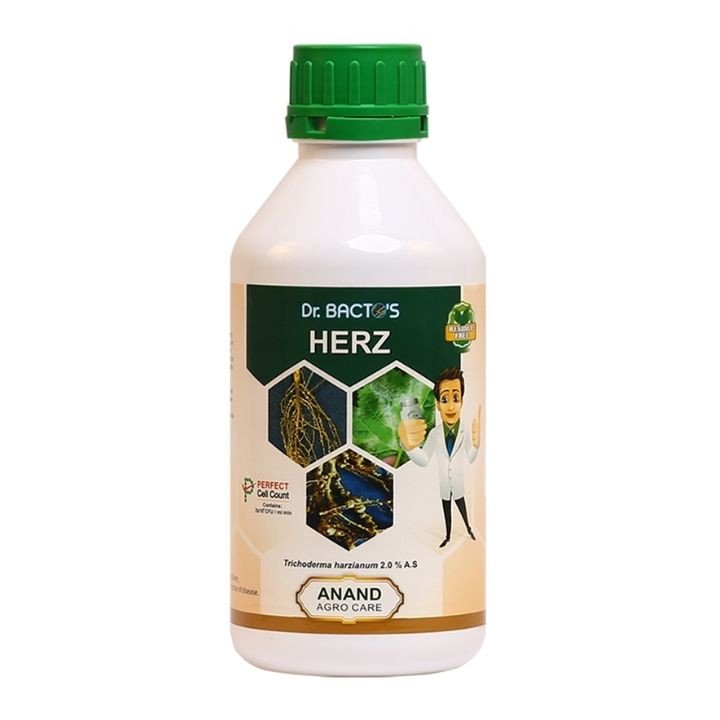
6. What is the difference between Dr. Bacto's Dermus and Dr. Bacto's Herz?
Dr. Bacto's Dermus contains Trichoderma viride, while Dr. Bacto's Herz contains Trichoderma harzianum. Both are biological fungicides, but they contain different Trichoderma species.
Note: Follow the original product label for approved crop uses, application rates, compatibility and precautions. Avoid assuming compatibility with chemical fungicides, as some may affect the viability of the beneficial fungus.
Similar Products
Best Selling

Customer Reviews
Recent Reviews
No reviews yet.