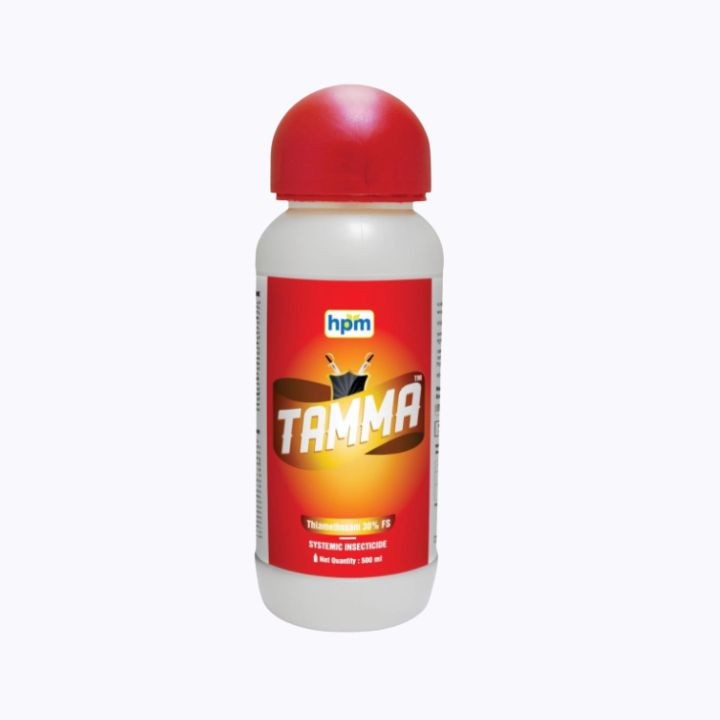
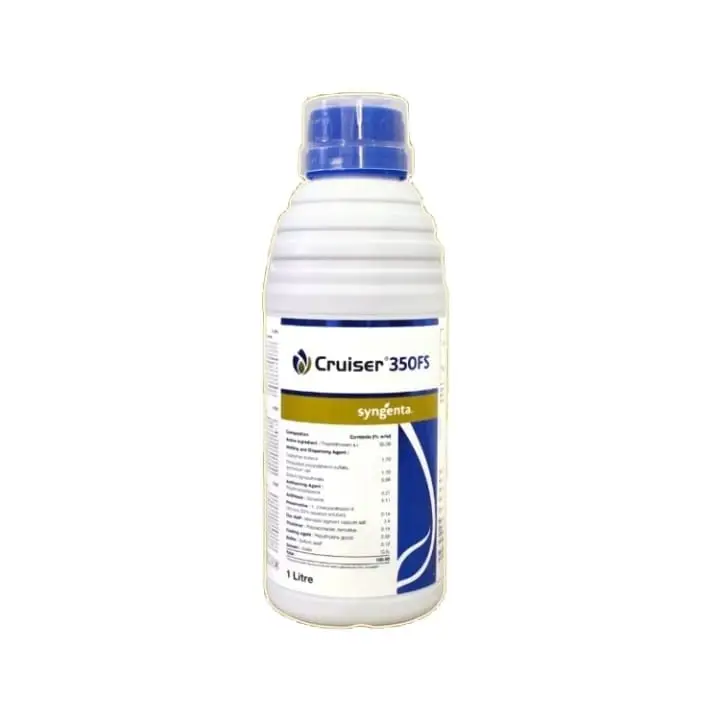
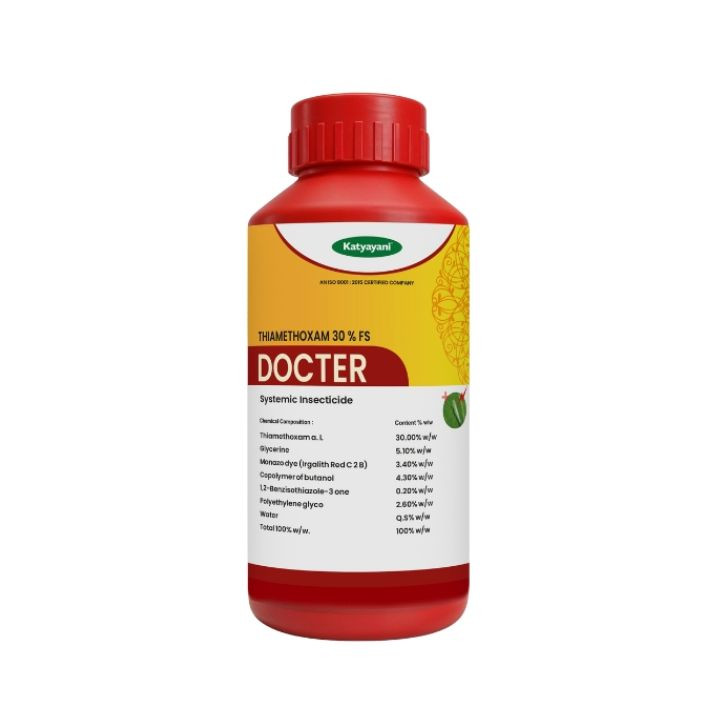
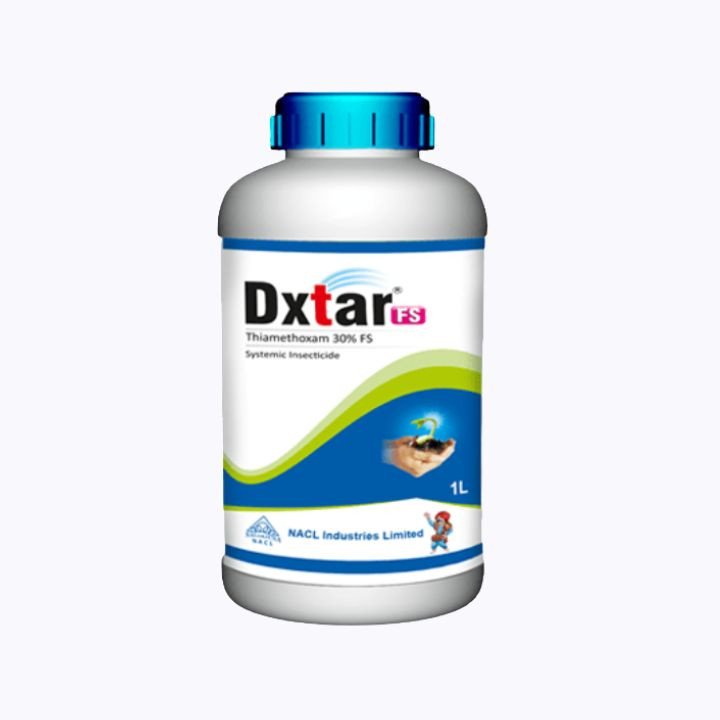
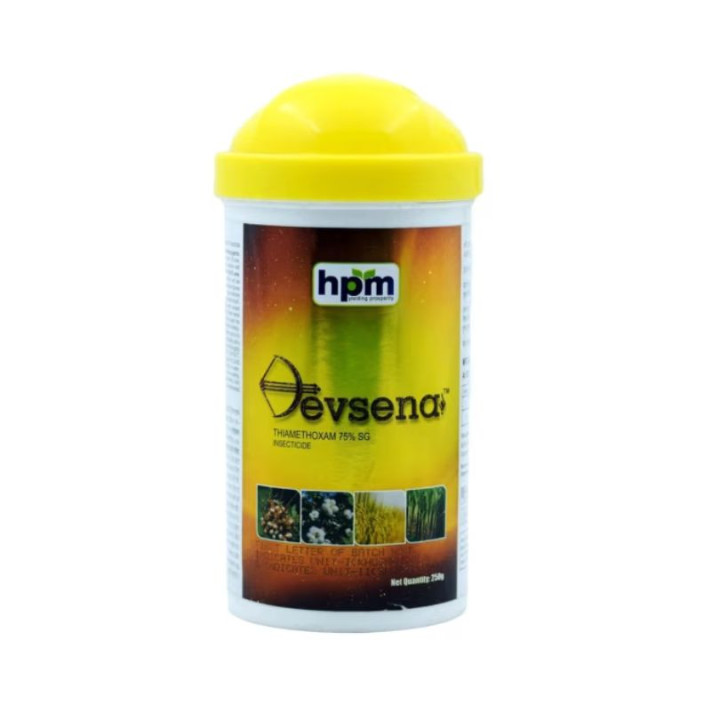
HPM Tamma (Thiamethoxam 30% FS) is a systemic seed treatment insecticide developed to provide effective protection against early-stage sucking and soil-dwelling insect pests. It works by disrupting the nervous system of insects through its unique action on nicotinic acetylcholine receptors, which interferes with their feeding and causes rapid mortality. This ensures healthy seed germination, better root establishment, and vigorous crop growth from the very beginning.
Technical Details
Technical Content
Thiamethoxam 30% FS
Formulation Type
Flowable Suspension (FS) – Seed Treatment
Chemical Group
Neonicotinoid
Mode of Action
Systemic insecticide acting on the nicotinic acetylcholine receptors in the insect nervous system, resulting in paralysis and death. Exhibits both contact and stomach poison activity.
Features & Benefits
Systemic Protection: Absorbed by the seed and transported through the plant, protecting seedlings from pests.
Triple Action: Works via contact, stomach, and systemic modes for effective pest elimination.
Broad Spectrum Control: Effective against sucking, chewing, and soil-dwelling pests.
Improved Crop Establishment: Promotes stronger germination and better stand establishment.
Long-Lasting Effect: Provides early-season protection and reduces need for multiple sprays.
Versatile Application: Suitable for various field and vegetable crops.
Recommended Crops & Target Pests
Crop
Target Pests
Corn (Maize)
Shoot flies, Stem flies, Aphids, Termites
Cotton
Jassids, Thrips, Aphids, Whiteflies
Wheat & Barley
Termites, Aphids
Soybeans & Sorghum
Flea beetles, Leaf miners, Stem flies
Sugar Beet, Oilseed Rape, Canola
Aphids, Root maggots, Leaf miners
Chilli, Okra, Sunflower
Thrips, Whiteflies, Leaf miners
Dosage & Application
Dosage: 1 ml per liter of water or 200 ml per acre with 200 liters of water.
Application Type: Seed treatment before sowing.
Mix the required quantity of HPM Tamma with clean water and coat the seeds uniformly by shaking in a closed container.
Dry the treated seeds in shade before sowing.
Application Guidelines
Ensure thorough coating on seed surfaces for uniform protection.
Do not mix treated seeds with untreated seeds during storage or sowing.
Use treated seeds only for planting, not for food or feed purposes.
Safety & Precautions
Wear gloves, mask, and protective clothing while handling treated seeds.
Wash hands and exposed skin thoroughly after application.
Store away from food, feed, and water sources.
Keep out of reach of children and pets.
Frequently Asked Questions (FAQs)
Q1: What is HPM Tamma used for? It is used as a seed treatment insecticide to control sucking and soil-dwelling pests that attack crops during early growth stages.
Q2: Which crops can be treated with HPM Tamma? It can be used on corn, cotton, wheat, barley, soybeans, sorghum, sugar beet, canola, chilli, okra, and sunflower.
Q3: How does HPM Tamma work? It acts on the insect’s nervous system by blocking nicotinic acetylcholine receptors, leading to paralysis and death.
Q4: What are its main advantages? It offers early-stage pest protection, enhances crop establishment, and reduces the need for repeated sprays.
Disclaimer: The information above is intended for reference only. Always follow the directions and safety guidelines provided on the product label and leaflet.