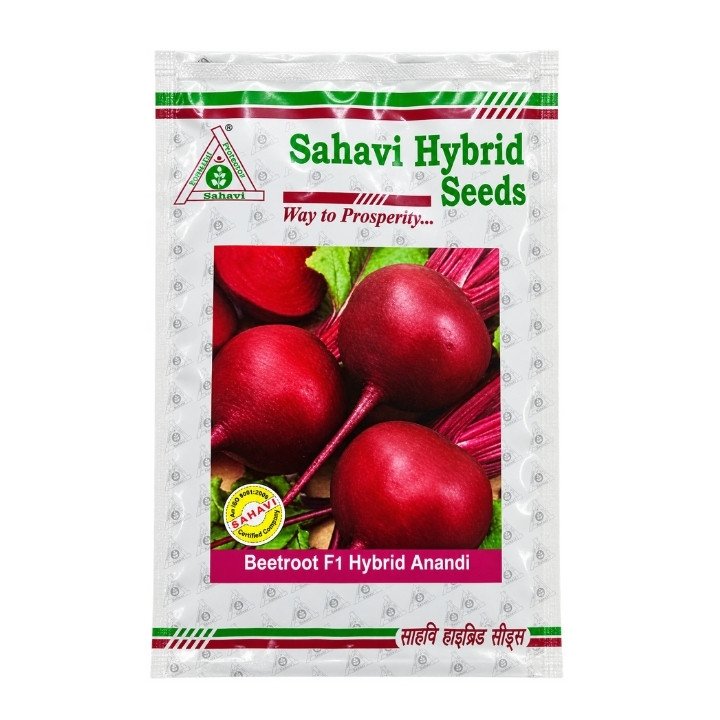
Sahavi Anandi F1 Hybrid Beetroot Seeds – 10 Grams
Sahavi Anandi is an F1 Hybrid Beetroot variety developed for producing attractive, uniform and marketable beet roots. It produces round-shaped, deep red roots with an average root weight of approximately 100–150 grams.
The variety is known for its attractive blood-red internal flesh and pleasant sweet taste. Sahavi Anandi reaches maturity in approximately 65–70 days under suitable growing conditions, making it suitable for commercial as well as fresh-market beetroot cultivation.
Its appealing root colour, good flesh quality and highly palatable sweet taste make Sahavi Anandi an excellent choice for farmers looking for quality beetroot production.
Product Specifications
| Brand |
Sahavi Hybrid Seeds |
| Variety Name |
Anandi |
| Crop |
Beetroot |
| Seed Type |
F1 Hybrid |
| Root Shape |
Round |
| Root Colour |
Deep Red |
| Flesh Colour |
Blood Red |
| Average Root Weight |
100–150 grams |
| Maturity |
Approximately 65–70 Days |
| Taste |
Sweet and Highly Palatable |
| Product Category |
Vegetable Seeds – Beetroot Seeds |
| Net Weight |
10 Grams |
Key Features
- F1 Hybrid Variety: A quality hybrid beetroot suitable for commercial vegetable cultivation.
- Attractive Round Roots: Produces uniform and appealing round-shaped beet roots.
- Deep Red Root Colour: Roots develop an attractive deep red exterior that is desirable in fresh vegetable markets.
- Blood-Red Flesh: The internal flesh develops a rich blood-red colour, giving the roots an attractive appearance after cutting.
- 100–150 Gram Root Weight: Produces marketable roots with an average weight of approximately 100–150 grams.
- 65–70 Days Maturity: Reaches harvest maturity in approximately 65–70 days under suitable cultivation conditions.
- Excellent Flesh Quality: Known for its attractive flesh quality and desirable internal colour.
- Sweet Taste: Highly palatable due to its pleasant and naturally sweet taste.
- Market-Oriented Hybrid: Attractive colour, shape and root size make it suitable for commercial fresh-market production.
Root Characteristics
| Characteristic |
Details |
| Root Shape |
Round |
| Root Colour |
Deep Red |
| Flesh Colour |
Blood Red |
| Average Root Weight |
100–150 grams |
| Taste |
Sweet and Highly Palatable |
| Maturity |
Approximately 65–70 Days |
Benefits of Sahavi Anandi Beetroot
- Produces attractive deep red beet roots.
- Uniform round root shape.
- Rich blood-red internal flesh.
- Average root weight of 100–150 grams.
- Approximately 65–70 days maturity.
- Sweet and highly palatable taste.
- Suitable for fresh vegetable markets.
- Suitable for commercial beetroot cultivation.
- Good appearance for retail and wholesale marketing.
Recommended Uses
- Commercial beetroot cultivation
- Fresh vegetable production
- Local vegetable markets
- Wholesale markets
- Fresh consumption
- Salads and vegetable preparations
Sowing Guidelines
- Select fertile and well-drained soil for beetroot cultivation.
- Prepare the field thoroughly to obtain a fine and loose seedbed.
- Sow the seeds at an appropriate depth in moist soil.
- Avoid excessively deep sowing as it may affect germination and seedling emergence.
- Maintain sufficient moisture during germination and early crop establishment.
- Thin overcrowded seedlings where necessary to provide enough space for proper root development.
- Maintain recommended spacing according to local growing conditions and cultivation practices.
Soil Requirements
Beetroot performs best in fertile, loose and well-drained soil. Proper soil preparation is important because compact soil can restrict root development and affect root shape.
Incorporating well-decomposed organic manure before sowing can help improve soil structure and nutrient availability.
Irrigation Management
- Maintain adequate soil moisture after sowing.
- Provide light irrigation where required during germination.
- Avoid allowing the soil to remain excessively dry for long periods.
- Avoid waterlogging, as excessive moisture may adversely affect root health.
- Adjust irrigation according to soil type, weather and crop growth stage.
Nutrient Management
Apply fertilizers according to soil-test results and local agricultural recommendations. Balanced nutrition supports healthy leaf growth, uniform root development and desirable root size.
Avoid unnecessary over-application of nitrogen because excessive vegetative growth may affect proper root development.
Weed Management
Keep the field relatively free from weeds, especially during the early growth stages. Weeds compete with beetroot plants for nutrients, moisture, sunlight and growing space.
Carry out shallow intercultural operations carefully to avoid damaging developing roots.
Maturity & Harvesting
Sahavi Anandi reaches maturity in approximately 65–70 days under suitable growing conditions. Actual maturity can vary depending on temperature, soil type, sowing season, irrigation and overall crop management.
Harvest the roots after they attain suitable marketable size, attractive deep red colour and the desired maturity.
Harvesting Tips
- Harvest roots when they achieve marketable size.
- Avoid leaving mature roots in the field for unnecessarily long periods.
- Loosen the soil carefully before pulling roots where required.
- Avoid cutting or damaging the roots during harvesting.
- Remove excess soil gently after harvesting.
- Grade roots according to size and quality before marketing.
Crop Management Tips
- Use well-prepared and properly drained land.
- Maintain uniform plant population through proper spacing.
- Provide adequate moisture throughout root development.
- Apply balanced fertilizers according to crop requirements.
- Keep the field free from excessive weed competition.
- Regularly monitor the crop for pests and diseases.
- Follow Integrated Pest Management practices whenever required.
Why Choose Sahavi Anandi F1 Hybrid Beetroot?
- Attractive Appearance: Deep red exterior provides excellent market appeal.
- Rich Flesh Colour: Blood-red flesh enhances internal appearance and quality.
- Marketable Root Size: Produces approximately 100–150 gram roots.
- Good Maturity: Ready for harvest in approximately 65–70 days.
- Sweet Taste: Highly palatable roots suitable for fresh consumption.
- Commercial Potential: Suitable for farmers targeting fresh vegetable markets.
Storage Instructions for Seeds
- Store the seed packet in a cool and dry place.
- Protect seeds from direct sunlight, heat and moisture.
- Keep the packet properly sealed until sowing.
- Keep seeds separately from pesticides and other agricultural chemicals.
- Keep out of reach of children and animals.
- Use seeds within the validity period printed on the original packet.
Frequently Asked Questions
What is Sahavi Anandi?
Sahavi Anandi is an F1 Hybrid Beetroot variety that produces round, deep red roots with blood-red flesh.
What is the root shape of Sahavi Anandi?
The variety produces attractive round-shaped roots.
What is the average root weight?
The average root weight is approximately 100–150 grams.
What is the colour of Sahavi Anandi beetroot?
The outer root colour is deep red and the internal flesh colour is blood red.
What is the maturity period of Sahavi Anandi?
The crop reaches maturity in approximately 65–70 days under suitable growing conditions.
How does Sahavi Anandi beetroot taste?
The variety is known for its sweet and highly palatable taste.
Is Sahavi Anandi suitable for commercial farming?
Yes. Its attractive colour, round shape, suitable root size and sweet taste make it suitable for commercial fresh-market cultivation.
What is the net weight of Sahavi Anandi seed packet?
The packet contains 10 grams of beetroot seeds.
Can Sahavi Anandi be grown in all seasons?
The suitable sowing season depends on local temperature, climate and growing conditions. Follow the sowing recommendations printed on the original Sahavi Hybrid Seeds packet or consult the local agriculture or horticulture department.
Disclaimer
Seed performance, root weight, maturity, colour and overall yield may vary according to climate, soil type, sowing season, irrigation, nutrition, pest and disease pressure, and crop-management practices. Always follow the instructions printed on the original Sahavi Hybrid Seeds packet and local agricultural recommendations.