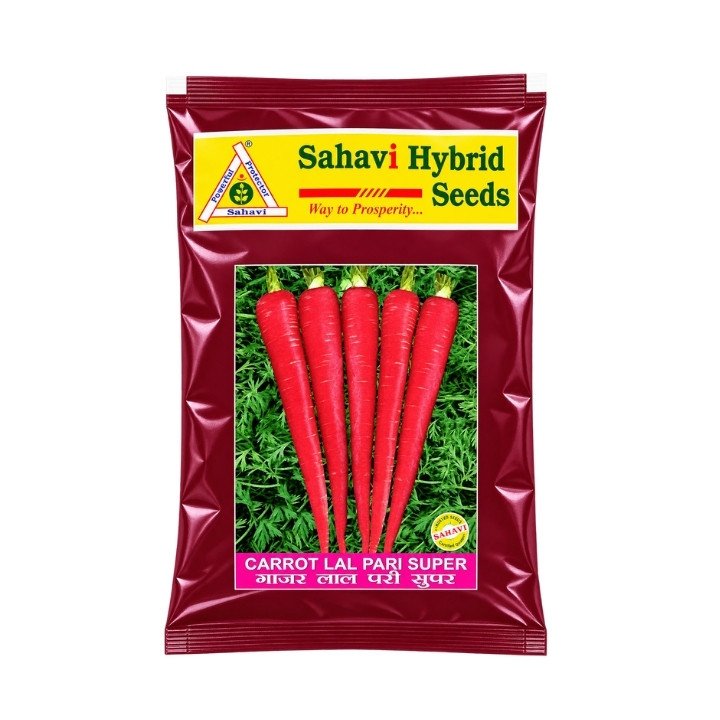
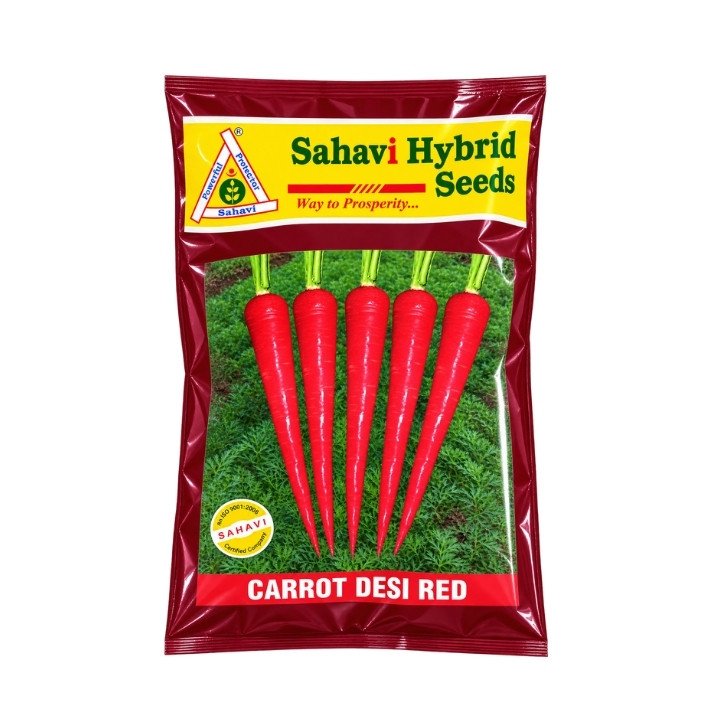
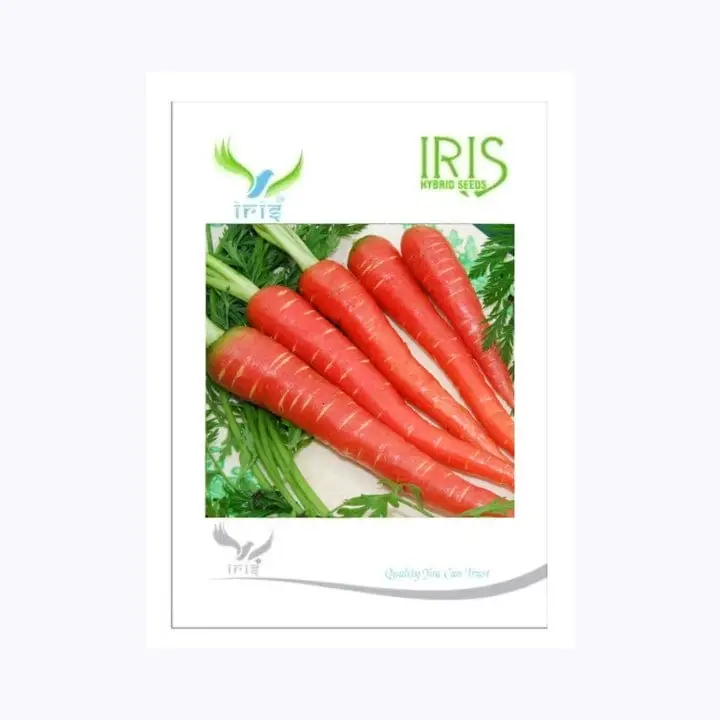
Sahavi Lal Pari Super is a red carrot (Gajar) seed variety from Sahavi Hybrid Seeds, developed for quality carrot production. The variety produces attractive long, tapered and red-coloured roots suitable for fresh vegetable consumption and commercial markets.
Lal Pari Super is suitable for growers looking for visually attractive red carrots with uniform root development. Proper soil preparation, suitable sowing season, balanced nutrition and uniform irrigation are important for achieving good root shape, colour and marketable quality.
Product Specifications
Brand
Sahavi Hybrid Seeds
Variety Name
Lal Pari Super
Crop
Carrot / Gajar
Product Category
Vegetable Seeds – Carrot Seeds
Root Colour
Red
Root Shape
Long and Tapered
Growth Type
Root Vegetable
Primary Use
Fresh Carrot Production
Suitable For
Commercial and Fresh-Market Cultivation
Key Features
Attractive Red Roots: Produces appealing red-coloured carrots with excellent fresh-market appearance.
Long Root Shape: Develops long and tapered roots under suitable soil and cultivation conditions.
Uniform Produce: Proper plant spacing and crop management support uniform root development.
Fresh-Market Suitable: Attractive root colour and shape make the produce suitable for local, retail and wholesale vegetable markets.
Commercial Cultivation: Suitable for farmers growing carrots for regular vegetable-market supply.
Versatile Use: Carrots can be marketed for fresh consumption and various culinary preparations.
Root Characteristics
Characteristic
Details
Root Colour
Red
Root Shape
Long and Tapered
Appearance
Attractive and Marketable
Market Type
Fresh Vegetable Market
Usage
Fresh Consumption and Cooking
Benefits of Sahavi Lal Pari Super Carrot
Produces attractive red carrots.
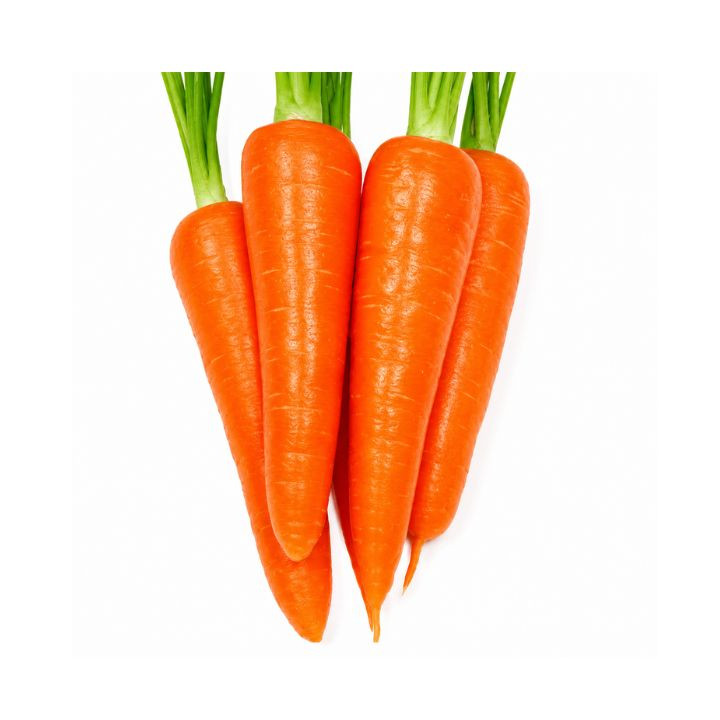
Long and tapered root appearance.
Suitable for commercial vegetable cultivation.
Good fresh-market presentation.
Suitable for local mandi and wholesale supply.
Can be used for fresh consumption and cooking.
Suitable for farmers looking for a traditional red carrot type.
Recommended Uses
Commercial carrot farming
Fresh vegetable production
Local vegetable markets
Wholesale mandi supply
Retail vegetable sales
Fresh consumption
Salads
Juice preparation
Cooking and vegetable dishes
Suitable Growing Conditions
Carrot is generally a cool-season root vegetable. A suitable growing environment along with loose and well-prepared soil is important for developing straight, healthy and marketable roots.
Good sunlight, adequate soil moisture and proper field drainage support healthy crop development.
Soil Requirements
Carrot performs best in deep, loose and well-drained soil. Proper soil preparation is especially important for long-rooted varieties because hard soil, stones and large clods may interfere with straight root development.
Select loose and fertile soil.
Ensure good drainage.
Remove stones and hard soil clods before sowing.
Avoid compact and heavily waterlogged fields.
Use properly decomposed organic manure where required.
Field Preparation
Plough or cultivate the field thoroughly.
Prepare a fine and loose seedbed.
Remove stones, hard clods, weeds and old crop residues.
Incorporate well-decomposed organic manure according to local recommendations.
Prepare suitable rows, ridges or raised beds depending on the cultivation system.
Ensure sufficient soil depth for proper root development.
Sowing Method
Use healthy seeds from the original Sahavi Lal Pari Super packet.
Sow directly into a finely prepared field.
Place the seeds shallowly and uniformly.
Cover the seeds lightly with fine soil.
Maintain adequate soil moisture during germination.
Thin overcrowded seedlings where necessary after establishment.
Maintain sufficient space between plants for proper root development.
Sowing Season
Carrot is generally best suited to cool or mild weather conditions. The ideal sowing period varies according to region, altitude and local temperature.
Important: Follow the sowing-season instructions printed on the current Sahavi Lal Pari Super packet or recommendations of the local agriculture or horticulture department.
Spacing
Proper spacing is important for developing uniform and well-shaped carrot roots. Overcrowded plants may compete for nutrients, moisture and root-development space.
Thin excessive seedlings after establishment and maintain the spacing recommended for carrot cultivation in your local growing region.
Irrigation Management
Maintain adequate moisture during germination.
Use light irrigation during early crop establishment where necessary.
Maintain relatively uniform soil moisture during root development.
Avoid severe moisture stress.
Avoid excessive irrigation and prolonged waterlogging.
Adjust irrigation frequency according to soil type and weather conditions.
Nutrient Management
Apply fertilizers according to soil-test results and local agricultural recommendations. Balanced crop nutrition is important for healthy foliage as well as proper carrot root development.
Use well-decomposed organic manure during field preparation.
Follow locally recommended fertilizer doses.
Avoid excessive and unbalanced nitrogen application.
Maintain adequate nutrient availability during root development.
Correct micronutrient deficiencies according to soil-test recommendations.
Root Development Tips
Prepare deep and loose soil before sowing.
Remove stones and large soil clods.
Avoid excessive seedling population.
Thin plants where necessary.
Maintain uniform soil moisture.
Avoid prolonged drought followed by excessive irrigation.
Use balanced nutrition throughout crop development.
Weed Management
Keep the field relatively free from weeds, particularly during early crop development. Weeds compete with carrot seedlings for nutrients, moisture, sunlight and root-development space.
Carry out shallow intercultural operations carefully to avoid damaging developing carrot roots.
Crop Protection
Inspect the crop regularly for insect pests, diseases and root disorders. Follow Integrated Pest Management and Integrated Disease Management practices wherever possible.
Maintain proper field sanitation.
Provide adequate drainage.
Avoid excessive plant density.
Follow crop rotation where appropriate.
Regularly inspect leaves and developing roots.
Use only crop-protection products registered for carrot.
Follow the pesticide label for dosage, timing and waiting period.
Harvesting
Harvest Sahavi Lal Pari Super carrots after roots attain the desired red colour, size and marketable maturity. Exact harvesting time can vary depending on sowing season, temperature, soil conditions and crop management.
Loosen the soil carefully before pulling mature carrots to minimize root breakage and physical damage.
Harvesting Tips
Harvest roots after they attain the desired marketable size.
Loosen the soil before pulling long roots.
Avoid breaking or cutting carrots during harvesting.
Remove excessive soil carefully after harvest.
Separate damaged, malformed or diseased roots.
Grade carrots according to size and quality.
Post-Harvest Handling
Handle harvested carrots carefully to prevent breakage.
Keep produce away from intense direct sunlight after harvesting.
Remove damaged roots before packing.
Grade roots for uniform market presentation.
Use suitable packaging during transportation.
Why Choose Sahavi Lal Pari Super Carrot Seeds?
Red Root Type: Produces attractive red carrots.
Long Shape: Desirable long and tapered root appearance.
Market Appeal: Suitable for fresh vegetable marketing.
Commercial Use: Suitable for market-oriented carrot cultivation.
Multiple Uses: Suitable for fresh consumption, juice, salads and cooking.
Storage Instructions for Seeds
Keep seeds in the original sealed packet until sowing.
Store in a cool and dry place.
Protect from direct sunlight, heat and excessive moisture.
Keep separately from pesticides, fertilizers and other chemicals.
Keep out of reach of children and animals.
Use the seeds within the validity period printed on the original packet.
Frequently Asked Questions
What is Sahavi Lal Pari Super?
Sahavi Lal Pari Super is a carrot seed variety from Sahavi Hybrid Seeds used for producing attractive red carrots.
What colour carrot does Lal Pari Super produce?
The variety produces red-coloured carrots.
What is the root shape?
The packet image indicates an attractive long and tapered carrot type.
Is Sahavi Lal Pari Super suitable for commercial cultivation?
Yes. It can be grown for fresh vegetable production and market-oriented carrot cultivation under suitable growing conditions.
Which soil is suitable for carrot cultivation?
Deep, loose and well-drained soil is preferred because it allows carrot roots to develop properly without obstruction.
Is carrot a cool-season crop?
Yes. Carrot generally performs best under cool to mild growing conditions.
What is the maturity period of Sahavi Lal Pari Super?
The exact variety-specific maturity period is not clearly available from a reliable Sahavi technical source. Follow the current seed packet or manufacturer's recommendation for the correct maturity period.
What is the root length of Lal Pari Super?
The exact Sahavi variety-specific root length has not been reliably verified. Actual root length can also vary according to soil and crop-management conditions.
What is the seed rate?
Follow the seed rate printed on the original Sahavi Lal Pari Super packet or the recommendation of your local agriculture department.
What is the pack size of Sahavi Lal Pari Super?
Check the net weight printed on the specific packet being purchased, as the front image provided does not show a clearly readable pack weight.
Disclaimer
Seed performance, germination, root length, root weight, maturity, colour and yield may vary depending on climate, soil type, sowing season, irrigation, nutrition, pest and disease pressure and overall farm management. Always follow the instructions printed on the original Sahavi Lal Pari Super seed packet and local agricultural recommendations.