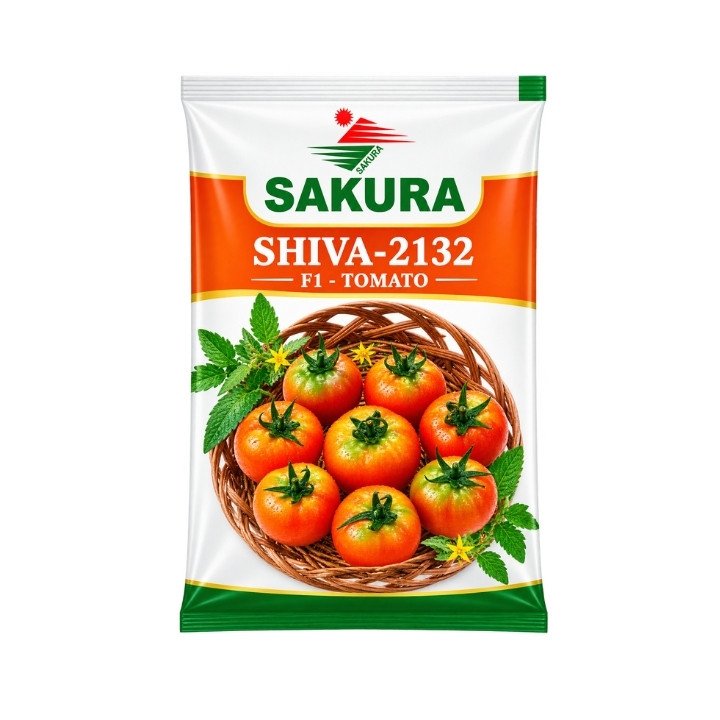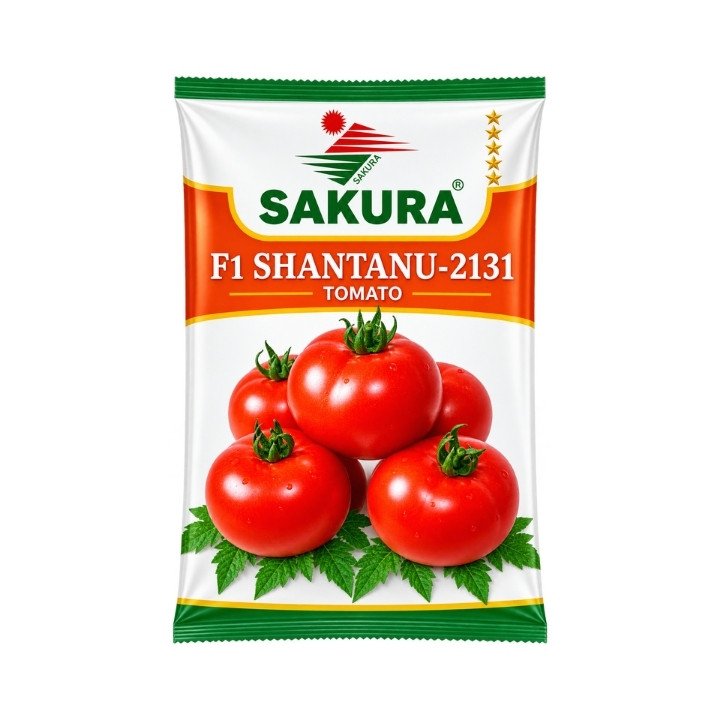

Sakura Shantanu-2131 is a high-yielding F1 hybrid tomato variety from Sakura Seed Corporation. It develops semi-indeterminate plants with good foliage cover and produces round, dark-red fruits suitable for fresh-market tomato production.
The fruits generally weigh around 95–110 g, while the indicative harvesting period is approximately 60–65 days after planting. The variety is also reported to offer tolerance to Tomato Leaf Curl Virus under suitable cultivation and crop-management practices.
| Specification | Details |
|---|---|
| Product Name | Sakura Shantanu-2131 F1 Hybrid Tomato Seeds |
| Brand | Sakura |
| Company | Sakura Seed Corporation |
| Variety | Shantanu-2131 |
| Crop | Tomato |
| Seed Type | F1 hybrid vegetable seed |
| Plant Type | Semi-indeterminate |
| Foliage | Good foliage cover |
| Fruit Shape | Round |
| Mature Fruit Colour | Dark red |
| Average Fruit Weight | Approximately 95–110 g |
| Indicative Harvesting | Approximately 60–65 days after planting |
| Yield Potential | High under recommended cultivation practices |
| Reported Disease Tolerance | Tomato Leaf Curl Virus (TLCV) |
| Recommended Use | Commercial fresh-market tomato cultivation |
| Pack Size | Check the selected product variant |
Variety note: Fruit weight, harvesting time, yield and disease response may vary with climate, season, soil, plant population, irrigation, nutrition and pest-management practices.
| Characteristic | Description |
|---|---|
| Shape | Round |
| Colour at Maturity | Dark red |
| Average Weight | Approximately 95–110 g per fruit |
| Plant Coverage | Good foliage cover |
| Market Segment | Fresh vegetable and commercial tomato markets |
| Growing Parameter | General Recommendation |
|---|---|
| Cultivation Type | Commercial open-field tomato cultivation |
| Nursery Method | Raise seedlings in clean pro-trays or a properly prepared raised nursery bed |
| Sowing Season | Select according to the regional climate and instructions printed on the seed pack |
| Soil Type | Fertile, well-drained soil with adequate organic matter |
| Transplanting | Transplant healthy seedlings at the pack-recommended age and growth stage |
| Spacing | Follow regional recommendations for semi-indeterminate hybrid tomatoes |
| Irrigation | Provide regular and uniform irrigation without prolonged waterlogging |
| Plant Support | Staking or trellising is useful for managing semi-indeterminate plants |
| Indicative Harvesting | Approximately 60–65 days after planting |
| Harvest Stage | Harvest according to market distance and required fruit maturity |
Shantanu-2131 is reported to offer tolerance to Tomato Leaf Curl Virus. Tolerance does not mean immunity, and infected plants may still develop symptoms under high disease and whitefly pressure.
Use healthy seedlings, remove severely infected plants where appropriate, control whitefly vectors according to local recommendations and maintain field sanitation. Do not depend only on varietal tolerance for virus management.
Harvest fruits according to the intended market. Fruits for nearby markets can be allowed to develop more colour, while those intended for longer transport may require harvesting at an earlier suitable maturity stage.
Grade the tomatoes according to size, colour and external quality. Protect harvested fruits from direct sunlight, rough handling and excessive stacking during packing and transportation.
Sakura Shantanu-2131 is an F1 hybrid tomato variety with semi-indeterminate plants, good foliage cover and round dark-red fruits.
The reported average fruit weight is approximately 95–110 g. Actual weight varies according to crop nutrition, season and fruit load.
The indicative harvesting period is approximately 60–65 days after planting, subject to local growing conditions.
It is described as a semi-indeterminate tomato variety with good foliage cover.
The variety is reported as tolerant to TLCV. Tolerance reduces susceptibility but does not guarantee complete protection under severe disease pressure.
Staking or trellising is useful for supporting semi-indeterminate plants, improving canopy management and keeping fruits away from the soil.
No. Yield and fruit quality depend on seed storage, germination, season, soil, spacing, irrigation, nutrition and pest and disease management.
Disclaimer: The details provided are for informational guidance only. Always adhere to the recommended sowing and cultivation instructions as stated on the product label and in the accompanying leaflet.No reviews yet.