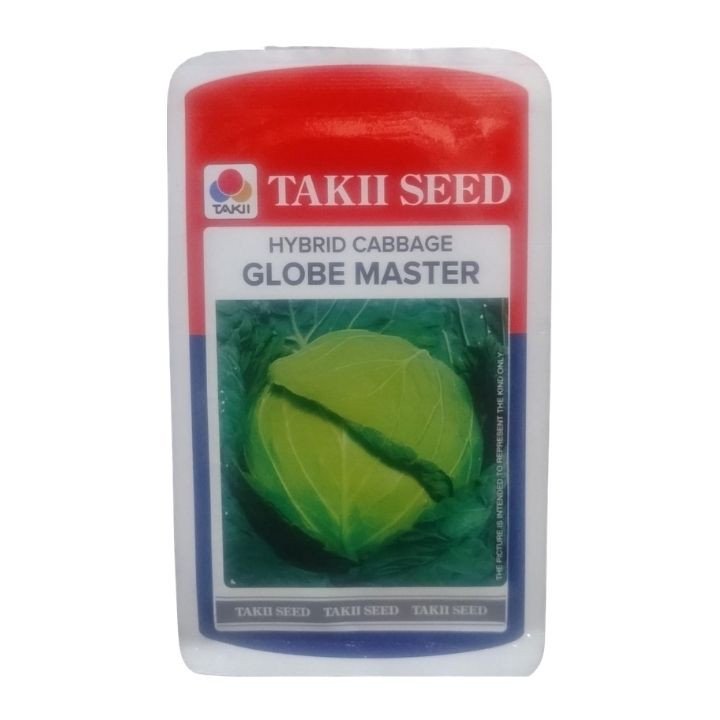
Not every widely successful cabbage variety earns that status through yield numbers alone — disease pressure can quietly erode returns even from a high-yielding crop if resistance isn't built in. Takii's Globe Master F1 has become one of the best-selling cabbage varieties worldwide, and a meaningful part of that track record ties directly to its disease resistance profile: high resistance to Fusarium yellows and intermediate resistance to Black rot, two diseases capable of causing serious losses in cabbage production when left unmanaged.
Beyond disease resistance, Globe Master F1 combines high yield potential with good head shape and an attractive blue-green color, all carried on a medium, compact plant structure — a combination that has clearly resonated with growers across diverse cabbage-producing regions globally.
| Characteristic | Details |
|---|---|
| Brand | Takii Seed |
| Variety Name | Globe Master F1 |
| Crop | Cabbage |
| Seed Type | F1 Hybrid |
| Head Type | Round |
| Plant Size & Habit | Medium, Compact |
| Maturity | 75 Days After Transplanting |
Fusarium yellows is a soil-borne fungal disease that can persist in field soil across seasons, making it a particularly stubborn problem for growers who don't have the flexibility to rotate away from cabbage or related brassica crops regularly. Globe Master F1's high resistance to this disease gives growers meaningful protection in fields with a known Fusarium history, reducing dependence on soil fumigation or extended crop rotation as the primary defense strategy. Its intermediate resistance to Black rot adds a further layer of protection, though intermediate resistance still warrants standard field sanitation and monitoring practices rather than being treated as complete immunity.
| Trait | Description |
|---|---|
| Color | Blue-Green |
| Shape | Globe (Round) |
| Core | Medium Short |
| Yield Potential | High |
| Shape Consistency | Good Shape |
The medium short core is a practical detail worth noting for growers focused on marketable yield — a shorter core generally means a higher proportion of the harvested head is usable, edible tissue rather than woody core material, which matters for both fresh market appeal and processing yield.
| Disease | Resistance Level |
|---|---|
| Fusarium Yellows | High Resistance |
| Black Rot | Intermediate Resistance |
| Parameter | Details |
|---|---|
| Days to Maturity | 75 Days After Transplanting |
| Recommended Harvest Season | Fall to Winter |
Takii's official variety listing does not specify exact seed rate, transplant spacing, or region-specific sowing calendar for Globe Master F1. Even with strong genetic resistance to Fusarium yellows, standard field sanitation practices remain worthwhile, particularly given the variety's intermediate (not complete) resistance to Black rot. Growers should confirm exact agronomic details from the seed packet, a Takii-authorized dealer, or local agricultural extension guidance suited to their specific growing region.
What does "high resistance to Fusarium yellows" mean in practical terms?
It means the variety has strong genetic protection against this soil-borne fungal disease, reducing the risk of yield loss in fields with a known Fusarium history, though good field sanitation practices remain a sensible complement.
Is Globe Master F1 fully resistant to Black rot?
No, it carries intermediate resistance to Black rot, which offers meaningful but not complete protection, so standard monitoring and field hygiene practices are still advisable.
How long does Globe Master F1 take to mature?
It reaches maturity in 75 days after transplanting, harvested during the fall to winter season.
What does the "medium short core" trait mean for usable yield?
A shorter core generally means a higher proportion of the harvested head consists of usable, edible tissue rather than woody core material, benefiting both fresh market and processing yield.
Disclaimer: The details provided are for informational guidance only. Always adhere to the recommended sowing and cultivation instructions as stated on the product label and in the accompanying leaflet. Results are based on favorable growing conditions and may vary by region and management practices.
No reviews yet.