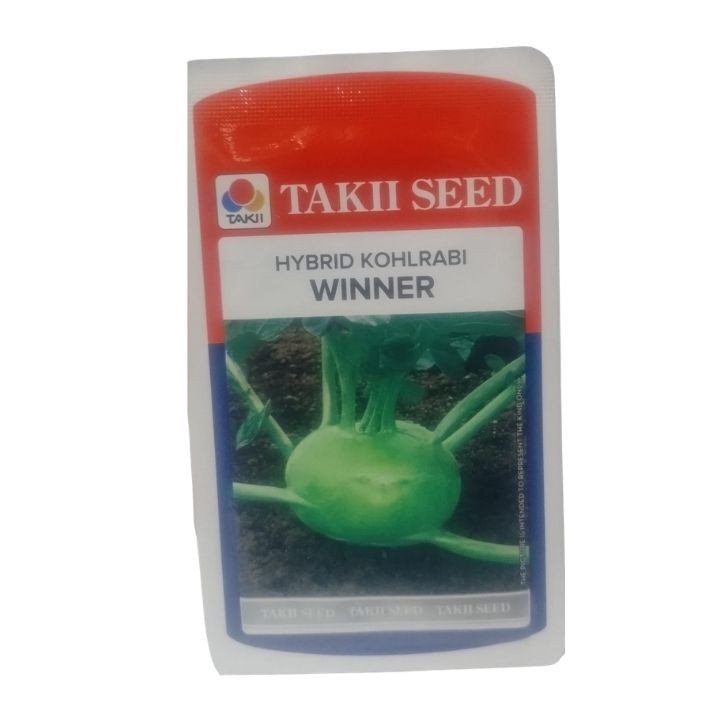
One of the more frustrating quality issues in kohlrabi production is pithiness — the bulb developing a woody, fibrous texture as it matures, which happens well before harvest timing runs out if a variety isn't bred to resist it. Takii's Winner F1 addresses this specifically through its late pithiness trait, giving growers a wider practical harvest window before bulb quality starts to decline, compared to varieties that turn pithy earlier in their maturity cycle.
Alongside this quality trait, Winner F1 carries an upright plant habit, which tends to support better airflow around the developing bulb and can make harvesting somewhat more straightforward compared to sprawling growth types.
| Characteristic | Details |
|---|---|
| Brand | Takii Seed |
| Variety Name | Winner F1 |
| Crop | Kohlrabi |
| Seed Type | F1 Hybrid |
| Plant Habit | Upright |
| Maturity | Medium-Early |
Pithiness in kohlrabi is essentially the bulb's internal tissue becoming dry, fibrous, and less palatable as the plant matures beyond its optimal harvest window. Varieties with an early tendency toward pithiness force growers into a narrower, more rigid harvest schedule to catch bulbs at peak quality. Winner F1's late pithiness trait extends this window, giving some flexibility in harvest timing without as steep a quality drop-off if picking is delayed by a few days due to labor scheduling, weather, or market timing.
| Trait | Description |
|---|---|
| Size Potential | Good |
| Color | Attractive Green |
| Shape | Uniform Semi-Globe |
| Pithiness Resistance | Late (extended quality window) |
The uniformity of the semi-globe shape across the crop stand is a practical advantage at harvest and grading time, since consistent bulb shape and size reduce sorting effort and support more uniform pack-outs for market.
Kohlrabi is typically grown as a cool-season crop, generally sown during cooler months for best bulb development, as excessive heat during bulb formation can affect quality and increase the risk of premature pithiness even in resistant varieties. Standard kohlrabi spacing generally follows a pattern of adequate row and plant spacing to allow bulbs to reach their full size potential without overcrowding-related stunting. Since Takii's own listing does not specify exact sowing season, seed rate, or spacing figures for Winner F1, growers should confirm these details from the seed packet, local agricultural extension guidance, or a Takii-authorized dealer before planning a planting schedule.
What does "late pithiness" mean for harvest planning?
It means the bulb resists developing a fibrous, woody texture longer than early-pithiness varieties, giving some flexibility in harvest timing without as sharp a quality decline if picking is slightly delayed.
What shape and color can I expect from Winner F1 bulbs?
The variety produces an attractive green bulb in a uniform semi-globe shape, with good size potential under favorable growing conditions.
Is Winner F1 an early or late maturing variety?
It falls into the medium-early maturity category, positioning it between the fastest and slowest maturing kohlrabi types.
Where can I find exact sowing season and spacing recommendations for this variety?
Since these specifics were not listed on Takii's official variety page, it's best to check the seed packet, consult local agricultural extension resources, or contact a Takii-authorized dealer for region-specific guidance.
Disclaimer: The details provided are for informational guidance only. Always adhere to the recommended sowing and cultivation instructions as stated on the product label and in the accompanying leaflet. Results are based on favorable growing conditions and may vary by region and management practices.
No reviews yet.