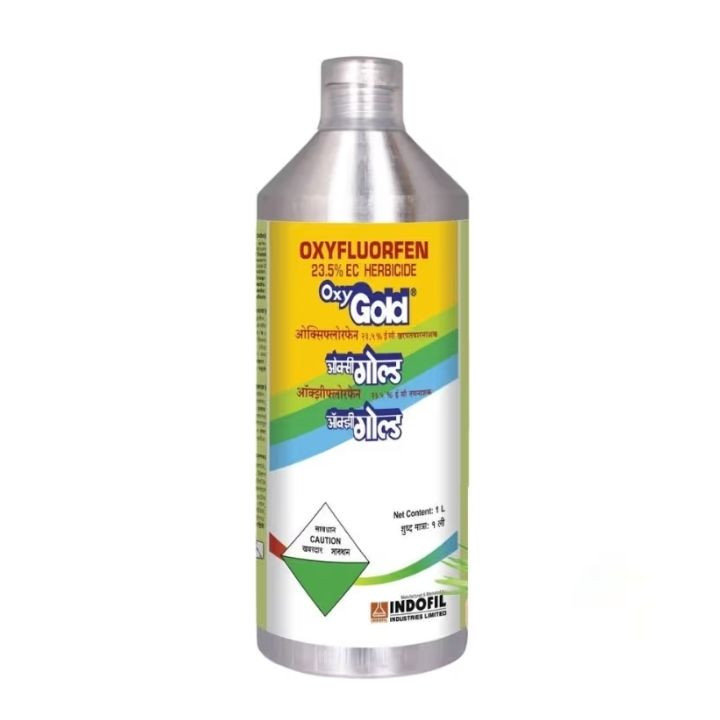
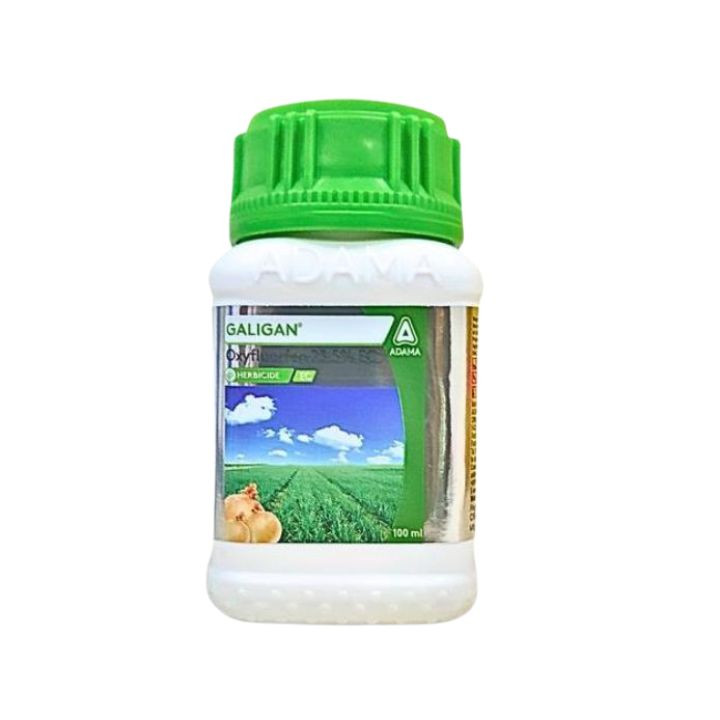
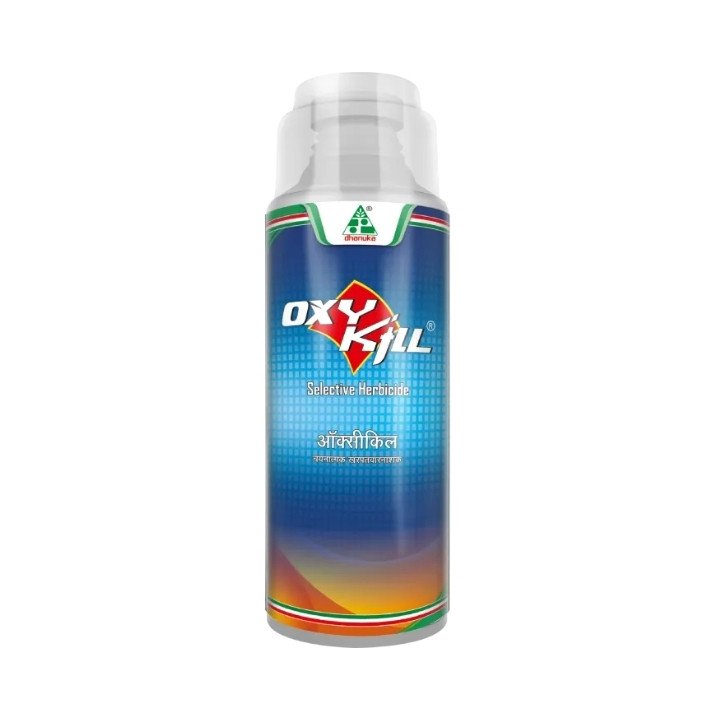
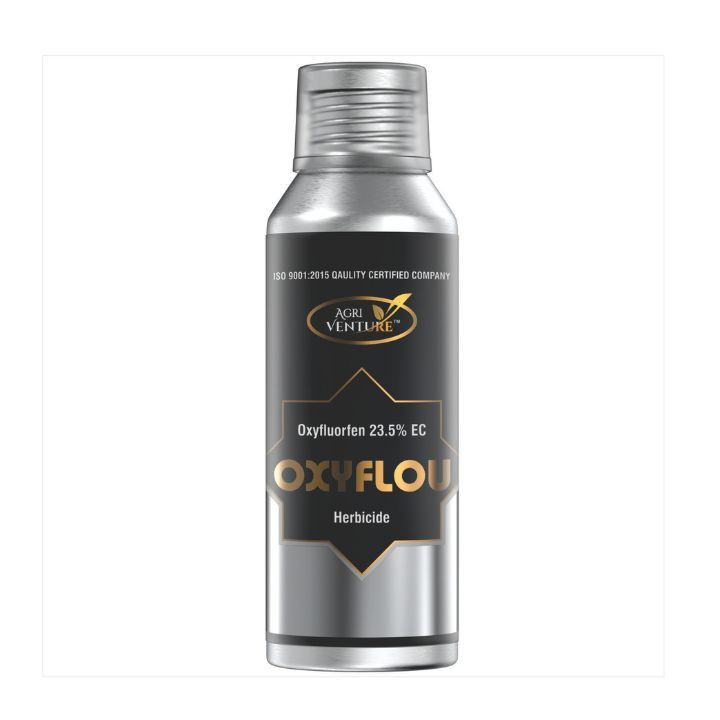
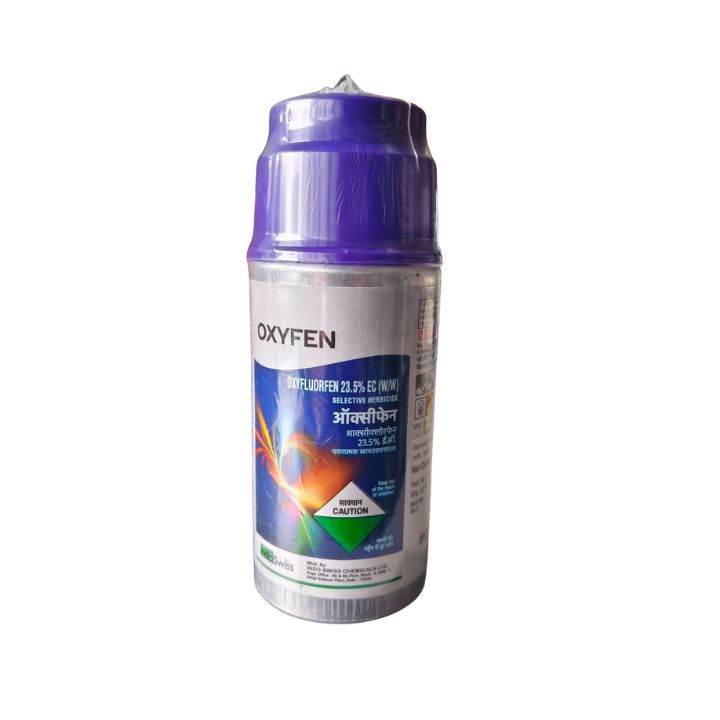
Oxyfluorfen 23.5% EC Herbicide – Technical Guide
Oxyfluorfen 23.5% EC is a widely used herbicide that farmers generally consider for early-stage weed control programs (as per label). It is known for strong action on young weeds and is commonly planned as a pre-emergence or early post-emergence spray, depending on crop situation and label directions. This guide explains how it works, where it fits best, and what precautions matter most for safe and consistent results.
What is Oxyfluorfen 23.5% EC?
- Active ingredient: Oxyfluorfen
- Formulation: 23.5% EC (Emulsifiable Concentrate)
- Herbicide type: Mainly contact action with residual support (label-based)
How It Works
Oxyfluorfen affects weed growth by disrupting an important process related to chlorophyll formation in weeds. In practical terms, it works best when weeds are small and when spray coverage is uniform. Since it can act strongly on green plant tissue, it is important to avoid unwanted contact with the crop (follow label method like directed spray where required).
Weeds Controlled
Weed spectrum depends on label and local recommendations. In general, Oxyfluorfen is commonly used for:
- Many annual broadleaf weeds
- Some grassy weeds at early stages (situation and label dependent)
Best Time to Apply
- Pre-emergence: Applied after sowing/transplanting but before weed emergence (label-based).
- Early post-emergence: Applied when weeds are very small and actively growing (label-based).
For better results, avoid delayed spray when weeds become mature and hard to control.
Application Tips for Better Field Results
- Uniform coverage: Use proper nozzle and maintain consistent walking/spray speed.
- Correct spray volume: Use enough water to cover soil/weed surface properly (as per label).
- Clean water & mixing: Always mix in clean water and keep agitation during spray.
- Moisture helps: In many pre-emergence programs, adequate soil moisture supports better performance (check label guidance).
Mixing
- Fill the tank half with water.
- Add the measured product dose.
- Top up remaining water while stirring/agitating.
- If mixing with another input, do a jar test first.
Important Precautions
- Avoid drift: Spray in low-wind conditions and keep nozzle height correct.
- Prevent crop injury: Do not allow spray to touch sensitive crop leaves/green stems unless label clearly allows it.
- No random tank mixes: Avoid “cocktail” mixing unless label explicitly supports it.
- Use a dedicated sprayer if possible: Herbicide residues can harm other crops.
FAQs
Is it used as pre-emergence or post-emergence?
It is commonly planned for pre-emergence or early post-emergence use depending on the label and crop situation.
Why is drift control important?
Because herbicides can affect non-target plants if spray drifts or touches green crop parts. Always spray carefully as per label method.
The details provided are for informational guidance only. Always adhere to the recommended application instructions as stated on the product label and in the accompanying leaflet.