

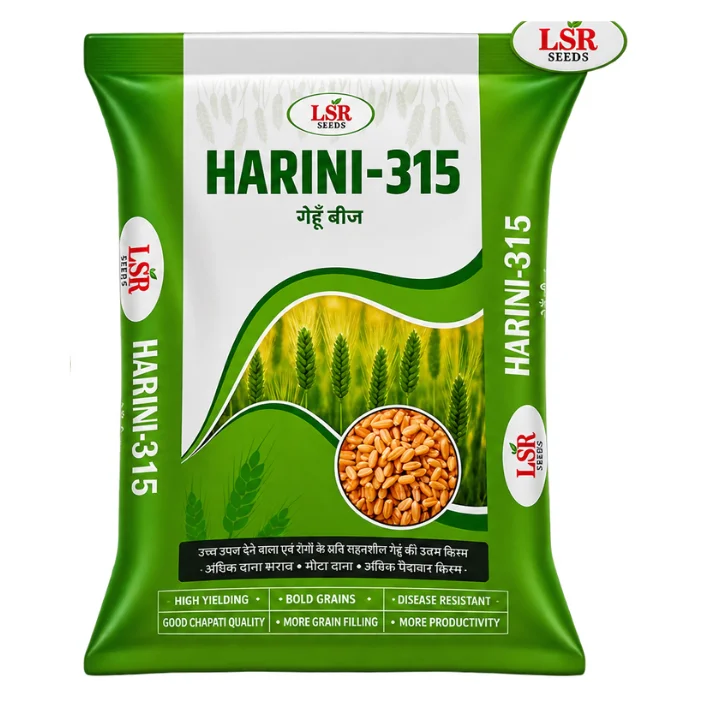


Srikar Biotech LSR Harini-315 Research Wheat Seeds
LSR Harini-315 Research Wheat Seeds
LSR Harini-315 Research Wheat Seeds are marketed under the LSR Seeds brand associated with Srikar Biotech. Harini-315 is promoted for Rabi wheat cultivation, highlighting bold grain characteristics, good chapati-making quality and high yield potential. It is intended for farmers looking for wheat seeds for grain production under suitable agricultural conditions.
The supplied product packaging highlights disease resistance, bold grains and improved grain quality. These are advertised variety characteristics rather than independently verified performance guarantees. Good results depend on seed quality, timely sowing, soil fertility, irrigation, climatic conditions and proper crop management.
Product Details
| Brand | LSR Seeds |
|---|---|
| Associated Company | Srikar Biotech |
| Variety | Harini-315 |
| Product Type | Research Wheat Seeds |
| Crop | Wheat |
| Botanical Name | Triticum aestivum L. |
| Growing Season | Rabi |
| Grain Characteristics | Promoted for Bold Grains |
| Grain Quality | Promoted for Good Chapati Quality |
| Yield Potential | High Yield Potential Claimed |
| Disease Resistance | Advertised; Specific Resistance Not Verified |
| Sowing Method | Direct Field Sowing |
| Seed Rate | Follow Original Seed Label |
| Maturity Period | Not Independently Verified |
| Suitable Soil | Fertile, Well-Drained Agricultural Soil |
Key Features and Benefits
- Research Wheat Variety: Harini-315 is marketed as a research wheat variety for agricultural cultivation.
- Bold Grain Characteristics: The packaging highlights the development of bold wheat grains.
- Chapati Quality: Promoted for grain characteristics suitable for chapati preparation.
- Yield Potential: Advertised as a high-yield-potential wheat variety under suitable growing conditions.
- Disease Resistance: Disease resistance is claimed in the promotional material, but specific resistance ratings are not available.
- Rabi Crop: Intended for wheat cultivation during the appropriate winter growing season.
Suitable Climate and Soil
Wheat is primarily cultivated during the cool Rabi season. A suitable temperature during germination, tillering, flowering and grain development supports healthy crop growth.
Fertile, well-drained loamy soils are generally suitable for wheat cultivation. Avoid waterlogging and ensure proper field levelling before sowing.
Sowing Method and Seed Rate
The exact manufacturer-recommended seed rate for LSR Harini-315 has not been verified. General wheat cultivation recommendations often use approximately 40–50 kg seed per acre for timely sowing, depending on seed size, germination percentage and regional conditions. This is general guidance and not a confirmed Harini-315 dosage.
- Prepare a fine and level seedbed.
- Select healthy seeds from the original sealed package.
- Check the label for seed treatment and germination information.
- Sow during the locally recommended wheat cultivation period.
- Use a suitable seed drill or line-sowing method.
- Maintain recommended sowing depth and row spacing.
- Ensure sufficient soil moisture for uniform germination.
Fertilizer and Nutrient Management
Apply fertilizers according to soil test results and regional wheat-growing recommendations. Nitrogen supports vegetative growth and tillering, while phosphorus contributes to root development and potassium helps normal plant functioning.
Balanced nutrient management is important for healthy crop establishment and grain formation. Avoid excessive fertilizer application without soil-test recommendations.
Irrigation Management
Maintain adequate soil moisture during important wheat growth stages such as crown-root initiation, tillering, flowering and grain filling. Irrigation frequency depends on rainfall, soil moisture and water availability.
Avoid prolonged waterlogging, which can affect root health and crop development.
Weed, Pest and Disease Management
Monitor the crop regularly for grassy and broadleaf weeds, especially during early establishment. Timely weed management reduces competition for nutrients, water and sunlight.
Inspect plants for locally important problems such as rust diseases, leaf blight and insect infestation. Follow integrated pest management practices and use registered plant protection products only when required.
Although the product is advertised as disease resistant, resistance to individual wheat diseases has not been independently verified.
Harvesting and Grain Quality
Harvest wheat when the spikes have turned golden, grains have hardened and the crop has reached suitable maturity. Proper drying and storage help protect harvested grain from moisture damage and pest infestation.
Bold grain appearance and chapati-making quality depend on genetic characteristics as well as crop nutrition, growing conditions and post-harvest handling.
Frequently Asked Questions
1. What is LSR Harini-315?
LSR Harini-315 is a research wheat seed product marketed under the LSR Seeds brand associated with Srikar Biotech.
2. Is Harini-315 suitable for Rabi cultivation?
Wheat is generally grown during the Rabi season. Follow local sowing recommendations and the original product label.
3. Does Harini-315 produce bold grains?
Bold grain quality is a promoted feature of this product. Actual grain development depends on crop management and environmental conditions.
4. What is the seed rate per acre?
General wheat sowing guidance is approximately 40–50 kg per acre in many timely sown conditions. Confirm the exact rate from the Harini-315 seed label.
5. Is Harini-315 disease resistant?
Disease resistance is advertised, but no verified disease-specific resistance information is available.
6. What is the maturity period?
The exact maturity period for Harini-315 has not been independently verified.
Disclaimer: Product identity and promoted characteristics are based on the supplied seller material and packaging. High yield, bold grains, chapati quality and disease resistance should not be treated as independently verified guarantees. Follow the original product label and agricultural recommendations for seed rate, sowing, irrigation and crop management.
Similar Products
Best Selling
Customer Reviews
Recent Reviews
No reviews yet.