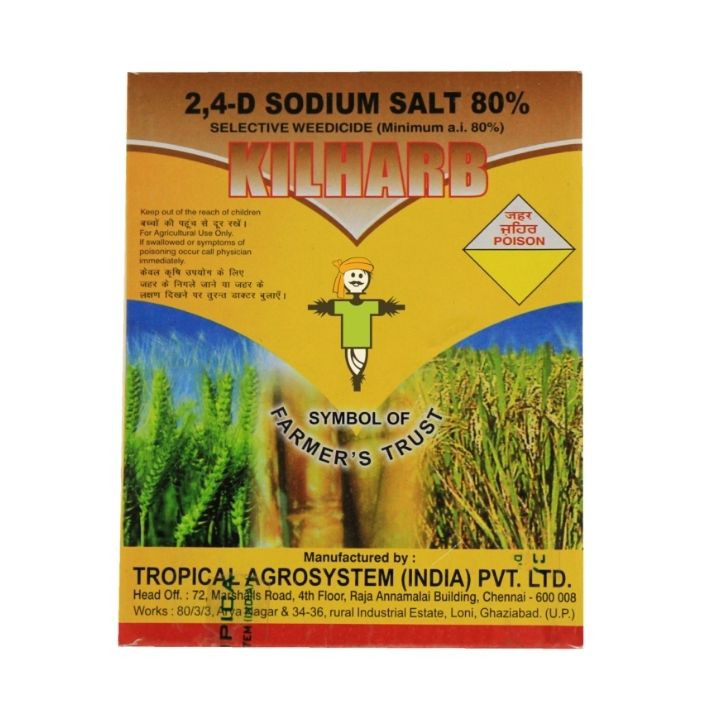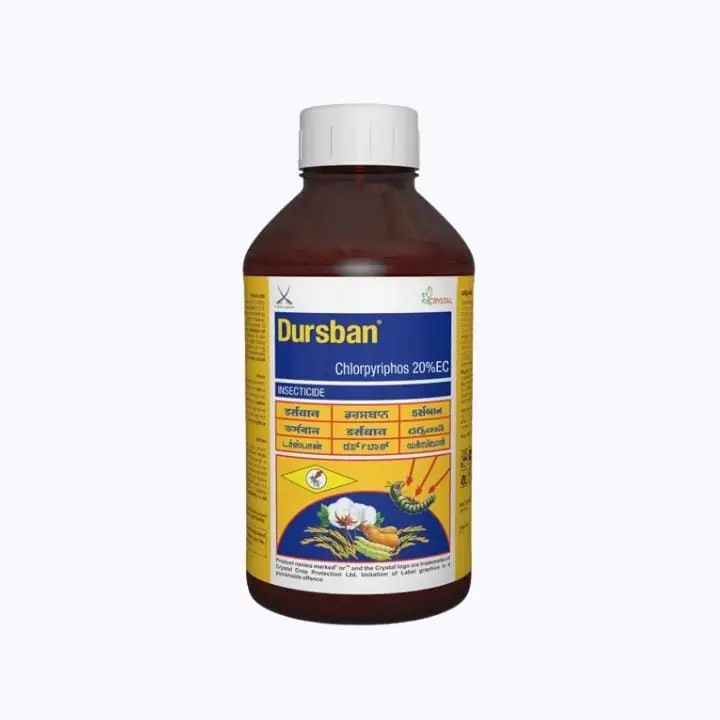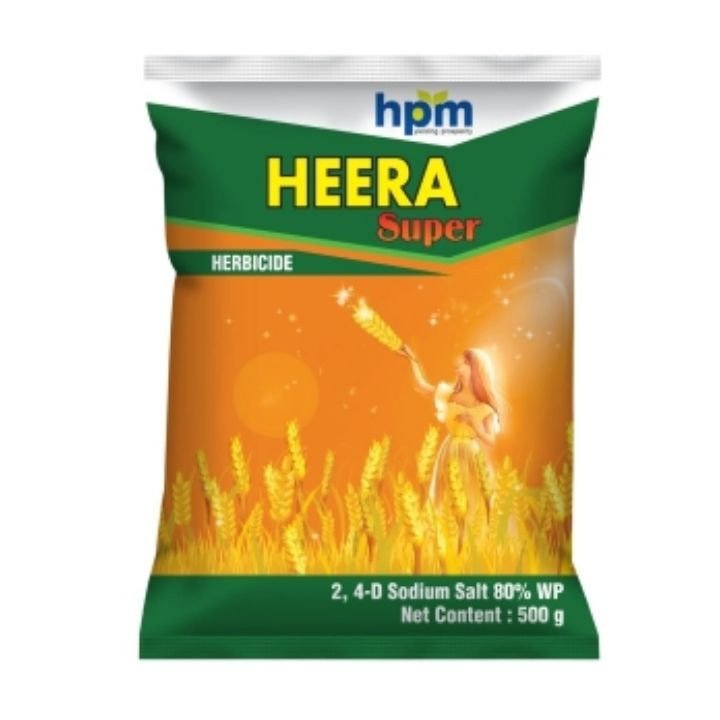
One detail that often gets overlooked with 2,4-D products is that the compound's uptake pathway depends heavily on which salt or ester form it's formulated as. HPM Heera Super uses the sodium salt of 2,4-Dichlorophenoxyacetic acid at 80% concentration in a wettable powder — and salts of 2,4-D are specifically absorbed through plant roots, in contrast to ester formulations, which are taken up primarily through foliage. This distinction shapes how and where Heera Super actually needs to reach the weed to work.
As a synthetic auxin belonging to the phenoxycarboxylic acid family, 2,4-D functions as a growth inhibitor rather than a direct toxin — it disrupts the plant's normal hormonal growth regulation, and this disruption is what ultimately kills susceptible broadleaf weeds while leaving grass-family crops largely unaffected.
| Detail | Specification |
|---|---|
| Brand | Heera Super |
| Manufacturer | HPM Chemicals & Fertilizers Ltd |
| Technical Content | 2,4-D Sodium Salt 80% |
| Formulation | Wettable Powder (WP) |
| Herbicide Type | Selective, Systemic, Phenoxy Herbicide |
| Toxicity Classification | Yellow (Moderately Hazardous) |
| Registered Crops | Wheat, Maize, Citrus, Grapes |
Since Heera Super's sodium salt form is absorbed primarily through roots rather than foliage, its effectiveness ties closely to soil moisture and how well the treated area allows root-zone uptake, rather than depending purely on thorough foliar coverage the way a foliage-absorbed herbicide would. Once absorbed, the herbicide translocates through the plant, accumulating at meristematic regions — the actively growing tips of shoots and roots — which is precisely where growth disruption does the most damage to weed development.
| Crop | Target Weed Species |
|---|---|
| Citrus | Euphorbia spp., Convolvulus, Oxalis corniculata, Fumaria parviflora, Coronopus didymus |
| Grapes | Convolvulus spp., Tridax procumbens |
| Wheat | Leucas aspera, Chenopodium album, Argemone mexicana, Fimbristylis miliacea, Anagallis arvensis, Vicia sativa, Amaranthus spinosus |
| Maize | Amaranthus viridis, Trianthema sp., Phyllanthus niruri |
| Non-Crop Land | Cyperus rotundus, Parthenium hysterophorus, Solanum elaeagnifolium |
| Aquatic Weeds | Boerhavia hispida, Eichhornia crassipes |
| Crop | Dose (per Acre) | Water Dilution | Waiting Period |
|---|---|---|---|
| Citrus | 500–1280 ml | 240 litres | Over 6 months |
| Grapes | 1000 ml | 200 litres | Over 90 days |
| Wheat | 250–400 ml | 200 litres | 90 days |
| Maize | 500 ml | 200 litres | 90 days |
| Non-Crop Land | 500–4000 ml (varies by target weed) | 200–400 litres | Not applicable |
| Aquatic Weeds | 740 ml | 240–400 litres | Not applicable |
Citrus's waiting period stands out sharply from the rest of the table — over 6 months compared to 90 days for wheat and maize. This reflects citrus being a perennial tree crop with a fundamentally different residue clearance timeline than annual field crops harvested within a single season, and this extended interval needs to be factored into orchard management planning well ahead of any application.
Why does this formulation get absorbed through roots instead of leaves?
Sodium salt forms of 2,4-D are specifically absorbed through plant roots, in contrast to ester formulations of the same active ingredient, which are taken up primarily through foliage.
Why is citrus's waiting period so much longer than wheat or maize?
Citrus is a perennial tree crop with a fundamentally different residue clearance timeline compared to annual field crops, resulting in a waiting period of over 6 months versus 90 days for wheat and maize.
Does Heera Super affect grasses along with broadleaf weeds?
No, 2,4-D has little effect on grasses, which is exactly what allows it to be used selectively in grass-family crops like wheat and maize without harming the crop itself.
Can Heera Super be used to clear non-crop land as well as standing crops?
Yes, it's registered for non-crop land use at a higher dosage range (500–4000 ml per acre depending on the target weed) alongside its crop-specific uses in citrus, grapes, wheat, and maize.
Disclaimer: The details provided are for informational guidance only. Always adhere to the recommended application instructions as stated on the product label and in the accompanying leaflet.
No reviews yet.