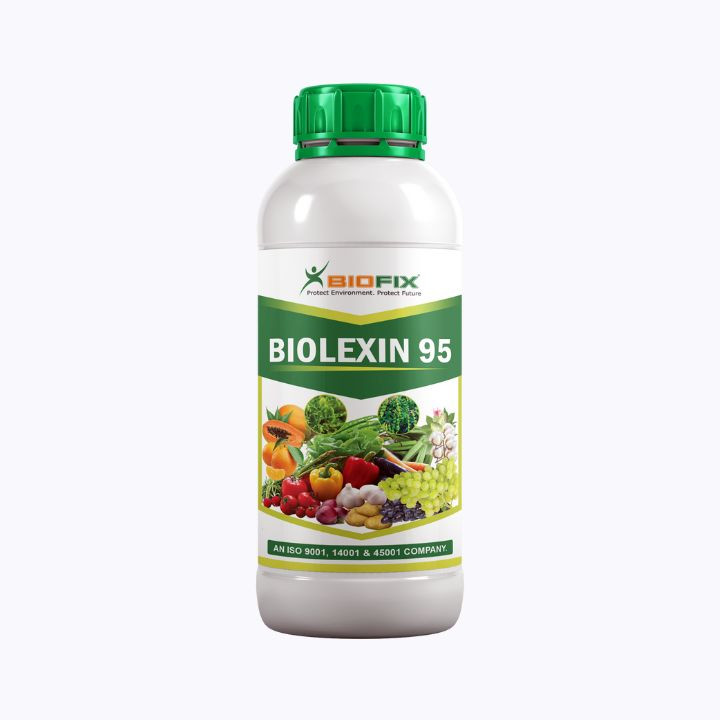
Biolexin 95 is a rich herbal extract containing natural prohibitins and elicitors that stimulate the plant’s defense mechanism by triggering the production of phytoalexins — natural plant compounds that fight against invading pathogens. Many high-yield crops lack these natural biochemicals, so Biolexin 95 replenishes and activates them through foliar application, helping plants resist a broad range of fungal and bacterial diseases. It’s especially effective against downy mildew and other soil-borne and foliar pathogens.
Application & Dosage
Apply Biolexin 95 as a foliar spray at early crop stages or immediately at the onset of disease symptoms.
| Application Stage / Method |
Dosage |
| Foliar Spray (General) |
0.5 – 1 ml per litre of water |
| 3–4 Leaf Stage |
1.5 – 2 ml per litre of water |
| 5–8 Leaf Stage |
2 – 3 ml per litre of water |
Spray thoroughly on both sides of leaves for complete coverage. Reapply every 10–15 days depending on disease pressure and weather conditions.
Recommended Crops
Biolexin 95 is recommended for all fruit crops, vegetables, orchards, and cash crops such as grapes, ginger, and turmeric. It can also be used for plantation and horticultural crops under both open-field and protected cultivation.
Frequently Asked Questions (FAQs)
Q1: What is Biolexin 95 used for?
Biolexin 95 is used to control fungal diseases like downy mildew, damping-off, and blight by activating the plant’s natural defense system.
Q2: How does Biolexin 95 work?
It acts as an elicitor that stimulates the production of phytoalexins and plant enzymes, strengthening resistance to pathogens.
Q3: Can it be used on all crops?
Yes, it is suitable for all fruit crops, vegetables, and commercial crops like grapes, ginger, and turmeric.
Q4: How often should Biolexin 95 be sprayed?
Spray every 10–15 days or as required based on disease intensity and environmental conditions.
Q5: Is Biolexin 95 organic and residue-free?
Yes, Biolexin 95 is a herbal extract-based formulation that is residue-free and safe for soil, environment, and beneficial organisms.