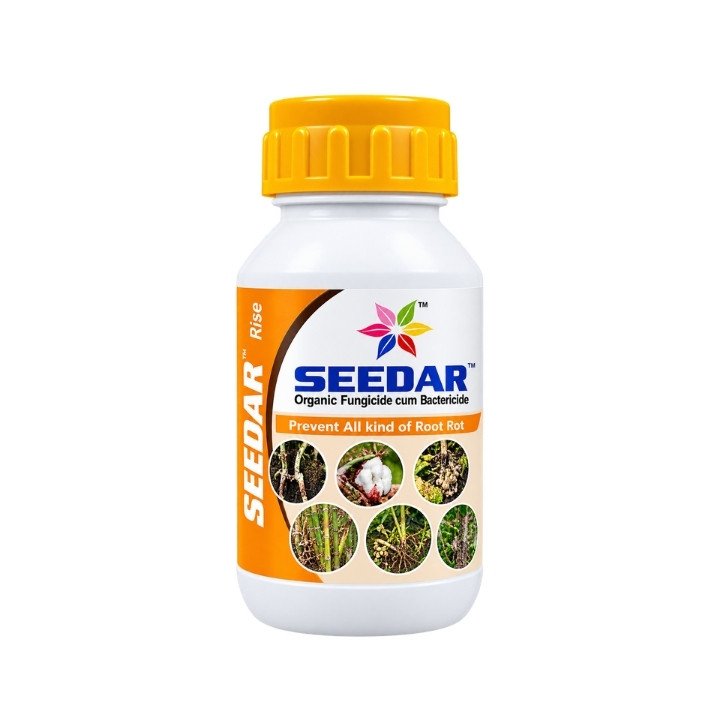
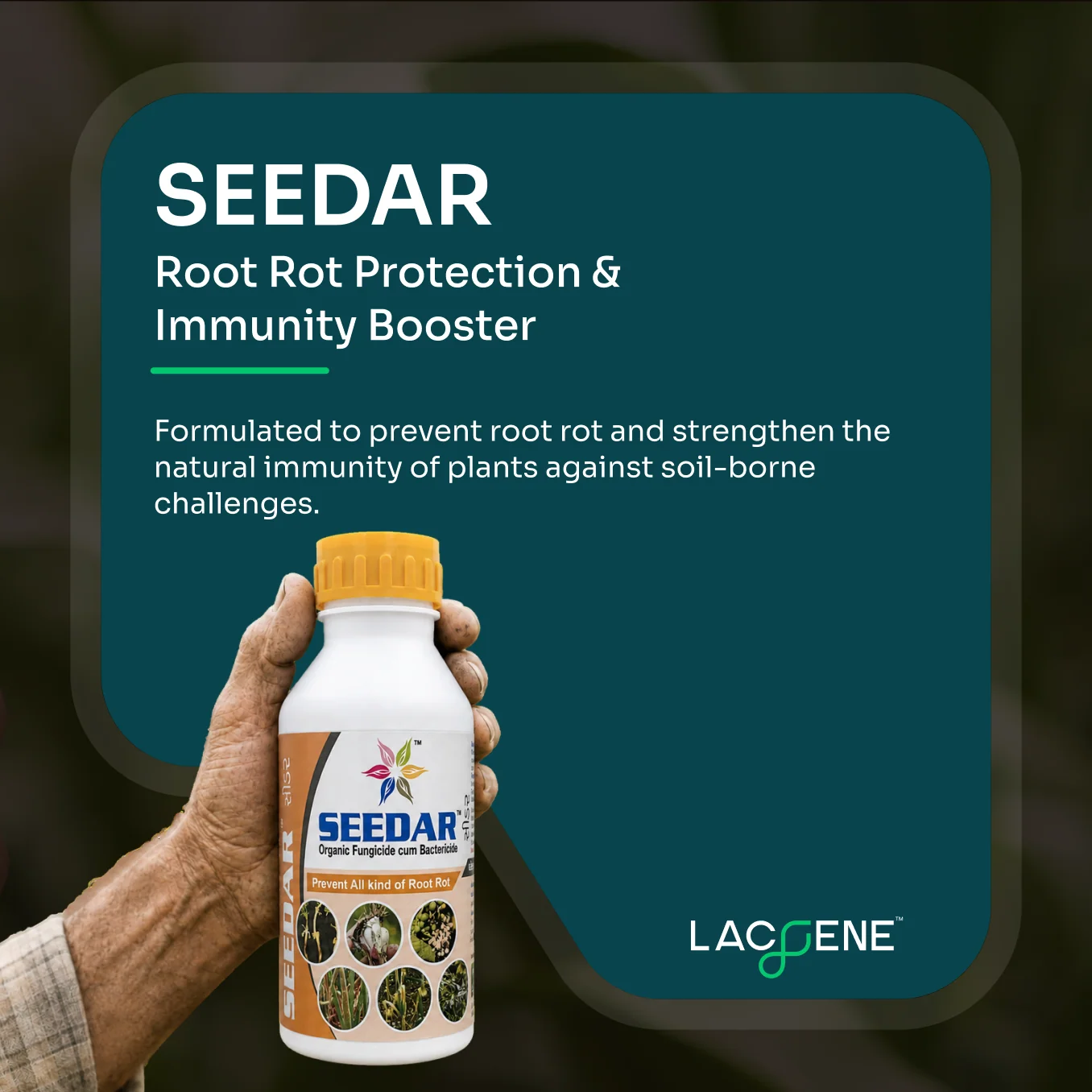
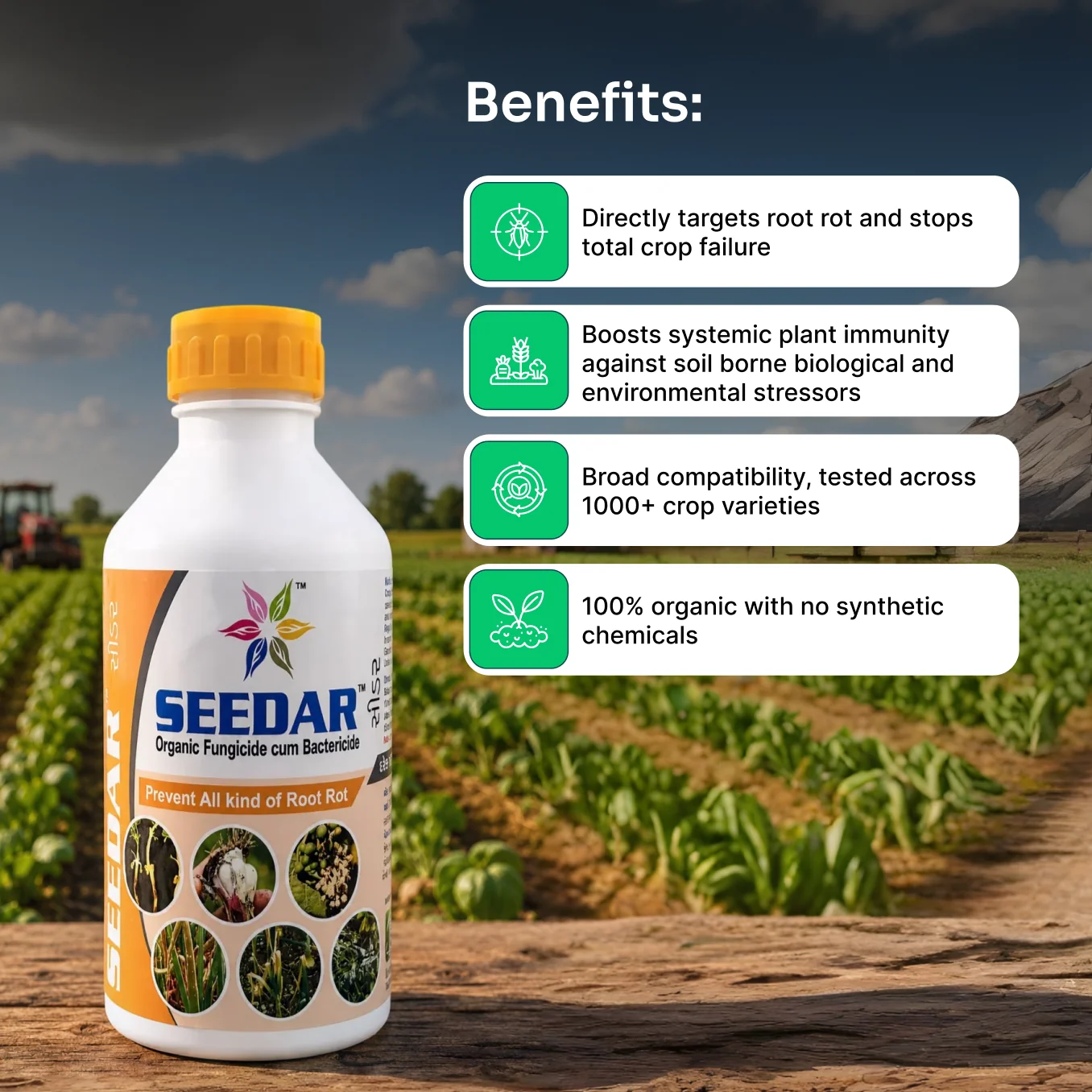
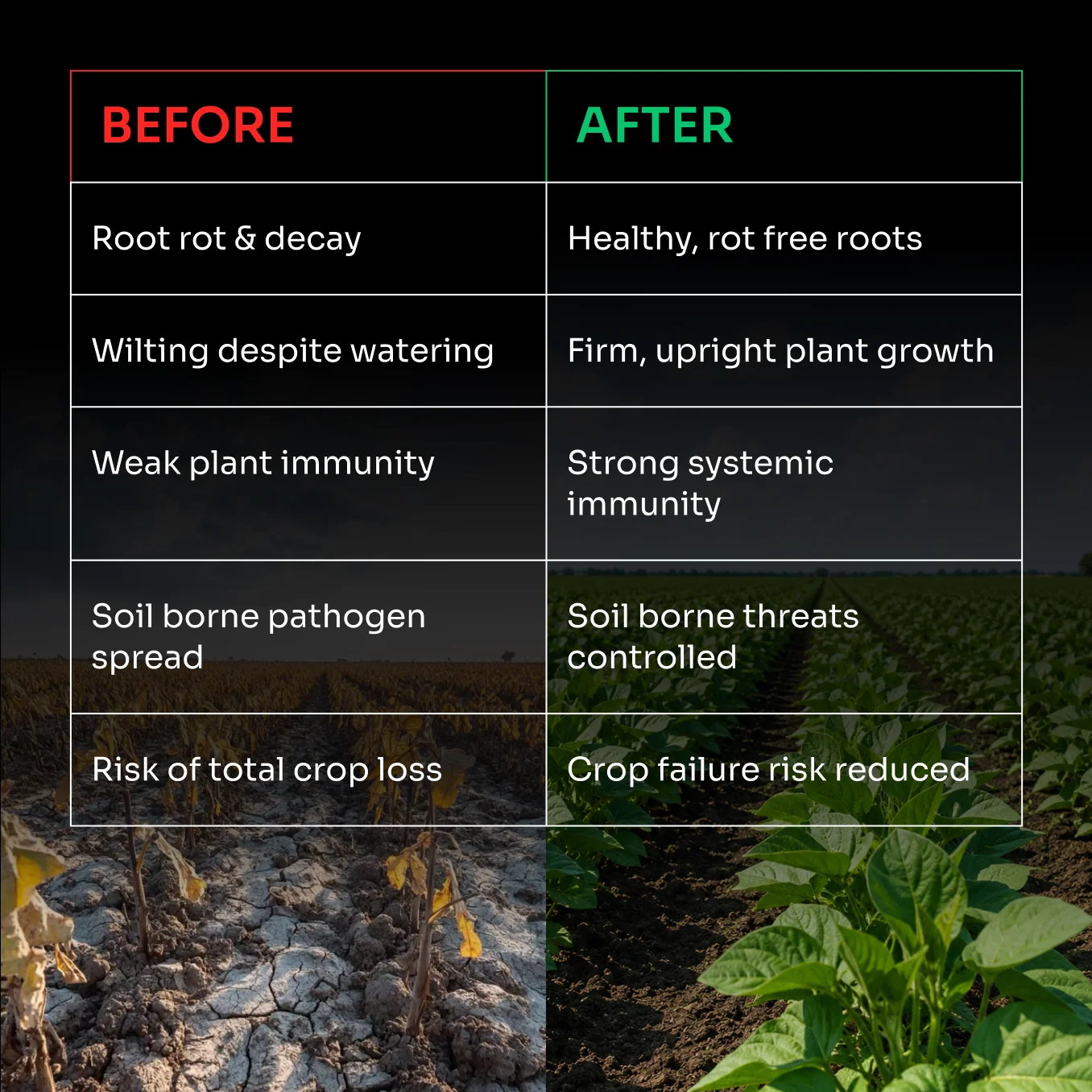


Most crop protection conversations center on what's visible above ground — leaf spots, blights, visible pest damage. Root rot rarely gets that same attention until it's too late, since by the time wilting or stunted growth shows up, the root system has often already sustained serious damage. Lacgene Seedar is positioned specifically to address this earlier, less visible stage of crop health — it's described as a specialised variant of Cumacin, formulated with soil-borne challenges and root protection as its primary focus.
Unlike many fungicides that treat symptoms once they've appeared on foliage, Seedar's stated approach is preventive and structural — supporting the plant's natural immunity from the root zone outward, rather than reacting to visible disease after infection has already spread upward through the plant.
| Component | Proportion |
|---|---|
| Cumacin | 10% |
| Vegetable Oil | 60% |
| Other Additives | 30% |
| Detail | Specification |
|---|---|
| Brand | Lacgene |
| Product Name | Seedar |
| Product Type | Organic Fungicide cum Bactericide |
| Application Method | Foliar Spray |
Seedar's positioning rests on two connected ideas. The first is direct root-zone protection — described as a "root shield" function meant to address root rot before it escalates into the kind of crop failure that's difficult to recover from once established. The second is broader immunity enhancement, aimed at supporting the plant's systemic resistance to both environmental stress and biological pressure more generally, rather than targeting one specific pathogen in isolation.
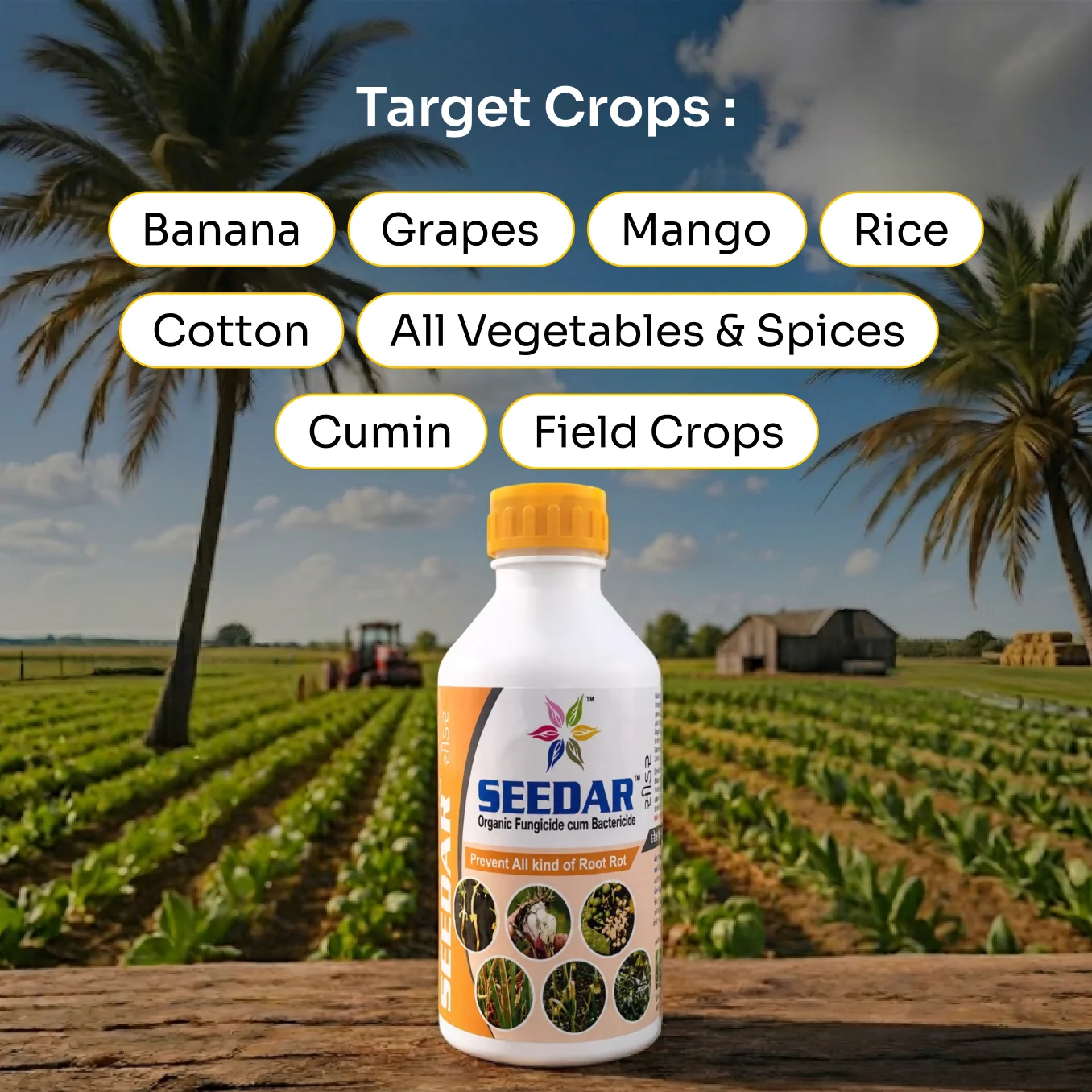
Seedar's stated crop coverage is unusually broad, spanning field crops, vegetables, fruits, plantation crops, horticultural flowers, fiber crops, medicinal and aromatic plants, and fodder crops. A sample of the categories covered:
| Crop Category | Representative Examples |
|---|---|
| Field Crops | Paddy, Wheat, Maize, Sorghum, Millets, Oilseeds, Cotton, Sugarcane, Pulses |
| Vegetables & Spices | Tomato, Brinjal, Chilli, Onion, Potato, Cabbage, Cumin, Turmeric |
| Fruits | Mango, Banana, Apple, Grapes, Citrus, Guava, Pomegranate, Strawberry |
| Plantation Crops | Tea, Coffee, Rubber, Coconut, Areca Nut, Cardamom, Cocoa |
| Horticultural & Medicinal Crops | Rose, Marigold, Orchids, Neem, Aloe Vera, Tulsi, Mentha |
| Fiber & Fodder Crops | Jute, Hemp, Berseem, Lucerne, Napier Grass |
Given how wide this crop range is, it's worth confirming current label registration and locally validated performance for the specific crop being treated, particularly in commercial-scale or export-oriented production, rather than assuming uniform performance across every listed category.
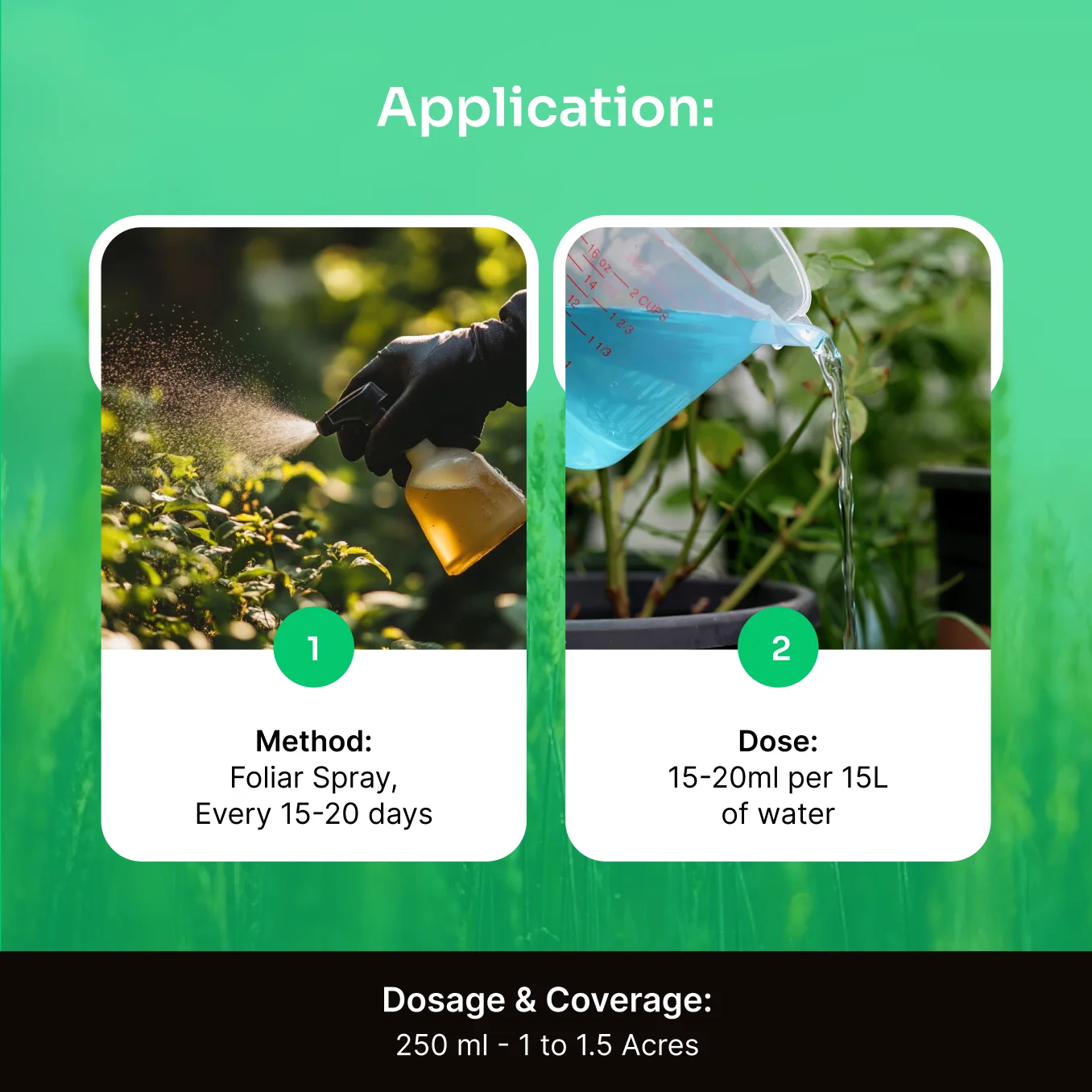
| Application Method | Dose | Frequency |
|---|---|---|
| Foliar Spray | 15–20 ml per 15 litres of water | Every 15–20 days |
The regular 15–20 day interval suggests Seedar is intended as an ongoing part of a crop protection schedule rather than a one-time or purely reactive treatment — consistent with its positioning as a preventive, immunity-building product rather than a rescue spray for an already advanced infection.
Does Seedar treat root rot that has already set in, or is it mainly preventive?
Its positioning emphasizes prevention and immunity support from the root zone, so it's generally best used as part of a regular schedule before root rot becomes established rather than as a rescue treatment for advanced infection.
Is Seedar suitable for organic certification?
It's marketed as an organic fungicide cum bactericide; growers targeting formal organic certification should verify compliance with their specific certifying body's approved input list.
Why is the crop list so broad compared to typical fungicides?
Root rot and general immunity-support functions tend to apply across many plant types rather than being crop-specific, which is reflected in Seedar's wide recommended crop range.
How often should Seedar be applied during a crop cycle?
The recommended interval is every 15–20 days as a foliar spray, supporting a consistent preventive schedule throughout the growth cycle.
Disclaimer: The details provided are for informational guidance only. Always adhere to the recommended application instructions as stated on the product label and in the accompanying leaflet.
No reviews yet.