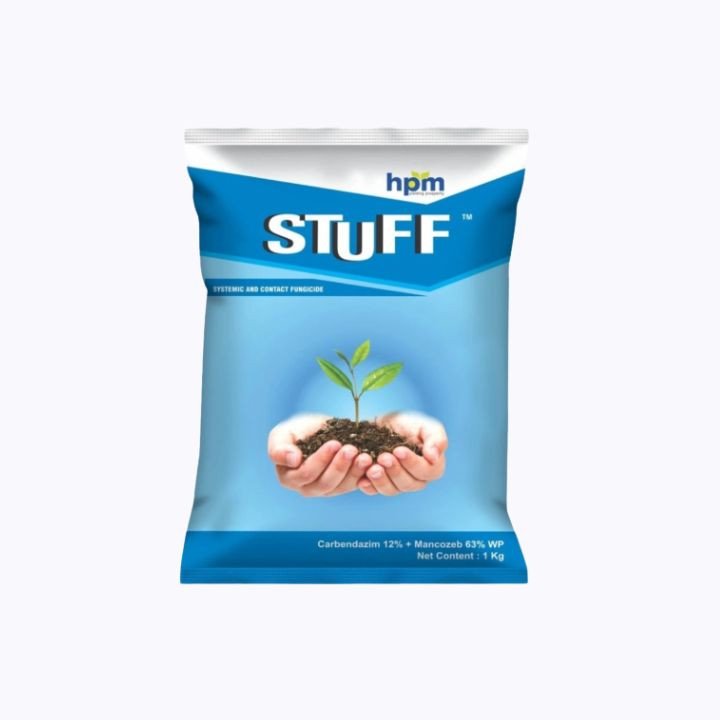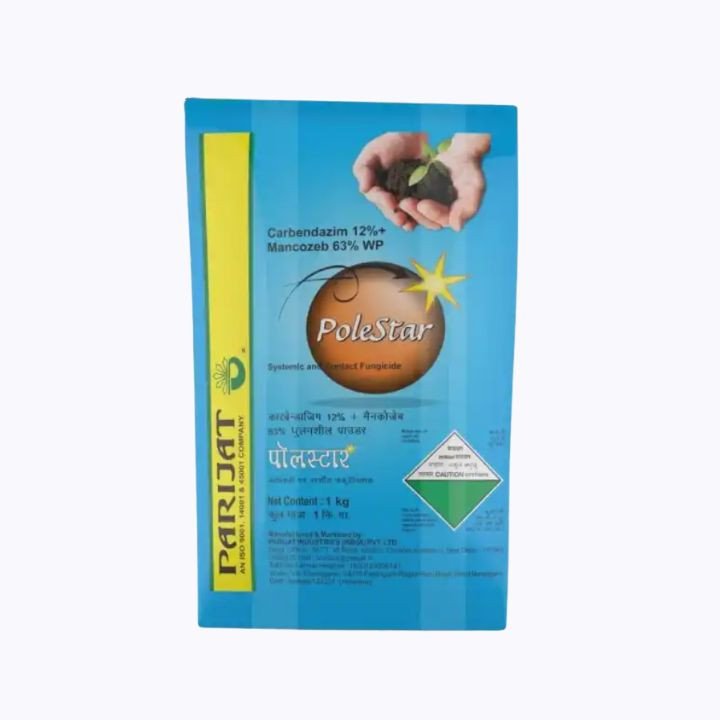
A single-active fungicide, however effective, gives a fungal population just one biological pathway to adapt around over repeated use. Parijat Polestar avoids putting all its resistance-management burden on one mechanism by combining Carbendazim 12% and Mancozeb 63% in a WP premix — a systemic active paired with a contact one, each working through an entirely different route inside and outside the fungal cell.
This isn't simply two fungicides sharing a bag. Carbendazim moves systemically within the plant, inhibiting fungal mitotic microtubule formation, which halts the fungus's ability to divide cells and develop its germ tube and mycelial growth. Mancozeb, meanwhile, stays on the plant surface after spraying, and once exposed to air, converts into an isothiocyanate compound that disables sulfhydryl-group enzymes in fungi — a mechanism specific to contact-based, multi-site activity.
| Detail | Specification |
|---|---|
| Brand | Parijat |
| Product Name | Polestar |
| Composition | Carbendazim 12% + Mancozeb 63% |
| Formulation | Wettable Powder (WP) |
| Chemical Groups | Benzimidazole Carbamate (Carbendazim) + Dithiocarbamate (Mancozeb) |
| Pack Sizes | 50 gm, 100 gm, 250 gm, 500 gm, 1 kg |
A fungal pathogen that develops tolerance to Carbendazim's cell-division-blocking mechanism still has to contend with Mancozeb's separate enzyme-disruption pathway operating on the plant surface, and vice versa. Because resistance typically develops against one specific biochemical target at a time, requiring a fungus to simultaneously overcome two unrelated mechanisms is a considerably higher evolutionary hurdle — this is the core logic behind why dual mode-of-action premixes like Polestar tend to hold up better over repeated seasons than single-active products.
| Crop | Target Diseases |
|---|---|
| Rice (Paddy) | Blast |
| Groundnut | Leaf Spot, Blast (foliar); Tikka, Collar Rot, Dry Root Rot (seed treatment) |
| Potato | Early Blight, Late Blight, Black Scurf |
| Tea | Blister Blight, Grey Blight, Red Rust, Die-Back, Black Rot |
| Grapes | Downy Mildew, Powdery Mildew, Anthracnose |
| Chilli | Leaf Spot, Fruit Rot, Powdery Mildew |
Groundnut stands out on this label for having two distinct application approaches rather than just one — a foliar spray dose against leaf spot and blast, and a completely separate seed treatment rate (2.5 gm per kg of seed) targeting Tikka, collar rot, and dry root rot. This split reflects how these disease groups originate differently: leaf spot and blast develop on standing foliage, while collar rot and dry root rot are soil and seed-borne issues better addressed at the seed treatment stage, before the crop even emerges.
| Crop | Diseases | CIB Dose (per Hectare) | Water Volume (per Hectare) |
|---|---|---|---|
| Rice (Paddy) | Blast | 750 gm | 750 L |
| Groundnut | Leaf Spot, Blast | 500 gm | 500 L |
| Groundnut (Seed Treatment) | Tikka, Leaf Spot, Collar Rot, Dry Root Rot | 2.5 gm per kg seed | — |
| Potato | Early Blight, Late Blight, Black Scurf | 1750 gm | 500 L |
| Tea | Blister Blight, Grey Blight, Red Rust, Die-Back, Black Rot | 1250 gm | 250–500 L |
| Grapes | Downy Mildew, Powdery Mildew, Anthracnose | 0.15% concentration | As required based on canopy |
| Chilli | Leaf Spot, Fruit Rot, Powdery Mildew | 750 gm | 500 L |
Grapes is the one crop on this list measured by percentage concentration rather than a fixed per-hectare quantity, since spray volume needs to flex significantly with canopy size across different vineyard training systems — a young vine and a mature, well-trellised one require very different total spray volumes even at the same 0.15% concentration.
Polestar works well as a preventive spray under normal disease-risk conditions, but its curative property means it should be applied immediately once disease symptoms first appear rather than delayed — waiting longer reduces how effectively even a curative fungicide can reverse established infection. Mixing preparation matters too: the recommended dose should go into a bucket half-filled with water, mixed thoroughly with a stick, before topping up with the remaining water under continuous agitation, then applied using a high-volume or knapsack sprayer.
Why does groundnut have two separate dosage entries instead of one?
One entry covers a foliar spray against leaf spot and blast, while the second is a seed treatment rate for tikka, collar rot, and dry root rot — these are different disease types requiring different application timing and methods.
Why is the grape dose given as a percentage rather than grams per hectare?
Grape canopy size varies considerably by vine age and training system, so spray volume needs to adjust accordingly — using a fixed percentage concentration allows the dose to scale naturally with however much spray volume the specific vineyard requires.
Does using two active ingredients together really help with resistance compared to a single fungicide?
Yes — since Carbendazim and Mancozeb work through completely different biochemical mechanisms, a fungal population would need to develop resistance to both simultaneously, which is considerably harder than adapting to a single mode of action.
How long does protection last after a single Polestar spray?
It typically provides around 7–10 days of disease control, after which a follow-up spray may be needed depending on ongoing disease pressure.
Disclaimer: The details provided are for informational guidance only. Always adhere to the recommended application instructions as stated on the product label and in the accompanying leaflet.
No reviews yet.