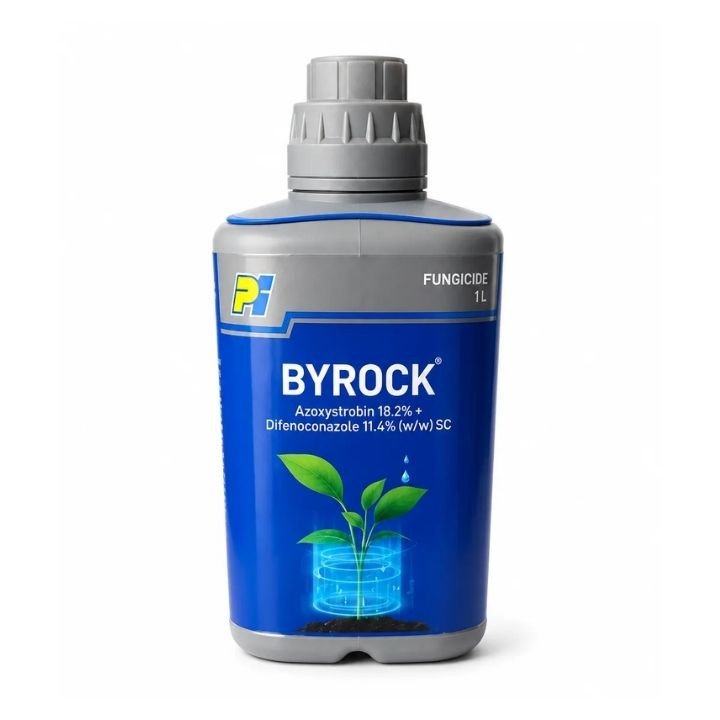

PI BYROCK is a wide-spectrum systemic fungicide containing Azoxystrobin 18.2% + Difenoconazole 11.4% SC. It combines two complementary fungicidal modes of action to provide preventive and curative protection against important fungal diseases in agricultural crops.
BYROCK combines a strobilurin fungicide with a triazole fungicide, helping protect healthy plant tissues while also suppressing early fungal infection. Its dual mode of action makes it suitable for integrated disease-management and fungicide resistance-management programs.
| Product Name | BYROCK |
|---|---|
| Brand | PI |
| Manufacturer | PI Industries Limited |
| Product Type | Broad-Spectrum Fungicide |
| Technical Name | Azoxystrobin 18.2% + Difenoconazole 11.4% SC |
| Formulation | SC - Suspension Concentrate |
| Chemical Groups | Strobilurin / QoI + Triazole / DMI |
| Activity | Preventive and Curative |
| Application Method | Foliar Spray |
| Active Ingredient | Concentration | Fungicide Group |
|---|---|---|
| Azoxystrobin | 18.2% | QoI / Strobilurin - FRAC Group 11 |
| Difenoconazole | 11.4% | DMI / Triazole - FRAC Group 3 |
| Formulation | Suspension Concentrate (SC) | |
| Crop | Target Diseases |
|---|---|
| Paddy / Rice | Blast and Sheath Blight |
| Chilli | Anthracnose / Fruit Rot, Powdery Mildew and Die Back |
| Tomato | Early Blight, Late Blight and Fruit Rot |
| Cotton | Leaf Spot and Alternaria Blight |
| Wheat | Rust and Powdery Mildew |
| Grapes | Downy Mildew and Powdery Mildew |
PI Industries states that BYROCK has label claims across multiple crops and diseases. Always follow the current BYROCK label for the complete registered crop and disease list.
| Crop | General Reference Dose | Water Volume |
|---|---|---|
| Paddy / Rice | 200 ml per acre | Approximately 200 litres per acre |
| Chilli | 200 ml per acre | Approximately 200 litres per acre |
| Tomato | 200 ml per acre | Approximately 200 litres per acre |
| Cotton | 200 ml per acre | Approximately 200 litres per acre |
| Wheat | 200 ml per acre | Approximately 200 litres per acre |
| Grapes | 200 ml per acre | Approximately 200–300 litres per acre |
The crop-wise rates above are based on the supplied BYROCK product reference. Always follow the current PI BYROCK commercial label for the final crop-specific dose, spray volume and pre-harvest interval.
Azoxystrobin is a QoI fungicide that interferes with mitochondrial respiration in susceptible fungi. It inhibits energy production required for spore germination, fungal growth and disease development.
Difenoconazole is a DMI triazole fungicide that inhibits sterol biosynthesis required for normal fungal cell membrane development and growth.
By combining these two modes of action, BYROCK provides complementary preventive and curative disease-management activity.
Blast and sheath blight are important fungal diseases of paddy that can affect leaves, sheaths and reproductive crop parts. BYROCK helps protect healthy plant tissue and manage developing infection when applied at the appropriate disease stage.
Ensure uniform coverage of the rice crop canopy, including disease-prone lower and middle plant portions.
Chilli crops can be affected by anthracnose, fruit rot, powdery mildew and die back. Early disease management is important because severe infection can damage foliage, shoots and marketable fruits.
Apply BYROCK preventively or during the initial stages of disease development according to the current product label.
Early blight and late blight can cause rapid damage to tomato foliage and developing crops under favourable environmental conditions. BYROCK combines preventive and curative fungicidal activity to support management of susceptible blight diseases.
Rust and powdery mildew can reduce healthy photosynthetic leaf area in wheat. Timely application of a suitable fungicide can help limit disease development and maintain crop foliage.
Powdery mildew and downy mildew are important grape diseases that can affect foliage and developing bunches. Regular crop monitoring and early fungicide application are important for effective disease management.
BYROCK should preferably be applied preventively or when the first symptoms of fungal disease appear. Early application generally provides better protection than waiting until infection has become severe.
Weather conditions, crop stage and disease pressure should be considered when deciding application timing. Avoid spraying immediately before rainfall or during strong winds.
BYROCK combines two fungicide groups with different biochemical targets. Azoxystrobin acts on fungal respiration, while Difenoconazole interferes with sterol production and fungal cell development.
This complementary activity provides broader disease-management performance and supports responsible resistance-management strategies when the product is used according to label directions.
PI BYROCK is a wide-spectrum fungicide containing Azoxystrobin 18.2% + Difenoconazole 11.4% SC.
BYROCK is a fungicide. It is used to manage fungal crop diseases and is not an insecticide.
BYROCK contains Azoxystrobin 18.2% and Difenoconazole 11.4% in Suspension Concentrate formulation.
The supplied BYROCK product information lists blast and sheath blight in paddy.
The supplied BYROCK reference recommends approximately 200 ml per acre for the listed crops. Follow the current commercial label for the final crop-specific rate.
Yes. The supplied product information lists chilli diseases including anthracnose, powdery mildew and die back.
Yes. The supplied reference lists early blight, late blight and fruit rot in tomato.
Yes. Rust and powdery mildew are listed among the wheat disease targets in the supplied product information.
Yes. The supplied product information lists downy mildew and powdery mildew in grapes.
Yes. PI describes BYROCK as a dual-mode systemic fungicide.
Yes. PI Industries describes BYROCK as a wide-spectrum fungicide with both preventive and curative action.
BYROCK combines two fungicide groups with different modes of action. It should still be used responsibly and rotated with suitable alternative fungicide groups when repeated treatments are required.
PI BYROCK Azoxystrobin 18.2% + Difenoconazole 11.4% SC combines two complementary fungicidal modes of action for preventive and curative management of important fungal crop diseases. Timely application, correct dosage and thorough crop coverage are important for effective disease protection.
Disclaimer: The details provided are for informational guidance only. Always adhere to the recommended application instructions as stated on the product label and in the accompanying leaflet.
No reviews yet.